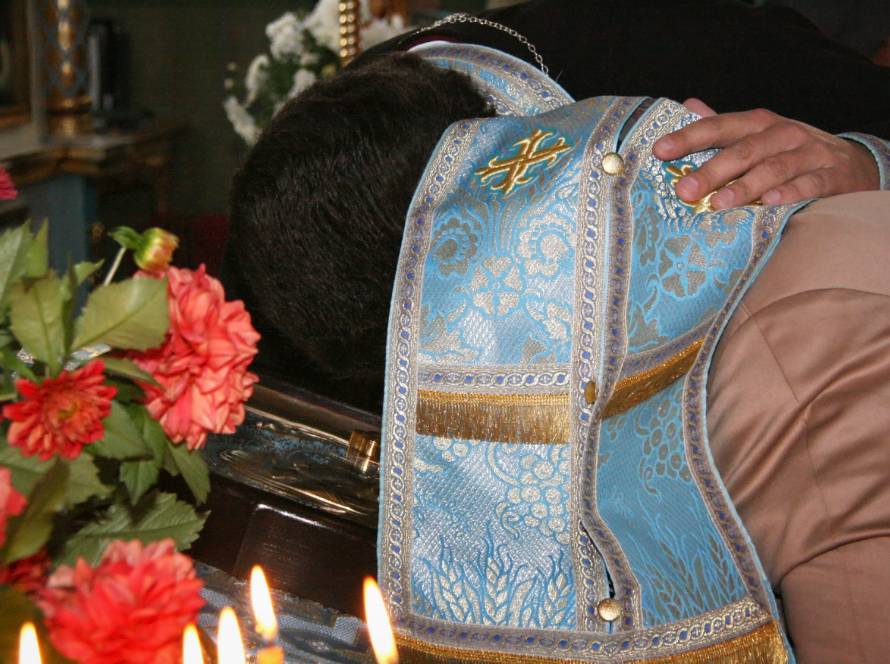
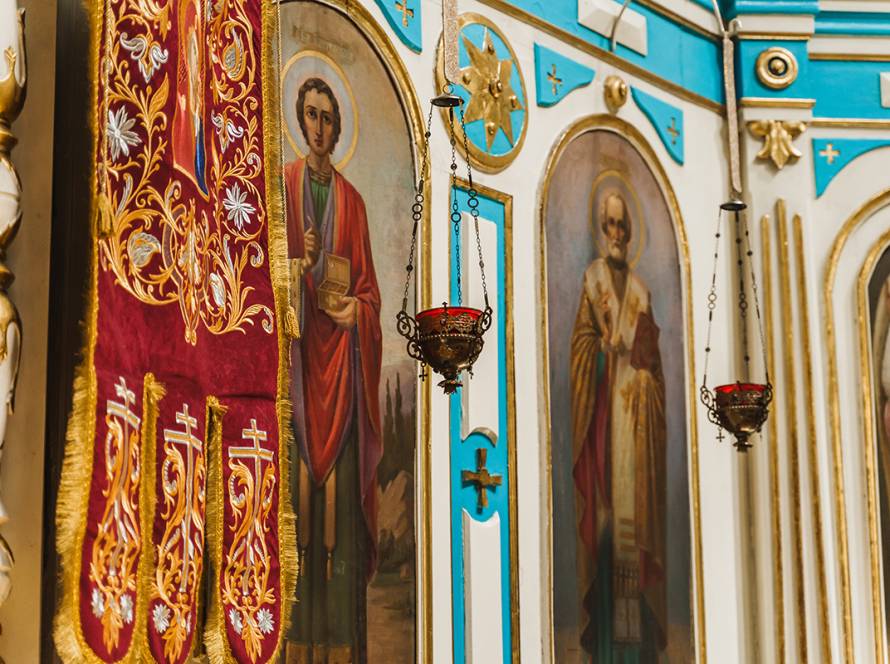
Orthodox worship is not an extra part of the Christian life. It is the heart of it. In the Divine Liturgy, the Church gathers around Jesus Christ, hears His word, offers thanksgiving, and receives His Body and Blood. This is where the Christian life is formed, healed, corrected, and strengthened.
The Orthodox Church teaches that worship is not mainly about personal preference, entertainment, or religious feelings. Worship is our entrance into the life of the Kingdom of God. We do not come to church to watch something happen. We come to stand before God, to repent, to pray, to give thanks, and to be united to Christ in the life of His Church.
Worship as the Center of Orthodox Life
In Orthodoxy, worship is the center because God is the center. Human beings were created to know God, love God, and glorify Him. When we worship rightly, we begin to become rightly ordered inside. Our hearts, minds, bodies, time, habits, and desires are brought before God and slowly healed by His grace.
Holy Scripture shows us that worship is not something invented by people. God teaches His people how to worship. In the Old Testament, the worship of Israel included priests, sacrifices, incense, vestments, holy places, sacred times, hymns, processions, and detailed instructions. In the New Testament, all of this finds its fulfillment in Christ, the true High Priest, the true Lamb of God, and the true Temple.
Our Lord says, “The hour is coming, and now is, when the true worshipers will worship the Father in spirit and truth” (John 4:23). This does not mean worship becomes vague, casual, or purely inward. It means worship is now fulfilled in Christ and lived in the Holy Spirit. Orthodox worship is full, bodily, spiritual, biblical, and sacramental because Christ became fully man to save the whole person.
This is why Orthodox Christians do not treat Sunday morning as one spiritual activity among many. The Divine Liturgy is the central act of the Church. It is the gathering of the Body of Christ around the Eucharist. It is where we learn who God is, who we are, and what our life is meant to become.
St. Justin Martyr, writing in the second century, describes Christians gathering on Sunday, reading the Scriptures, offering prayers, exchanging the kiss of peace, bringing bread and wine, giving thanks, and receiving the Eucharist. His description is not identical in outward detail to every service today, but it is clearly the same living pattern of worship. From the beginning, Christians gathered on the Lord’s Day to hear the apostolic teaching and receive Holy Communion.
A common misunderstanding is that Orthodox worship is “too ritualistic.” But every human life has ritual. Families have rituals. Schools have rituals. Courts have rituals. Even people who say they dislike ritual usually create their own patterns and habits. The question is not whether we will have ritual. The question is whether our worship is shaped by God, the Scriptures, and the life of the Church, or by personal taste and the mood of the moment.
Orthodox worship trains us. It teaches us to stand, bow, cross ourselves, listen, sing, repent, give thanks, and receive. It teaches children before they can explain it. It teaches adults who are tired, distracted, grieving, or struggling. The services carry us when our own attention is weak. The Church prays with us and for us until the prayer of the Church becomes the prayer of our own heart.
The Language of Orthodox Worship
Everything in Orthodox worship teaches. The icons, incense, vestments, candles, hymns, processions, movements, colors, and prayers are not decorations added to make church feel religious. They are part of the Church’s language. They help us see, hear, smell, touch, and taste the reality of the Kingdom of God.
Icons remind us that the Son of God truly became man. Because Christ took visible flesh, He can be depicted. Icons are not idols. Orthodox Christians do not worship wood, paint, or images. We honor the person shown in the icon, just as someone may kiss a photograph of a loved one without confusing the paper with the person. The honor passes to the one represented.
Icons also remind us that salvation is not an idea. The saints were real people who were healed and transfigured by the grace of God. Their faces surround us in church because we worship with the whole Church, both on earth and in heaven. Hebrews 12:1 speaks of a “great cloud of witnesses.” In the Orthodox temple, that truth becomes visible.
Incense is biblical. In Psalm 141, we pray, “Let my prayer arise in Thy sight as incense.” The Book of Revelation shows incense before the throne of God, connected with the prayers of the saints. When incense fills the church, it teaches us that our prayers are rising to God and that we are standing in holy space.
Vestments are also biblical. In the Old Testament, the priests wore garments set apart for worship. In the Church, vestments do not mean the clergy are pretending to be important. They mean the priest, deacon, and bishop are not serving as private individuals. They are serving the Church in the ministry given to them. The vestments hide the man and reveal the office.
Symbolism in Orthodox worship is not make-believe. A symbol in the Orthodox sense is not “just a symbol.” It is something that truly participates in and points to a deeper reality. Water in Baptism is not ordinary water with a religious idea attached to it. Bread and wine in the Eucharist are not reminders only. The Church’s symbols are filled with grace because God works through material things.
This is why Orthodox worship uses the whole body. We stand because we are before the King. We bow because we are humble before God. We make the sign of the Cross because our salvation comes through the Cross. We kiss icons because love is not only a thought. We light candles because Christ is the Light of the world. Orthodox worship teaches us that the body is not a prison for the soul. The body is part of the person and is called to be sanctified.
Another thing visitors notice quickly is that almost everything is sung. This is not because Orthodox Christians are trying to make the service dramatic. Singing is the natural language of prayer when the Church gathers as one body. St. Paul tells the Christians to speak to one another “in psalms and hymns and spiritual songs” (Ephesians 5:19). The services are sung because the Church is offering prayer, not giving a lecture.
Singing also protects the worship from becoming centered on personality. The priest’s private style should not dominate the service. The choir is not performing a concert. The people are not an audience. The chanting and singing lift the words of Scripture and prayer into a common offering. Even when the people are only listening, they are still being carried by the prayer of the Church.
At first, the music may feel unfamiliar. That is normal. Catechumens should not panic if they cannot follow every hymn, tone, or response right away. Come. Listen. Stand. Pray as best you can. Over time, the words and melodies begin to settle into the heart. The Church forms us slowly, like water smoothing stone.
The Divine Liturgy and the Daily Cycle
The Divine Liturgy is the central Eucharistic service of the Orthodox Church. The word “liturgy” means a public work or common work. It is not the private prayer of the priest. It is the work of the whole Church, with Christ Himself as the true celebrant.
The Divine Liturgy has a basic structure. First, there is preparation. Before the public part of the service, the priest prepares the bread and wine at the Proskomedia. The bread is cut and arranged on the diskos, and names of the living and departed are commemorated. This reminds us that the Eucharist is not isolated from the life of the Church. We bring our people, our needs, our griefs, and our thanksgiving before God.
The public Liturgy begins with the blessing: “Blessed is the Kingdom of the Father and of the Son and of the Holy Spirit.” This opening matters. The Liturgy begins not with a greeting, announcement, or performance, but with the Kingdom. We are reminded at once that worship is entrance into God’s reign.
The first major portion is often called the Liturgy of the Catechumens or the Liturgy of the Word. It includes litanies, psalms, hymns, the Little Entrance, the Trisagion Hymn, the Epistle reading, the Gospel reading, and usually the sermon. Here the Church hears the Word of God and is taught by the apostolic faith.
The Little Entrance, when the Gospel Book is carried in procession, shows that Christ comes among His people through His word. The readings are not just religious information. They are proclaimed in the worshiping Church so that we may hear, repent, believe, and obey.
The second major portion is the Liturgy of the Faithful. This part centers on the offering of bread and wine, the Great Entrance, the Creed, the Eucharistic prayer, the consecration of the Gifts, the Lord’s Prayer, Holy Communion, and thanksgiving. The Great Entrance is when the prepared Gifts are brought through the church and placed on the altar. It is solemn because we are approaching the holy mystery of Christ’s sacrifice and presence.
During the Anaphora, the Church gives thanks to God for creation, salvation, the Cross, the tomb, the Resurrection, the Ascension, and the Second Coming. The priest calls upon the Holy Spirit, and the bread and wine become the Body and Blood of Christ. This is not a bare symbol. This is the true Eucharist, given by Christ to His Church.
When Orthodox Christians receive Holy Communion, they receive Christ Himself. This is why preparation matters. We prepare through prayer, fasting according to the guidance of the Church, confession as needed, reconciliation with others, and attention to our life. We do not approach casually. We approach with fear of God, faith, and love.
The Divine Liturgy then sends us back into the world. We are not meant to leave church unchanged. We receive Christ so that our homes, marriages, work, speech, thoughts, and actions may be offered to God. The Liturgy does not end our Christian life for the week. It begins it again.
Orthodox worship also includes the daily cycle of services. The Church sanctifies time by prayer throughout the day and night. In parish life, people most often encounter Vespers, Matins, and the Divine Liturgy, but these belong to a larger pattern.
The liturgical day traditionally begins in the evening. This follows the biblical pattern in Genesis: “the evening and the morning were the first day.” Vespers is the evening service. It gives thanks for the day that has passed and begins the liturgical day that is coming. This is why Saturday evening Vespers already belongs to Sunday.
Compline is prayed after the evening meal or before sleep. It is a quieter service of repentance, protection, and trust in God through the night. The Midnight Office is connected with watchfulness, remembering the coming of Christ and the need to be spiritually awake.
Matins, also called Orthros in some traditions, is the morning service. It is rich with psalms, canons, hymns, Gospel readings on Sundays, and praise. Matins teaches us to greet the day with prayer and to see every morning as a sign of the Resurrection.
The Hours are shorter services connected to parts of the day. The First Hour is associated with the beginning of the day. The Third Hour remembers the descent of the Holy Spirit. The Sixth Hour remembers the Crucifixion. The Ninth Hour remembers the death of Christ on the Cross. These prayers teach us that the whole day belongs to God.
In a fuller order, the daily cycle includes Vespers, Compline, the Midnight Office, Matins, the First Hour, Third Hour, Sixth Hour, Ninth Hour, and then Vespers again as the next day begins. In parish practice, not every service is served every day. Monasteries usually keep this rhythm more fully. Parishes keep as much as they are able, especially on Sundays, feasts, fasts, and special seasons.
The Typikon is the book and living rule that guides how the services are put together. It tells how the fixed calendar, the weekly cycle, the daily cycle, the tones, feasts, fasts, readings, hymns, and ranks of services are combined. It is not light reading for beginners. Even clergy and chanters spend years learning how to use it.
For catechumens, the important thing is simple: the Church does not invent worship week by week. The services are ordered, received, and prayed according to the mind of the Church. The Typikon protects us from making worship depend on someone’s personal creativity. It helps the Church worship with reverence, continuity, and faithfulness.
The Calendar, Feasts, and the Christian Year
The liturgical calendar teaches us to live time in Christ. The Church does not only remember events from the past. She enters into the saving life of Christ year after year. The feasts, fasts, saints’ days, readings, hymns, and seasons train us to see our whole year through the Gospel.
There are fixed feasts, which fall on the same date each year, and movable feasts, which depend on the date of Pascha. The calendar is not just a schedule. It is a school of repentance, joy, discipline, and hope. It teaches us when to fast, when to feast, when to mourn, when to prepare, and when to rejoice.
Pascha

The greatest celebration of the Church is Pascha, the Resurrection of Christ. Pascha is called the Feast of Feasts because everything in the Christian life flows from the death and Resurrection of Christ. Without the Resurrection, there is no Christianity. St. Paul says, “If Christ is not risen, your faith is futile” (1 Corinthians 15:17).
Pascha is not simply Orthodox Easter. It is the Church’s proclamation that Christ has trampled down death by death. The long journey of Great Lent, Holy Week, the midnight service, the Paschal Liturgy, the hymns, the light, the joy, and the repeated greeting “Christ is risen!” all teach us that death has been defeated. This is the center of the Christian year.
Major Feasts
The Church also celebrates the Twelve Great Feasts. These are major feasts in the life of Christ and the Theotokos. They are not distractions from Christ. Even the feasts of the Theotokos reveal the mystery of Christ, because she is honored as the one who bore God in the flesh.
The Nativity of the Theotokos is celebrated on September 8. This feast celebrates the birth of the Virgin Mary, the Mother of God. Her birth prepares the way for the coming of Christ.

The Exaltation of the Holy Cross is celebrated on September 14. This feast honors the Cross as the sign of Christ’s victory. Orthodox Christians venerate the Cross because through it Christ destroyed death.

The Entrance of the Theotokos into the Temple is celebrated on November 21. This feast teaches that the Mother of God was prepared for her holy calling. She becomes the living temple who will bear Christ.

The Nativity of Christ, Christmas, is celebrated on December 25. This feast celebrates the birth of Jesus Christ, the Son of God, from the Virgin Mary. God becomes man for our salvation.

Theophany, the Baptism of Christ, is celebrated on January 6. At Christ’s Baptism in the Jordan, the Holy Trinity is revealed: the Son is baptized, the Father speaks, and the Holy Spirit descends.

The Meeting of the Lord is celebrated on February 2. This feast remembers Christ being brought into the Temple and received by the righteous Simeon and Anna. It shows Christ as the fulfillment of Israel’s hope.

The Annunciation is celebrated on March 25. The Archangel Gabriel announces to the Virgin Mary that she will bear the Son of God. Her faithful response, “Let it be to me according to your word,” teaches obedience and humility.

Palm Sunday, the Entry of the Lord into Jerusalem, is celebrated on the Sunday before Pascha. The Church receives Christ as King, while also preparing to follow Him to His Passion.

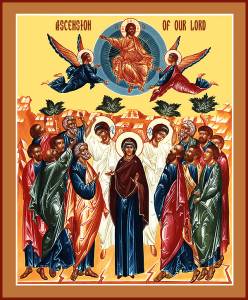
The Ascension is celebrated forty days after Pascha, always on a Thursday. Christ ascends into heaven in His glorified human nature. This means our humanity is lifted up in Him.
Pentecost is celebrated fifty days after Pascha. The Holy Spirit descends upon the apostles, and the life of the Church is revealed to the world. Pentecost is not merely the birthday of an institution. It is the manifestation of the Spirit-filled Body of Christ.

The Transfiguration is celebrated on August 6. Christ reveals His divine glory on Mount Tabor before Peter, James, and John. This feast shows what human life is called to become by grace: filled with the light of God.

The Dormition of the Theotokos is celebrated on August 15. This feast remembers the falling asleep of the Mother of God. It proclaims hope in the Resurrection and honors the one who bore Christ in her womb.

New Calendar Vs. Old Calendar
Many people ask about the Old Calendar and the New Calendar. Our parish follows the New Calendar. That is why we celebrate Christmas on December 25. Some Orthodox Christians follow the Old Calendar for fixed feasts, which means their December 25 currently falls on January 7 on the civil calendar.
This can sound confusing, but the basic point is simple. Both Old Calendar and New Calendar Orthodox Christians are celebrating the Nativity of Christ on December 25 according to the calendar they use liturgically. For Old Calendar parishes, December 25 on their church calendar appears as January 7 on the civil calendar. So when people say “Old Calendar Christmas is January 7,” that is how it appears on the civil calendar, but in the rubrics and liturgical books, the feast is still December 25.
This calendar difference should not become a source of pride or argument. The Orthodox Church has lived with this difference for a long time. The more important question is whether we are actually keeping the feast with prayer, fasting, repentance, worship, and joy. A person can argue about calendars and still miss Christ. A person can keep the feast quietly and faithfully and be deeply formed by the Church.
For catechumens, the practical path is simple. Follow the calendar of your parish. Come to the services. Learn the feasts by living them. Let the rhythm of the Church become the rhythm of your life. Over time, the calendar will stop feeling like a list of dates and start feeling like home.
Most Commonly Asked Questions
Why does Orthodox worship feel so different from other churches?
Orthodox worship feels different because it comes from the ancient life of the Church, not from modern religious culture. It is built around prayer, Scripture, sacrifice, beauty, reverence, and the Eucharist. It may feel unfamiliar at first, but it is meant to form you over time, not impress you in one visit.
Do Orthodox Christians worship icons?
No. Orthodox Christians worship God alone. We honor icons because Christ truly became man, and because the saints are alive in Him. The honor given to an icon passes to the person shown in it, not to the wood or paint.
Why is the service so long?
Orthodox worship is not designed around convenience. It is designed around entering the prayer of the Church. The length gives room for Scripture, repentance, hymns, thanksgiving, and Holy Communion. Over time, what once felt long often begins to feel necessary.
Do I need to understand everything before I can benefit from the Liturgy?
No. You should keep learning, but you do not need to understand everything before you come and pray. A child does not understand every word at the family table, but he still belongs there and grows there. Come faithfully, ask questions, and let the Church teach you.
What should I do next?
Start by attending Vespers and the Divine Liturgy regularly. Stand, listen, pray, and do not worry about mastering everything at once. Begin learning the calendar, the basic structure of the Liturgy, and the meaning of the major feasts. Most of all, speak with your priest and catechist so your learning stays connected to real life in the Church.
A Pastoral Closing
Orthodox worship is not something you figure out from the outside. You learn it by entering it. Come to the services. Let the hymns, icons, incense, prayers, readings, fasting seasons, feasts, and Holy Communion teach you how to live as an Orthodox Christian. The goal is not to become an expert in religious customs. The goal is to be united to Christ in His Church and to let your whole life become worship.
If you’re working through this and need guidance, reach out to Fr. Stephen at frsteve@savannahorthodox.com AND Anthony at anthony@anthonyally.com. CC us both.