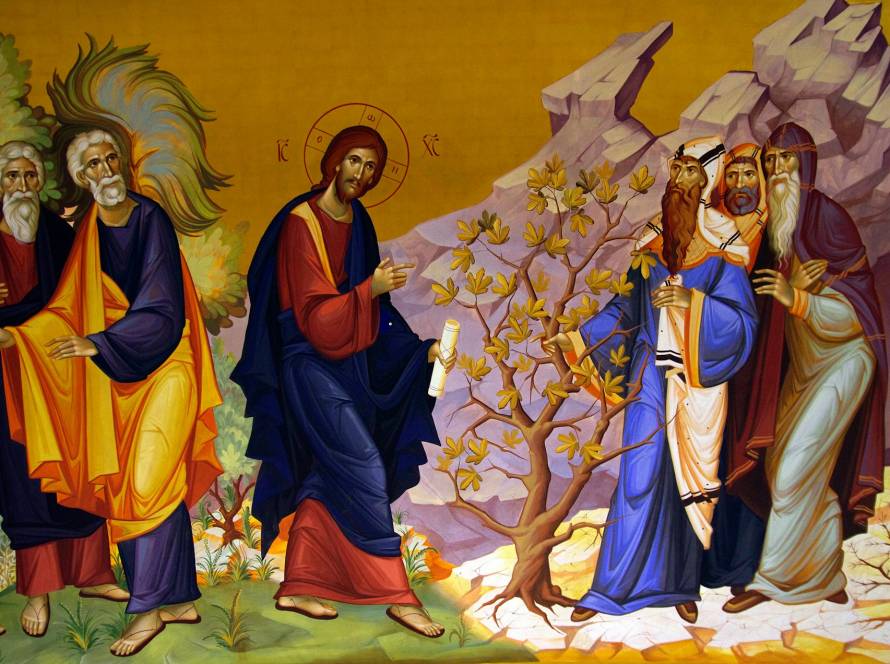
Holy Scripture and Holy Tradition belong together in the life of the Orthodox Church. The Bible is not a book that fell from heaven by itself, and Holy Tradition is not a collection of human opinions added later. Both are part of the one life of the Church, given by the Holy Spirit and received from the Apostles.
The Orthodox Church teaches that the Bible is the inspired Word of God, read, prayed, preached, and understood within the Church. We do not place Scripture against the Church or Tradition against Scripture. The same Holy Spirit who inspired the Scriptures also guides the Church in receiving, preserving, interpreting, and living them.
The Bible in the Life of the Church
The Bible is the written Word of God. It contains the Old Testament and the New Testament. The Old Testament tells the story of creation, the fall, God’s covenant with Israel, the Law, the prophets, the Psalms, and the long preparation for Christ. The New Testament proclaims the coming of Jesus Christ, His life, death, Resurrection, Ascension, the life of the Apostles, and the teaching of the early Church.
Orthodox Christians do not treat the Bible as a private religious handbook where each person decides the meaning for himself. Scripture is the Church’s book. It was written within the life of God’s people, preserved by the Church, copied by the Church, read in the Church, preached in the Church, and interpreted in the Church.
St. Paul says that “all Scripture is given by inspiration of God” (2 Timothy 3:16). This means Scripture is not merely human religious writing. God truly speaks through it. At the same time, God used real human authors, languages, histories, and situations. Because of this, we read Scripture with reverence, attention, humility, and the mind of the Church.
The Bible is central to Orthodox worship. The Psalms fill the services. The Gospel is carried in procession, kissed, read aloud, and honored. Old Testament readings prepare us for the feasts. The Divine Liturgy is full of Scripture, even when we do not notice it at first. The Church does not honor the Bible less because she reads it in worship. She honors it rightly.
For a catechumen, Scripture should become familiar. Begin with the Gospels. Read slowly. Do not rush to master everything. Let Christ speak. Then continue with Acts, the Epistles, the Psalms, and the Old Testament. Read with prayer and bring your questions to the Church.
Scripture Was Received by the Church
The Church did not invent Scripture, but the Church did receive and recognize Scripture. The Apostles preached Christ before the New Testament was completed. The Church worshiped, baptized, celebrated the Eucharist, ordained clergy, taught the faith, and suffered martyrdom before there was a printed Bible or a settled New Testament list in every place.
This matters because some people speak as if Christianity began with each believer alone and a Bible in hand. That is not how the Christian faith came to us. Christ founded the Church. The Apostles handed down the faith. The Scriptures were written, copied, guarded, and recognized within that same apostolic life.
St. Paul tells the Christians in Thessalonica, “Stand fast and hold the traditions which you were taught, whether by word or our epistle” (2 Thessalonians 2:15). Notice that the apostolic teaching came both in written form and spoken form. The Church received both. Holy Tradition is not a rival to Scripture. It is the living apostolic faith in which Scripture is rightly received.
The Church also had to discern which writings were truly apostolic and which were not. Many texts existed in the ancient world. The Church received the four Gospels, the apostolic letters, Acts, Revelation, and the Old Testament as Scripture. This was not done by private opinion, but by the Church’s worship, teaching, pastoral discernment, and guidance by the Holy Spirit.
St. Irenaeus of Lyons, writing in the second century, pointed Christians back to the apostolic faith preserved in the Churches founded by the Apostles. He did this because false teachers were also quoting Scripture. The question was not simply, “Who has Bible verses?” The deeper question was, “Who has the apostolic faith by which Scripture is rightly understood?”
This is why Scripture cannot be separated from the Church. A Bible removed from the Church can be twisted into many meanings. History shows this clearly. People quote Scripture to defend opposite doctrines, rival churches, and private opinions. The Orthodox Church receives Scripture within the same worship, sacraments, doctrine, and holiness that have been handed down from the beginning.
Holy Tradition: Living Faith, Not Just Custom
Holy Tradition is the life of the Holy Spirit in the Church. It is the apostolic faith handed down through Scripture, worship, councils, icons, sacraments, prayers, hymns, fasting, the lives of the saints, and the teaching of the Fathers. It is not dead custom. It is not nostalgia. It is not “things old people like.” Holy Tradition is the living memory and life of the Church.
It is important to make a careful distinction. There is what we might call “big T” Tradition and “little t” traditions. Big T Tradition is the faith itself: the truth about God, the Holy Trinity, Jesus Christ, the sacraments, the life of prayer, repentance, and holiness. This is unchanging because it comes from Christ and the Apostles.
Little t traditions are the cultural expressions that surround the life of the Church. These can include food festivals, ethnic clothing, architectural styles, languages, musical settings, and local customs. These can be beautiful and meaningful, but they are not the same as the faith itself. They can change, adapt, and differ from place to place.
Confusion happens when people treat cultural customs as if they were the faith, or when they reject the faith because they misunderstand the customs. The Orthodox Church is not Greek, Russian, Romanian, or any other ethnicity at its core. The Church is the Body of Christ, open to all people.
This is why the Church rejects phyletism, the idea that the Church should be divided or defined by ethnicity or national identity. Phyletism was condemned as a heresy because it replaces the unity of the Church with human divisions. In Christ, “there is neither Jew nor Greek” (Galatians 3:28). The Church gathers all people into one Body, one faith, one baptism.
This does not mean culture is unimportant. Culture can serve the Gospel. It can help people express their faith. But it must never replace the Gospel or divide the Church. The faith is not tied to one culture. It is for the whole world.
Holy Tradition teaches us how to read the Bible. It shows us that Christ is the center of Scripture. It teaches us to read the Old Testament as preparation for Him and the New Testament as the proclamation of His saving work. It also protects us from strange interpretations that cut Scripture away from the faith of the Apostles.
A common misunderstanding is that Tradition means man-made additions to the Bible. That can happen in religious life, and the Church is not blind to the danger of empty customs. Christ Himself warned against human traditions that make void the commandment of God. But Holy Tradition is not that. Holy Tradition is the apostolic faith, the life given by Christ and carried in the Church by the Holy Spirit.
Another misunderstanding is that “Bible alone” is the safest path. It sounds simple, but it does not match how the Bible came to us. The Bible itself points us to the Church, to apostolic teaching, to bishops and presbyters, to the Eucharist, to baptism, to prayer, and to the life of the Body of Christ. Scripture never teaches us to separate itself from the Church.
For Orthodox Christians, Holy Tradition is practical. It teaches us how to pray, how to fast, how to worship, how to repent, how to prepare for Communion, how to celebrate feasts, and how to live as Christians in the world. It gives form to the Christian life so that faith does not remain vague or abstract.
The right approach is not to oppose Scripture and Tradition, but to receive both within the Church. Read the Bible. Come to the services. Listen to the hymns. Learn the Creed. Ask questions. Let the Church train your mind and heart. Over time, Scripture opens more deeply when it is read in the same life that gave it to us.
Phyletism and the Unity of the Church
The Orthodox Church makes a clear distinction between cultural traditions and the faith itself, and this is where the danger of phyletism must be addressed directly. Phyletism is the idea that the Church should be organized or defined primarily by ethnicity, nationality, or cultural identity. The Church has condemned this as a heresy because it replaces the unity of Christ with human divisions.
In Christ, the Church is one Body. As Scripture says, “There is neither Jew nor Greek… for you are all one in Christ Jesus” (Galatians 3:28). This does not erase culture, but it puts culture in its proper place. The Gospel gathers people from every nation into one faith, one baptism, and one life in Christ.
This is why we must be careful not to confuse “little t” traditions with the life of the Church itself. Food festivals, languages, architectural styles, and musical settings can differ from place to place, and they can be good and beautiful. But they are not the faith. When these things begin to define the Church or exclude others, they distort the Gospel.
The Orthodox Church is not Greek, Russian, Romanian, or any other ethnicity at its core. It is the Church of Jesus Christ. Every culture is called to be purified and fulfilled in Christ, not to replace Him. The faith remains the same, even as it is lived out in different cultures.
For a catechumen, this is important to understand early. You may encounter different languages, foods, or customs depending on the parish. Do not mistake these for the essence of Orthodoxy. Look for the faith: the same Christ, the same Gospel, the same sacraments, the same call to repentance and holiness. That is where the true unity of the Church is found.
Most Commonly Asked Questions
Do Orthodox Christians believe the Bible is the Word of God?
Yes. The Orthodox Church teaches that the Bible is the inspired Word of God. We read it with reverence, proclaim it in worship, and receive it as part of the life of the Church.
What is the difference between Tradition and traditions?
Holy Tradition is the apostolic faith and life of the Church given by the Holy Spirit. Traditions can also refer to local customs, cultures, and practices. These can be helpful, but they are not the same as the unchanging faith of the Church.
Why does the Orthodox Church reject phyletism?
The Church rejects phyletism because the Church is not based on ethnicity or nationality. In Christ, all people are called into one Body. The faith is for everyone, not tied to one culture or nation.
Why can’t I just read the Bible on my own?
You should read the Bible, but not in isolation. Scripture belongs to the Church. Without the apostolic faith and life of the Church, it is easy to misunderstand or twist its meaning.
How should I start learning Scripture and Tradition?
Begin with the Gospels, attend the services, and listen carefully to the prayers and hymns. Ask questions, stay close to your priest or catechist, and let the Church guide you into understanding.
A Pastoral Word
Holy Scripture and Holy Tradition are not burdens placed on you. They are gifts that keep you rooted in the truth of Christ. Do not get lost in arguments or distractions. Stay grounded in the life of the Church, and let God teach you through what He has already given.
If you’re working through this and need guidance, reach out to Fr. Stephen at frsteve@savannahorthodox.com AND Anthony at anthony@anthonyally.com. CC us both.