For the first time in this “Almost Christian” series, we are moving out of the world of movies, songs, and books and into video games. Video games present an interesting challenge because they do not simply tell us a story. They ask us to enter that story, spend time with its characters, struggle through its world, and sometimes make that world our home for dozens of hours.
Final Fantasy VI is a particularly good place to begin. Released by Square in 1994, the game tells the story of a world dominated by an empire seeking magical power, a mysterious young woman named Terra, a large group of unlikely companions, and one of the most memorable villains in video game history: Kefka Palazzo. What begins as a fairly familiar struggle against an evil empire eventually becomes something much deeper, because the heroes actually fail to prevent the destruction of the world.
That failure is what makes Final Fantasy VI so interesting from an Orthodox Christian perspective. The game is certainly not secretly Christian, and we should not force Christian meanings onto every scene or character. Yet its story contains striking echoes of truths Christianity has proclaimed for centuries: evil cannot create, suffering does not make life meaningless, love reveals something essential about being human, despair is not the final word, and even a terribly wounded world can still be worth saving.
A World Worth Saving
The first half of Final Fantasy VI follows a group of characters trying to stop the Gestahlian Empire from abusing the power of magic. Terra Branford begins the story as a young woman whose will has been stolen through a slave crown. Locke, Edgar, Sabin, Celes, Cyan, and many others gradually become part of a resistance against the Empire and its increasingly dangerous servant, Kefka.
At first, the moral shape of the story seems simple. There is an empire abusing its power, and the heroes must stop it. Then everything changes. Kefka gains extraordinary power, moves the Warring Triad, destroys the balance of the world, and leaves civilization shattered.
This is one of the things that separates Final Fantasy VI from many heroic stories. The heroes do not save the world before disaster strikes. They lose. Towns are destroyed, people die, landscapes are transformed, friends are separated, and the second half of the game begins in what is literally called the World of Ruin.
Yet the game continues. That simple fact contains one of its most powerful ideas. The world has been broken, but it has not become worthless.
The Christian Answer to a Broken World
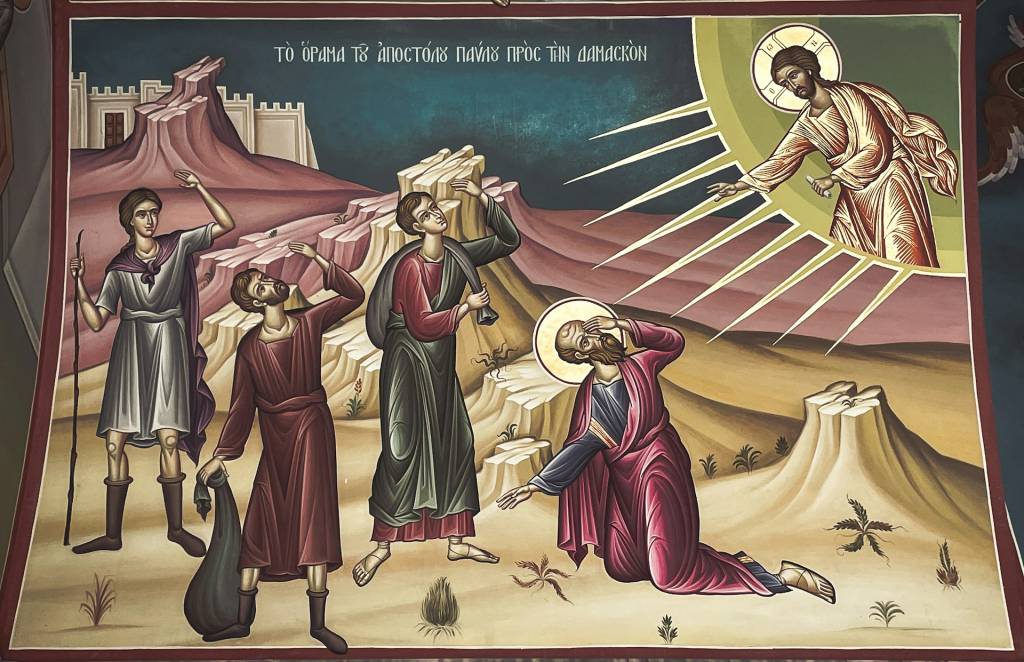
Orthodox Christianity begins with a similar recognition about the world we actually inhabit. Creation is good because God created it good, yet the world has been wounded by sin and death. We do not live in Eden, and Christianity has never required us to pretend that suffering, injustice, disease, violence, and death are illusions.
St. Paul describes creation as groaning and suffering as it waits for redemption in Romans 8. The Christian response to this groaning is neither denial nor despair. Orthodox Christians believe that creation remains beloved by God even in its fallen condition, and that its wounds do not erase its original goodness or its final purpose.
This is one reason the World of Ruin in Final Fantasy VI feels strangely familiar from a Christian perspective. The heroes awaken in a world where everything they had hoped to preserve appears to have been lost. The question is no longer simply whether Kefka can be defeated. The deeper question is whether anything still matters after so much has been destroyed.
Kefka gives one answer. The heroes give another.
Kefka and the logic of nihilism
Kefka gradually becomes more than a cruel villain who enjoys destruction. By the end of Final Fantasy VI, he represents something close to nihilism. He looks at suffering, loss, and death and concludes that these things prove that life itself has no lasting meaning.
His reasoning is seductive because it begins with something true. People suffer. Everything we build eventually passes away. Human beings lose people they love, dreams collapse, nations disappear, and every earthly life ends in death.
Kefka takes those facts and draws the darkest possible conclusion from them. If everything dies, why bother living? If things can be destroyed, why bother building? If love eventually brings grief, why bother loving?
Christianity does not answer those questions by pretending suffering is less terrible than it really is. The Orthodox Church teaches that death is an enemy, not simply a natural stage that we should learn to accept without grief. At the tomb of Lazarus, Jesus Christ Himself weeps, even though He knows what He is about to do.
The Christian answer to nihilism is resurrection. Death is real, but death does not possess the final word about creation. Suffering is real, but suffering cannot prove that love is meaningless.
Final Fantasy VI cannot give the full Christian answer because it does not have the Gospel at its center. What it does understand, however, is that Kefka’s conclusion is false. The existence of suffering does not prove that nothing matters.
The heroes answer Kefka by living
One of the most beautiful things about the game is that the heroes do not defeat Kefka with a philosophical lecture. Their answer is found in the lives they have chosen to live. When Kefka asks what meaning people can possibly find in a dying world, each character can point toward something worth living for.
For some, it is friendship. For others, it is family, memory, responsibility, love, or the hope of rebuilding. These things may appear small beside Kefka’s godlike power, but that is exactly the point.
Kefka possesses tremendous power and has almost nothing worth living for. The heroes have suffered terrible losses and still discover reasons to love. The contrast suggests that power cannot answer the deepest questions of human existence.
Orthodox Christians believe something similar. The purpose of human life is not domination, comfort, or even survival. Human beings were created for communion with God and with one another, and therefore a life shaped by self-giving love is closer to our true humanity than a life built around power.
Terra and the discovery of love
Terra’s story makes this especially clear. She begins Final Fantasy VI uncertain about what it means to love. Because of her unusual origin and the manipulation she has suffered, she wonders whether she is even capable of the kind of love she sees in other people.
At first, Terra’s importance seems connected to her power. She is half human and half Esper, which makes her extraordinarily valuable to people who want to control magic. The Empire sees her as a weapon, and much of the early story revolves around what she can do.
But Terra eventually discovers herself not through greater power, but through love. Her relationship with the orphaned children of Mobliz gives her something she could never gain through magical strength. She learns to care for others, to protect them, and to give herself for them.
This comes surprisingly close to a Christian understanding of the human person. The Orthodox Church teaches that we become truly ourselves not through isolation or self-assertion, but through communion and love. A human being is not merely an individual collection of desires and abilities; we were created to give and receive love.
St. John tells us simply that “God is love” in 1 John 4:8. This does not mean that every feeling called love is automatically holy. It means that self-giving love has its ultimate source and fulfillment in God.
Terra’s story therefore contains an almost Christian insight. She spends much of the game wondering what makes her human, and the answer is not biology. Her humanity becomes clearest when she learns to love.
Celes and the movement from despair toward life
The story of Celes in the World of Ruin may be the darkest and most powerful part of Final Fantasy VI. After the catastrophe, Celes awakens on a small island with Cid. She does not know whether any of her friends survived, and the world she knew appears to be gone.
Depending on what happens with Cid, Celes can reach a point of terrible despair. Believing herself alone, she loses the will to continue living. Yet her story does not end there.
A small sign gives her reason to believe that someone else may still be alive. Hope returns, and Celes leaves the island to search for her friends. From that point forward, the player begins gathering the scattered members of the old group and discovering that life has continued throughout the ruined world.
There is something almost resurrectional about the structure of this part of the story. Celes moves from hopelessness toward hope, from isolation toward communion, and from an apparent ending toward a new beginning. The world itself seems dead, yet signs of life continue appearing.
Christian hope goes much further than this. Our hope is not merely that things might improve or that enough people we love might still be waiting somewhere. Orthodox Christians believe that the Resurrection of Jesus Christ has changed the meaning of death itself and that those united to Him are called toward eternal life.
Still, Final Fantasy VI understands something important about despair. Despair tells us that the story is over when it is not. It takes the darkness of the present moment and declares that darkness to be the whole truth.
The Christian spiritual tradition repeatedly warns against this temptation. The Fathers knew that despair can become a powerful weapon because it convinces a person that repentance, healing, prayer, or another beginning is pointless. Hope does not require us to deny our wounds; it requires us to refuse to worship them.
Evil cannot create anything of its own
Kefka’s great achievement is destruction. He destroys people, cities, relationships, landscapes, and eventually much of civilization itself. Yet for all his power, there is something he never manages to do: create something truly good.
This fits remarkably well with the historic Christian understanding of evil. Evil is not a substance created alongside goodness. It is a corruption, distortion, or misuse of what God has made.
St. Athanasius describes evil in terms of humanity turning away from God and moving toward corruption and non-being. Evil has no independent creative existence. It feeds upon what is good and damages it.
That is Kefka almost perfectly. He can take power and corrupt it. He can take a kingdom and terrorize it. He can take a beautiful world and scar it. But he cannot produce the kinds of things that ultimately defeat him: love, loyalty, sacrifice, friendship, family, and hope.
There is an important spiritual lesson here. Destruction can look powerful because it often happens quickly. Building a family may take decades, while violence can tear one apart in minutes. A church may take generations to establish, while fire can destroy a building overnight.
Yet destruction’s speed should not be confused with creative power. Evil is always dependent upon something good that existed before it. The devil does not create a new humanity; he seeks to deform the humanity God created.
Why hope matters more in the World of Ruin
Hope would mean much less in Final Fantasy VI if the heroes had simply prevented every tragedy. The World of Ruin gives their hope weight. They choose to keep living after discovering exactly how much can be lost.
This is one of the game’s strongest almost Christian themes. Hope is not optimism. Optimism expects circumstances to improve, while Christian hope can survive even when circumstances become worse.
St. Paul writes that “suffering produces endurance, and endurance produces character, and character produces hope” in Romans 5:3-4. That is a strange statement unless hope means something deeper than expecting an easy outcome. Christian hope is rooted ultimately in God, which means it can exist beside tears, grief, persecution, sickness, and death.
The characters of Final Fantasy VI do not all recover what they lost. Cyan cannot undo the poisoning of Doma or bring his wife and son back. Locke cannot erase his past. Setzer cannot restore everything that disappeared from his life.
What they can do is decide what they will become in response to loss. Their wounds can become reasons to withdraw from life, or those same wounds can deepen their love for others. The game repeatedly chooses the second path.
A broken world is still worth loving
This may be the most Christian-sounding idea in the entire game. The heroes do not fight Kefka because defeating him will magically restore everything to the way it was. The old world is gone.
They fight because the wounded world that remains is still worth saving. Children still need someone to care for them. Friends are still worth finding. Communities can still be rebuilt. Flowers can still grow in ruined places.
Orthodox Christianity offers an even stronger reason to love this wounded creation. God has not abandoned what He made. The Incarnation, Resurrection, and promised renewal of creation reveal that God’s answer to the brokenness of the world is not simply to throw creation away.
That should shape the way Christians look at other people as well. A wounded person is not a worthless person. A sinner is not disposable. Someone’s brokenness does not erase the image of God.
That does not mean evil should be ignored or suffering romanticized. The heroes of Final Fantasy VI do not look at Kefka’s destruction and call it beautiful. They recognize evil as evil precisely because they still believe there are good things worth defending.
Where Final Fantasy VI falls short
This is where the title “Almost Christian” matters. We can recognize these echoes without pretending Final Fantasy VI teaches Orthodox Christianity. It does not.
The game knows that nihilism is wrong, but it cannot fully explain why existence has meaning. It knows that love is greater than power, but it cannot identify the ultimate source of love. It knows that hope should survive death and destruction, but it cannot promise resurrection.
Christianity can make those claims because its hope is not merely an idea. The Orthodox faith proclaims that death has been confronted and defeated in Christ. Our hope therefore rests upon something greater than human determination or the ability to rebuild after tragedy.
This distinction is important whenever Christians find spiritual themes in popular culture. We do not need to baptize every good story or pretend its creators intended a Christian message. Truth can be reflected imperfectly, and human beings made in the image of God can recognize parts of that truth even when they do not see the whole picture.
That is what makes stories like Final Fantasy VI useful for reflection. They can ask good questions. Sometimes they can even stumble remarkably close to good answers.
From the World of Ruin to Christian hope
Final Fantasy VI asks what remains when almost everything has been taken away. Kefka believes the answer is nothing. The heroes discover that love remains, duty remains, friendship remains, and hope remains.
The Orthodox Church would take the answer further. God remains. Because of that, even death cannot finally reduce human existence to nothing.
That is the difference between an almost Christian story and the Christian Gospel itself. A great story may awaken our longing for redemption, teach us to hate evil, or remind us that love is stronger than selfish power. The life of the Church invites us not merely to admire those things in fiction, but to enter the reality toward which they point through prayer, repentance, the Holy Mysteries, worship, and a life of communion with God.
There is also a practical reason I am excited to move “Almost Christian” into video games. There are a lot of games worth writing about, probably far more than I will ever have time to cover myself. Watching a two or three hour movie for an article is usually manageable, but an eight, twenty, or forty hour game becomes a little more difficult when you are also a full-time priest, web developer, husband, and father.
So I would especially welcome submissions and suggestions from people who know these games well and want to examine them carefully through an Orthodox Christian lens. The goal is not to find secret Christianity hidden inside every piece of popular culture, but to notice those moments when a story reflects fragments of truth and then ask where the fullness of that truth can actually be found. If you have a game, movie, song, book, or other work you think belongs in “Almost Christian,” you can send your suggestion to me, Fr. Stephen, at frsteve@savannahorthodox.com.
Frequently Asked Questions About Final Fantasy VI and Christianity
Is Final Fantasy VI a Christian game?
No. Final Fantasy VI is not a Christian game and does not present the theology of the Orthodox Church. It does, however, contain themes of hope, sacrificial love, resistance to evil, and the rejection of nihilism that Christians can thoughtfully examine.
What is the main message of Final Fantasy VI?
One of the game’s strongest messages is that life remains worth living even after terrible suffering and loss. Its heroes discover meaning through relationships, love, responsibility, friendship, and hope rather than through power.
What does Kefka represent in Final Fantasy VI?
Kefka can be read as representing a form of nihilism in which death and suffering are taken as proof that nothing ultimately matters. His inability to create anything truly good also resembles the Christian understanding of evil as a distortion and corruption of what is good.
What does Terra learn in Final Fantasy VI?
Terra begins the story uncertain about love and even about her own humanity. She eventually discovers through caring for others that love, rather than magical power, reveals something much deeper about who she is.
Why is the World of Ruin important in Final Fantasy VI?
The World of Ruin forces the characters to decide whether life remains meaningful after their apparent defeat. Their decision to reunite, love, rebuild, and resist Kefka gives the game’s message of hope much greater weight because that hope exists in a genuinely wounded world.