For those who have been following along, “Almost Christian” is a series examining the spiritual themes found in popular media through the lens of Orthodox Christianity, showing how these works can reflect fragments of truth while falling short of the fullness of the faith. Until now, we have looked largely at films, music, video games, television, and other forms of popular culture. With Fyodor Dostoevsky’s The Brothers Karamazov, we turn to a book for the first time, and perhaps there is no better novel with which to begin.
The Brothers Karamazov is different from many works considered in this series because Dostoevsky was himself deeply shaped by Orthodox Christianity. The novel does not merely borrow Christian images from the surrounding culture. It wrestles directly with God, freedom, sin, repentance, suffering, judgment, love, and the possibility of salvation.
Yet the title “Almost Christian” still fits, because so many people within the novel live with fragments of Christianity while stopping short of its fullness. We encounter compassion without hope, freedom without truth, guilt without repentance, religion without love, intellect without humility, and desire without self-control. Dostoevsky places these incomplete visions beside lives that begin to show another possibility: the human person being transformed through repentance, communion, sacrifice, and love.
Ivan Karamazov and the Problem of Suffering
Ivan gives voice to one of the oldest and most painful objections to Christianity. If God is good, why do innocent people suffer? He focuses especially on children, gathering horrifying examples of cruelty and asking how any future harmony could possibly justify what they endured.
His argument matters because Dostoevsky does not make Ivan foolish. Ivan is intelligent, compassionate, and morally horrified by evil. The novel allows his objection to hurt because the suffering of innocent people should hurt us too.
Ivan eventually says that he wants to “return the ticket.” His protest is deeper than simply saying that God does not exist. Even if everything were somehow explained at the end of history, Ivan says that he would refuse a world in which such suffering was permitted to occur.
The Orthodox Church does not answer this by pretending suffering is easily explained. Scripture itself contains Job crying out in anguish, the Psalmist asking, “Why hast thou forsaken me?” and the martyrs asking God how long injustice will continue. Christianity does not give us a mathematical formula that makes a murdered child, a grieving mother, or an innocent victim suddenly acceptable.
The Cross Does Not Explain Suffering Away
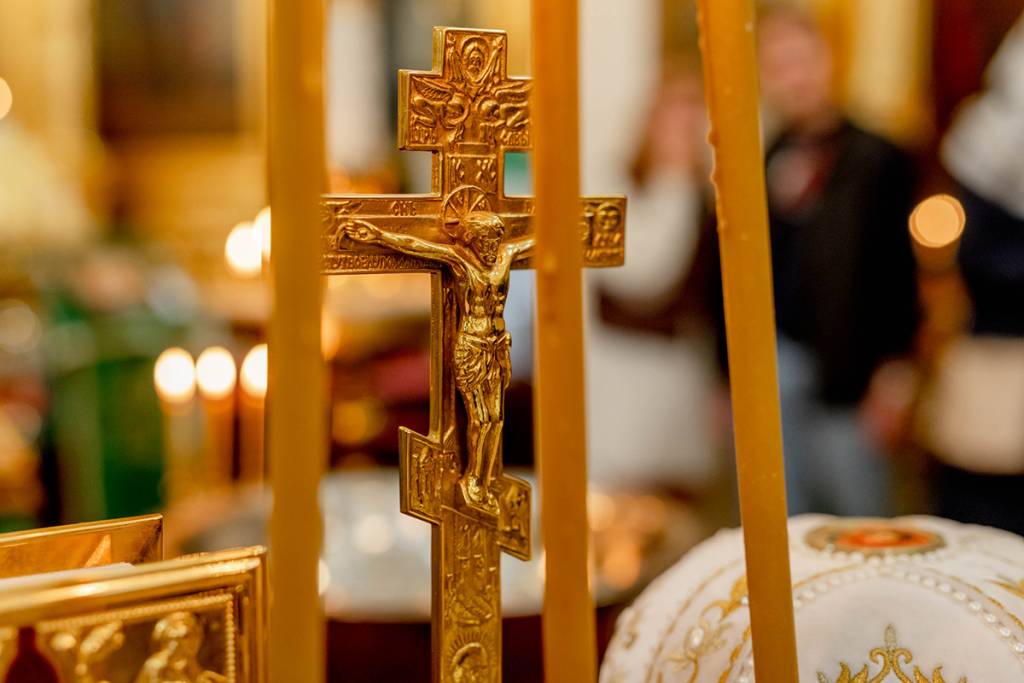
The Christian answer begins somewhere more difficult. God does not remain distant from human suffering. Jesus Christ enters it, accepts betrayal, humiliation, torture, abandonment, and death, and transforms death from within through the Resurrection.
This does not mean Christians should tell someone in pain that everything happens for a reason and move on. At the tomb of Lazarus, Christ weeps before He raises His friend from the dead. Orthodox Christians believe that we are called to enter another person’s suffering with compassion, prayer, mercy, and hope rather than treating suffering as an intellectual puzzle.
The Grand Inquisitor
Ivan’s most famous challenge comes in the story he tells Alyosha about the Grand Inquisitor. Christ returns during the Spanish Inquisition and is immediately arrested. The old Inquisitor explains that Christ made a terrible mistake by giving humanity freedom.
The Inquisitor believes most people do not truly want freedom. They want bread, security, certainty, miracles, and someone powerful enough to tell them what to do. He believes humanity would be happier if freedom were taken away and people were simply managed.
This brings the novel close to the heart of the Christian understanding of the human person. God desires our love, but love cannot be forced. The Orthodox Church teaches that human freedom is wounded by sin, yet it remains essential to our relationship with God because obedience without freedom would not be love.
The temptations described by the Inquisitor deliberately echo Matthew 4. Christ refuses to turn stones into bread simply to prove Himself, refuses to throw Himself from the Temple to compel belief through spectacle, and refuses earthly dominion purchased through submission to evil. The Inquisitor believes Christ should have accepted what He refused.
The Answer Is a Kiss
Then comes one of the most beautiful moments in the novel. After the Inquisitor finishes his long argument, Christ does not answer him with another argument. He approaches the old man and kisses him.
The silence matters. The Inquisitor has constructed an entire system explaining humanity, religion, power, and freedom. Christ answers personally, with an act of love that the Inquisitor cannot fit into his system.
There is something deeply Christian here. The faith is not merely a collection of arguments that we master. Christianity is communion with the living God, and truth must become life within us.
St. Paul says that even if he understands mysteries and possesses great knowledge, without love he is nothing in 1 Corinthians 13:2. Ivan possesses tremendous intellectual power, but intellect alone cannot heal the human heart. A person can understand arguments about love while remaining unable to love.
Ideas Have Consequences
Ivan’s struggle also raises the question commonly associated with the novel: if there is no God, is everything permitted? The exact popular wording is more complicated than it is sometimes presented, but the underlying question runs throughout the story. If human beings are only temporary collections of matter, what finally gives moral truth its authority?
Dostoevsky does not leave that question in a classroom. Ivan’s ideas reach Smerdyakov, who draws conclusions from them that Ivan himself is unwilling to carry out. Ivan does not murder his father, but he begins to understand that ideas can help create the moral world in which another person acts.
This should make Christians careful about what we teach, repeat, excuse, and normalize. Our words affect other people. The Lord warns in Matthew 18:6 about causing another person to stumble because our responsibility extends beyond the boundaries of our own private choices.

Elder Zosima and Active Love
Against Ivan’s intellectual rebellion stands Elder Zosima, but Zosima is not simply Dostoevsky’s competing philosopher. His answer is a way of life. He teaches repentance, humility, responsibility, and what he calls active love.
It is easy to love humanity in the abstract. We can speak passionately about justice, compassion, peace, and the human race while being irritated by the actual person sitting beside us. Active love means loving particular people, including inconvenient, wounded, irritating, and sinful people.
This echoes St. John the Theologian: “he who does not love his brother whom he has seen, cannot love God whom he has not seen” in 1 John 4:20. Orthodox Christianity is intensely practical at this point. Prayer, fasting, worship, and theology must bear fruit in mercy, patience, forgiveness, and love.
Guilty Before Everyone
One of Zosima’s most striking teachings is that each person bears responsibility before everyone and for everyone. This does not mean that we are legally guilty of crimes committed by strangers. It means that sin is never as isolated as we imagine.
We prefer to divide the world into innocent people and guilty people, usually placing ourselves comfortably among the innocent. Zosima points toward repentance instead. Before diagnosing everything wrong with the world, we should first ask how our own pride, anger, selfishness, indifference, and lack of love contribute to the brokenness around us.
This is deeply consistent with Orthodox spiritual life. During the Prayer of St. Ephrem in Great Lent, Christians ask God to grant them the ability to see their own sins and not judge their brother. Repentance begins when we stop using the sins of others as a distraction from our own need for healing.
Hell and the Inability to Love
Zosima also describes hell in terms of the inability to love. This is important because Christianity is sometimes reduced to the idea that God rewards good people and angrily punishes bad people. The Orthodox understanding is deeper than a simple system of external rewards and penalties.
God is love, and eternal life is communion with Him. A heart that continually rejects love, mercy, repentance, and communion is therefore closing itself against the very life for which it was created. Hell is terrible precisely because the human person was made for love and can tragically refuse it.
When the Holy Elder Begins to Decay
Dostoevsky refuses to make faith easy even for Alyosha. After Zosima dies, many expect some visible confirmation of his holiness. Instead, his body begins to decay quickly, producing scandal and cruel gossip.
Alyosha is shaken because he expected holiness to be vindicated in an obvious way. His crisis exposes a temptation that still exists among religious people: we want signs. We want miracles, incorrupt bodies, dramatic experiences, and visible proof that the people we trust really are holy.
But faith cannot depend upon receiving the signs we demand. Christ warns against a generation continually seeking signs in Matthew 12:39. The Christian life is not built upon God performing on command but upon learning to trust Him even when events do not unfold according to our expectations.

Alyosha Must Leave the Monastery
Alyosha initially appears to belong safely within the monastery, but Zosima sends him back into the world. This is essential to understanding his character. His faith cannot remain protected from difficult people, family conflict, temptation, grief, and suffering.
The monastery forms him, but what he receives there must become active love outside its walls. The same is true for every Christian vocation. We cannot leave our Christianity inside the church building after the Divine Liturgy ends.
Alyosha becomes compelling because he rarely dominates anyone. He listens, stays present, forgives, encourages, and loves. He does not defeat Ivan by becoming more clever than Ivan; he answers him by becoming the kind of person Ivan’s philosophy cannot easily explain.
The Wedding at Cana
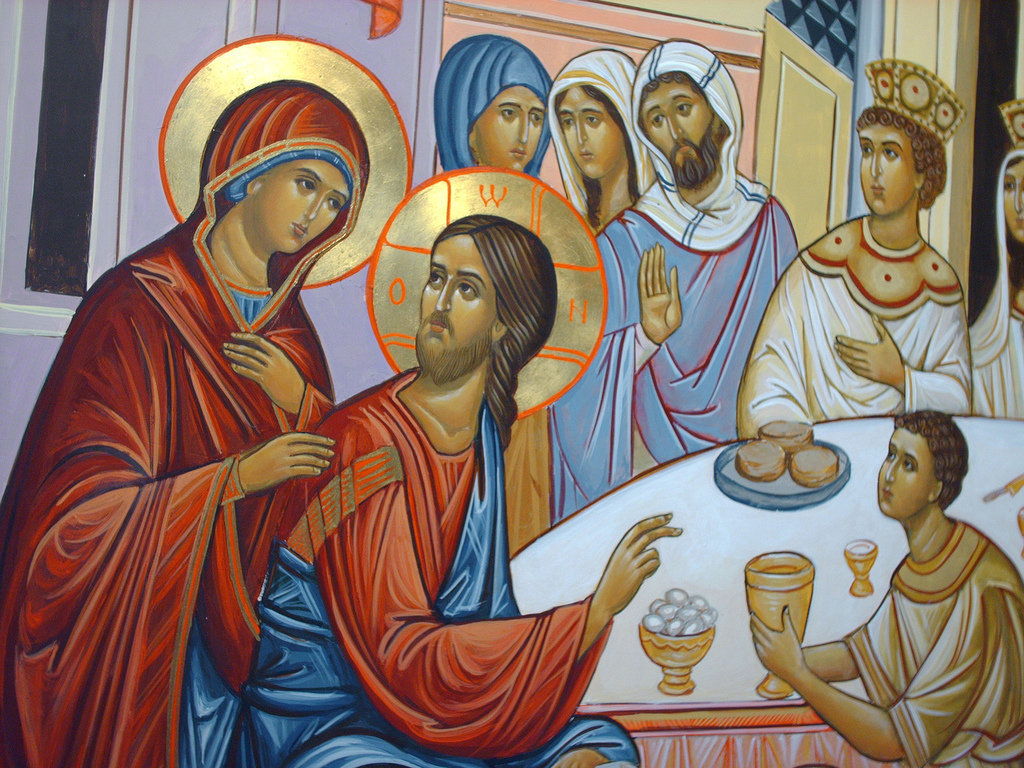
Alyosha’s crisis after Zosima’s death reaches its turning point as he hears the Gospel account of the wedding at Cana. He begins to see that the Kingdom of God is not opposed to everything human and joyful. Christ enters a wedding feast and blesses human celebration.
This is important for Orthodox Christianity. The goal of the spiritual life is not hatred of creation but its transfiguration. Water, oil, bread, wine, marriage, bodies, meals, friendship, art, and human relationships can all be offered to God and sanctified.
Alyosha does not emerge from his crisis by escaping the earth. He falls upon the earth, embraces it, and rises changed. His faith becomes less dependent upon the world meeting his expectations and more ready to love the world sacrificially.
Dmitri and the Beginning of Repentance
Dmitri Karamazov is far less outwardly religious than Alyosha. He is impulsive, jealous, lustful, angry, reckless, and sometimes violent. Yet beneath the chaos there remains a conscience capable of being wounded by the truth.
This makes Dmitri spiritually fascinating. His sins are serious, but he knows that something is wrong within him. He does not consistently defend his passions as virtues or pretend that his worst actions are simply expressions of his authentic self.
Orthodox Christians believe repentance is more than feeling guilty. The Greek word metanoia points toward a change of mind, heart, and direction. Repentance means turning toward God and allowing grace to begin reordering a life that has become disordered.
Guilty, Yet Not of the Crime
Dmitri is convicted of murdering his father even though he did not commit the murder. Yet his response becomes more complicated than merely insisting upon his legal innocence. He begins to recognize that although he is innocent of this particular crime, he is not an innocent man.
That distinction is profoundly important. Legal guilt asks whether I committed a particular act. Repentance asks what kind of person I have become and what within me still needs to be healed.
The Church does not teach us to confess imaginary crimes. It teaches us to stop hiding behind comparisons. We do not become righteous merely because someone else has committed a worse sin.
Grushenka and the Little Onion

The story of the little onion offers another picture of mercy. A wicked woman dies, and her guardian angel remembers that she once gave a single onion to a beggar. That tiny act of kindness becomes something by which she might be pulled from the fire.
But when others try to hold onto her as she is being pulled upward, she kicks them away and insists that the onion belongs to her alone. The onion breaks, and she falls back. The tragedy is not that her act of mercy was too small, but that selfishness still ruled her heart.
We should not turn this into a mechanical formula for salvation. Its beauty lies in showing that even a small movement toward mercy matters while reminding us that salvation cannot be separated from love of others. We cannot seek communion with God while demanding that everyone else be pushed away.
No One Is Only His Worst Moment
Dostoevsky refuses to reduce his characters to simple moral labels. Dmitri is more than his lust. Grushenka is more than her manipulation. Ivan is more than his doubt, and Katerina is more than her pride.
The Orthodox Church likewise distinguishes the human person from the passions that deform him. Sin is real and must never be excused, but sin is not our true identity. Every human being bears the image of God, even when that image has become difficult to recognize beneath layers of woundedness and sin.
This is why repentance is possible. Christianity does not tell us that our sins do not matter. It tells us that they do not have to have the final word.
Ilyusha and the Answer Ivan Cannot See
The suffering of children returns near the end of the novel through Ilyusha. Earlier, Ivan speaks about suffering children as part of his case against God. Alyosha encounters an actual suffering child and responds differently.
He cannot explain Ilyusha’s suffering away. He cannot construct an argument that makes the boy’s pain or death acceptable. He can love him, stand beside his family, care for the other boys, mourn with them, and refuse to let suffering isolate them from one another.
This may be Dostoevsky’s most powerful answer to Ivan. Christianity does not ask us to become comfortable with the suffering of children. It calls us to become the people who enter suffering with love and fight against the isolation, hatred, cruelty, and despair that suffering can produce.
Remember This Moment
After Ilyusha’s death, Alyosha gathers the boys and asks them to remember the love and friendship they have shared. He tells them that a good and holy memory from childhood may someday keep a person from great evil. Memory becomes something more than nostalgia.
Orthodox Christianity understands memory in a deeply spiritual way. The Church continually remembers the saving acts of God, the saints, the departed, and the mercy we have received. Holy memory helps shape the kind of person we become.
Alyosha therefore leaves the boys not with an explanation of death but with communion. Remember one another. Love one another. Do not allow suffering to make you cruel.
The Karamazov Within Us
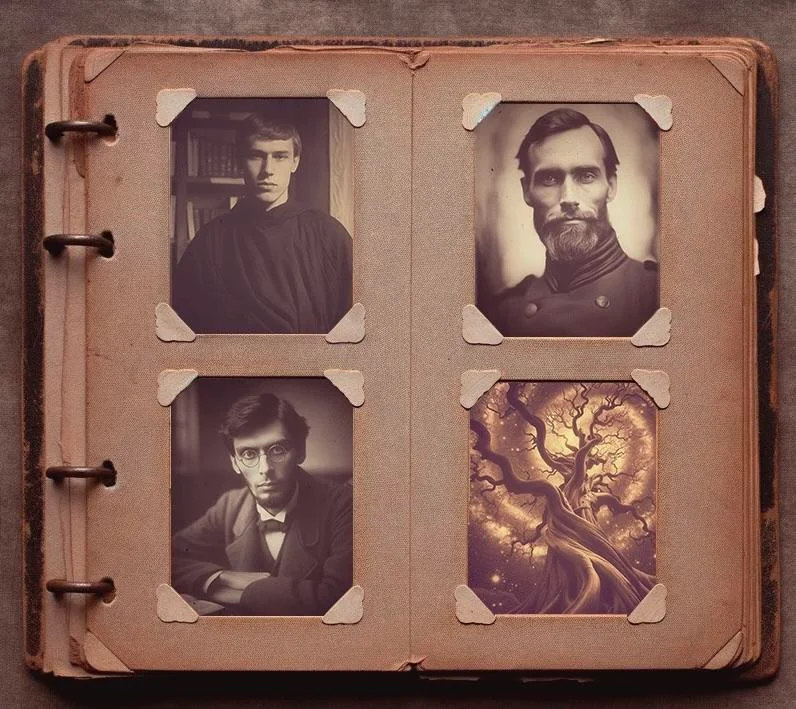
The three brothers can almost be seen as different parts of the human person. Dmitri is ruled by passion, Ivan by intellect, and Alyosha is drawn toward spiritual communion. Yet Christianity does not teach that the body is evil, the intellect is useless, and only the spiritual part matters.
The whole human person must be healed. Our desires must be purified rather than merely indulged, our intellect humbled and illuminated rather than discarded, and our spiritual longing directed toward God rather than vague religious feeling. Salvation concerns the whole person.
This is one reason the Karamazov brothers remain recognizable. Most of us have something of all three within us. We desire like Dmitri, question like Ivan, and sometimes long for God like Alyosha.
Why The Brothers Karamazov Is Almost Christian
Calling The Brothers Karamazov “Almost Christian” does not mean Dostoevsky accidentally stumbled across a few Christian ideas. The novel is far more consciously Christian than most works discussed under that title. Rather, the “almost” is found especially in the people Dostoevsky places before us and in the incomplete answers by which they try to live.
Ivan has compassion but cannot find hope. Dmitri recognizes guilt but must learn repentance. The Grand Inquisitor offers security without freedom. Others seek love while remaining trapped in pride, possession, resentment, or desire.
Alyosha and Zosima point toward something fuller. The answer to the broken human person is not simply a better theory. It is a life transformed through repentance, freedom, communion, mercy, sacrifice, and active love.
That is also where The Brothers Karamazov finally points beyond itself. A novel can awaken longing, expose contradictions, and help us recognize truths about ourselves. It cannot give us the Eucharist, absolution, Baptism, prayer, ascetic struggle, the communion of the saints, or the sacramental life of the Church.
The Orthodox Church teaches that Christianity is not primarily an idea to admire but a life into which we enter. The invitation is not merely to agree with Alyosha rather than Ivan. It is to repent, forgive, pray, worship, receive mercy, learn to love the difficult person before us, and become by grace what God created humanity to be.
The Brothers Karamazov refuses cheap Christianity because Dostoevsky refuses to make Ivan’s questions easy. The final Christian answer to suffering is not a clever sentence that makes evil reasonable. It is the crucified and risen Christ, and the lives of people who allow His love to become visible through them.
That is why this novel remains so powerful. Ivan asks questions that still trouble us, Dmitri shows how deeply the passions can wound us, Zosima calls us to responsibility, Alyosha shows us active love, and Ilyusha reminds us that suffering demands more than theories. The novel brings us very close to the door, but eventually every reader must decide whether to remain outside discussing Christianity or enter into the life of the Church and begin living it.
If you have a film, book, song, television series, game, or other work you would like considered for a future installment of “Almost Christian,” you can send your suggestion to Fr. Stephen at frsteve@savannahorthodox.com.
Frequently Asked Questions
Is The Brothers Karamazov a Christian book?
The Brothers Karamazov is deeply shaped by Dostoevsky’s Christian faith and contains explicitly Christian theological themes. It is still a novel rather than a catechism, so its characters and arguments should not simply be treated as official teachings of the Orthodox Church.
Was Fyodor Dostoevsky Orthodox Christian?
Yes. Dostoevsky was a Russian Orthodox Christian, and questions of faith, repentance, freedom, suffering, and resurrection became central to his mature writing. His personal religious journey and the Orthodox culture around him strongly influenced The Brothers Karamazov.
What does the Grand Inquisitor mean in The Brothers Karamazov?
The Grand Inquisitor argues that human beings would rather surrender freedom in exchange for security, bread, certainty, and authority. His argument challenges the Christian teaching that genuine love requires freedom and cannot simply be forced upon the human person.
What does The Brothers Karamazov say about the problem of evil?
The novel takes the problem of evil seriously through Ivan’s protest against innocent suffering. Rather than offering a simple philosophical explanation, Dostoevsky contrasts Ivan’s rebellion with repentance, compassionate presence, active love, and hope in resurrection.
What can Orthodox Christians learn from The Brothers Karamazov?
The novel offers powerful reflections on repentance, freedom, responsibility, suffering, mercy, and the danger of separating knowledge from love. Its strongest lesson may be that Christianity must become more than something we argue about: it must become a life of communion with God and active love for the person before us.