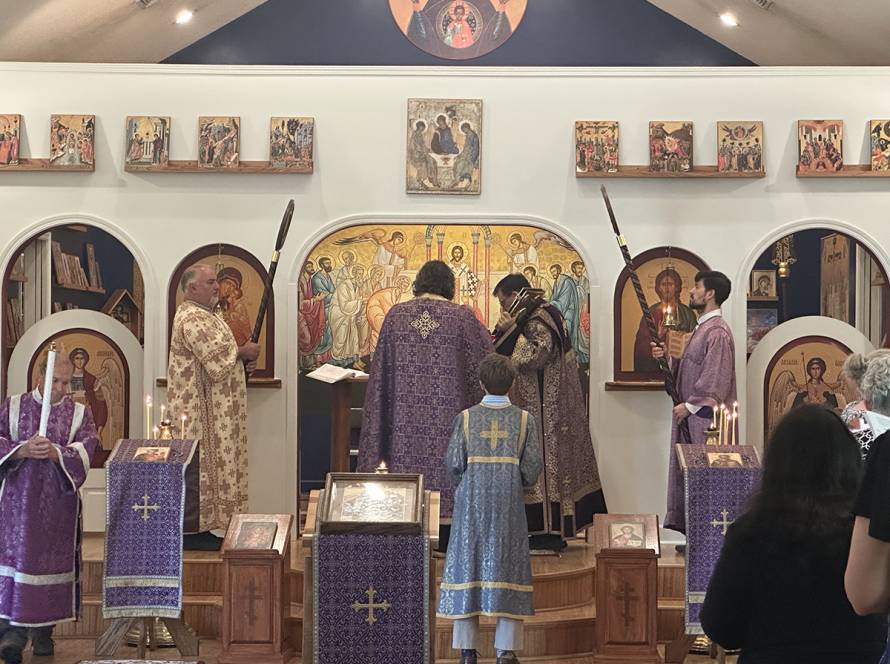
Obedience is one of the most misunderstood words in Orthodox Christianity. Many people hear it and think of blind submission, control, or a monk obeying an elder in a monastery. Others hear it and immediately become defensive, as if obedience means they are not allowed to think, ask questions, or speak honestly. But in the Orthodox Church, obedience is not about losing your mind, your conscience, or your personhood. Obedience is the healing of the will so that the heart learns to follow Christ instead of being ruled by pride, fear, anger, self-justification, or the passions.
The Lord Himself shows us what obedience means. In the Garden of Gethsemane He prayed, “Not My will, but Yours, be done” (Luke 22:42). Christ’s obedience was not weakness. It was love, humility, and perfect communion with the Father. In the same way, Orthodox obedience is not meant to crush a person. It is meant to heal a person and teach him how to live in the Church with humility, repentance, and freedom. A person does not become less human through obedience to Christ. He becomes more truly human.
What Is Obedience?
Obedience Is the Healing of the Will
In the Orthodox Church, obedience begins with God. We obey Christ, His Gospel, His commandments, and the life He has given to His Church. The goal is not merely to follow rules. The goal is to become a person whose heart is being healed and brought back into communion with God.
Holy Scripture teaches this clearly. The Lord says, “If you love Me, keep My commandments” (John 14:15). Saint Paul speaks of the “obedience of faith” (Romans 1:5). The Christian life is not a private religious feeling. It is a life of faith that becomes visible through repentance, worship, prayer, fasting, confession, forgiveness, and love.
Saint John Climacus writes, “Obedience is the burial place of the will and the resurrection of humility.” This does not mean the human will is destroyed as something evil. It means the fallen, proud, isolated will must die so that the healed will can rise in humility. Obedience helps us become free from the tyranny of “I know best.”
The Fall Began With Disobedience
The Fall began with disobedience. Adam and Eve trusted their own judgment over the command of God. They listened to another voice, took what was not given, and acted apart from communion. Because of this, salvation involves more than believing correct ideas. It involves the healing of the will. We learn to say no to self-will and yes to God.
This is why obedience is so closely tied to repentance. Repentance is not only feeling sorry. It is a change of mind, a turning of the heart, and a new way of life. Obedience is the practical shape of repentance. It teaches us that my first reaction is not always holy, my strongest feeling is not always true, and my own judgment is not always safe.
Sin often speaks with confidence. Anger sounds certain. Pride sounds reasonable. Resentment sounds like justice. Fear sounds like wisdom. Self-will rarely announces itself as rebellion. It usually says, “I am just being honest,” or “I know what is best,” or “Everyone agrees with me.” Obedience brings these thoughts into the light of Christ and the Church.
Obedience Is Learned Through the Life of the Church
Obedience is not only for monks. It is for every Christian. We obey by coming to the services, praying at home, fasting according to our strength, confessing honestly, preparing for Holy Communion, forgiving those who hurt us, receiving correction, and learning the faith as something handed down to us, not invented by us.
A catechumen does not enter the Church to reshape it according to his own opinions. He enters the Church to be formed by Christ through Holy Scripture, Holy Tradition, worship, prayer, fasting, the sacraments, and the pastoral care of the Church. This is why obedience belongs in a catechism. It is not a side topic. It touches everything.
Without obedience, prayer becomes self-directed. Fasting becomes either neglected or extreme. Confession becomes selective. Scripture becomes private interpretation. Church life becomes consumer choice. The person may still use Orthodox words, but he has not yet learned the Orthodox way of life.
The Orthodox Church does not teach obedience because she wants weak people. She teaches obedience because she wants healed people. A person who cannot be corrected cannot be healed. A person who only listens when he already agrees is not truly being taught. Obedience is the humility to say, “I may not see clearly. I need Christ. I need the Church. I need guidance.”
A Parish Is Not a Monastery
Many Orthodox people first hear about obedience through stories of monks, elders, and monasteries. These stories can be beautiful and helpful, but they can also be misunderstood. A parish is not a monastery. A parish priest is not an abbot who controls every detail of a layperson’s life. Laypeople have marriages, children, jobs, finances, family duties, and responsibilities in the world.
Monastic obedience is lived in a very specific setting. A monk or nun freely enters a monastery, receives a rule of life, and lives under an abbot or abbess. The monastery has a shared daily rhythm of prayer, work, meals, silence, and community life. Obedience there often touches many ordinary details of the day because the whole life has been offered in that particular way.
Parish life is different. A parishioner is not usually asking the priest what job to take, what groceries to buy, what time to wake up, or how to manage every family decision. A parish priest should not normally micromanage a layperson’s home, marriage, money, or private affairs. Parish obedience is not monastic obedience copied and pasted into family life.
Parish Obedience Is Still Real Obedience
At the same time, parish obedience is still real obedience. The fact that a parish is not a monastery does not mean every parishioner becomes his own spiritual authority. A parish priest is not simply a religious employee, counselor, or discussion partner. He is a spiritual father and shepherd appointed by the bishop to teach the faith, guard the order of the Church, administer the mysteries, correct sin, and care for souls.
This is part of the order of the Church. The priest does not give himself authority. He is ordained and assigned under the bishop. He serves at the altar by blessing, not by personal entitlement. He preaches, hears confessions, baptizes, chrismates, presides at the Divine Liturgy, visits the sick, counsels the struggling, and gives pastoral direction as one who must answer to God and to his bishop.
This does not mean the priest is always right. It does not mean he knows every detail of every situation. It does not mean he is sinless, all-knowing, or incapable of mistakes. But it does mean that he carries a real pastoral responsibility in the Church. When he gives ordinary pastoral direction, the normal Orthodox response is to receive it seriously and obey, unless he commands something sinful, abusive, or contrary to the Orthodox faith.
The Priest Is a Shepherd, Not a Religious Employee
The priest is not merely one opinion among many. He is not simply a consultant whose words can be accepted or rejected based on whether they match what the parishioner already wants. He is not an employee hired to affirm every feeling. He is a father in Christ, placed in the parish to shepherd souls.
This can be difficult for modern people. We live in a world that trains us to be consumers, critics, and personal authorities. We review everything. We compare everything. We decide whether each person has met our expectations. If we are not careful, we bring that same spirit into the Church. The parish becomes a place where I evaluate the priest, the choir, the people, the sermon, the schedule, and the decisions of the parish according to my own preferences.
This is especially hard in America, where “don’t tell me what to do” is almost treated as a virtue. We are taught to protect our personal autonomy, question every authority, and treat correction as an attack. But the Orthodox Church does not see self-rule as the same thing as freedom. A man may insist that no one can tell him what to do and still be completely enslaved to anger, pride, lust, fear, or resentment. True freedom is not the absence of obedience. True freedom is the healing of the will in Christ.
The Church calls us to something deeper. The Church is not a product. The priest is not a service provider. The parish is not a club. The Church is the Body of Christ, and life in the Body requires humility. We come not only to receive comfort, but to be changed. We come not only to be affirmed, but to be healed.
Obedience Does Not Mean the Priest Is Always Right
Obedience does not mean the priest is always right. It means the parishioner is not always the judge. This is very important. If a person only obeys when he already agrees, he is not really obeying. He is simply following himself. Obedience becomes real when the priest says something our passions resist.
Sometimes a priest may make an imperfect judgment. He may not know every fact. He may choose a path that the parishioner would not have chosen. But if he is not commanding sin, even imperfect pastoral guidance can still be spiritually profitable. It can humble the heart, slow down the passions, break self-will, and teach the person to trust the healing order of the Church rather than his own immediate judgment.
To say “the priest may be wrong” is true. Priests are human. But that truth can also become an excuse for self-will. A parishioner may use the possibility of the priest’s imperfection as permission to obey only himself. That is not Orthodox obedience. The question is not, “Can the priest ever be wrong?” The question is, “Am I willing to be shepherded when I do not fully understand or agree?”
The Church Is Not Ruled by Personal Demand
The Church is not the laity telling the priest what to do. Laypeople may ask questions, raise concerns, report danger, and seek clarification. They should speak honestly when something serious is happening. But laypeople do not get to command the priest to handle every situation according to their anger, fear, or personal judgment.
A parish priest must answer to God and his bishop for how he shepherds the flock. He must care for the person who is wounded, the person who has sinned, the safety of the parish, the facts that are known, the facts that are not known, the possibility of repentance, and the danger of scandal. He cannot simply react to the loudest voice or the strongest emotion. He must act as a shepherd, not as a weapon in someone else’s conflict.
This can be frustrating for parishioners because the priest often cannot explain everything he knows or everything he is considering. He may be dealing with confessions, private conversations, family concerns, legal or safety issues, or facts that are not yet clear. A parishioner may see one piece of the matter and demand a public action. The priest may have to move slowly, carefully, and quietly for the good of everyone involved.
Parish obedience means accepting that the priest may not handle a situation exactly the way I would handle it. It means I can speak honestly without trying to rule him. It means I can ask questions without making my agreement the condition for my obedience. It means I can trust that he has my salvation and the good of the Church in mind, even when I do not understand every decision.
Obedience Has Real Limits
There are limits, and they should be clear. If a priest commands sin, covers abuse, manipulates someone, demands secrecy for evil, contradicts the Orthodox faith, or uses authority for personal gain, that is not holy obedience. In such cases, the faithful should seek help, including from the bishop and proper authorities when needed. Obedience is not a shield for corruption.
But the existence of bad authority does not erase true authority. The possibility that a priest could be wrong does not mean I am free to obey only myself. Orthodox obedience is sober. It is neither blind submission nor proud independence. It is humble trust within the order of the Church.
The Priest Is Not a Weapon in Conflict
Parish obedience is often tested most clearly in conflict. When people are hurt, angry, or afraid, they often want the priest to validate their side completely. They want him to punish the other person, agree with their interpretation, and prove that they are right. But the priest is not a weapon to use against another parishioner. He is a physician of souls.
A physician does not only treat the wound caused by another person. He also treats the infection that may grow inside the wounded person. In the same way, the priest must sometimes say, “You were wounded, but your response is also sinful.” That correction is not betrayal. It is pastoral care.
This is one of the hardest lessons in the spiritual life. We often believe that if we have been wronged, then everything we feel afterward is justified. We think the other person’s sin gives us permission to hold anger, speak with contempt, gather allies, and refuse forgiveness. But the Gospel does not allow this. The sin of another person does not become permission for my own sin.
A Person Can Be Right and Still Wrong in the Heart
A person can be right about the facts and still be wrong in the heart. Someone may truly have been mistreated, threatened, insulted, ignored, or harmed. That matters. The Church does not ask anyone to pretend that sin is not sin. But being wronged does not give a person permission to hate. The commandment of Christ still stands.
Forgiveness is one of the clearest tests of obedience because the wounded heart often feels justified in refusing it. Christ does not say, “Forgive only when the other person deserves it.” He says, “If you forgive men their trespasses, your heavenly Father will also forgive you” (Matthew 6:14). The Lord’s Prayer teaches us to ask forgiveness from God as we forgive those who trespass against us.
This is why forgiveness is not a small matter in Orthodoxy. It is at the center of daily prayer. It is at the doorway of Great Lent. It is woven into confession, Communion, and the whole life of repentance. A Christian cannot make peace with hatred and still claim to be walking the path of Christ.
Forgiveness and Boundaries Are Not the Same Thing
Forgiveness does not always mean immediate reconciliation. It does not mean trusting an unsafe person. It does not mean pretending that harm did not happen. It does not mean there should be no accountability. Boundaries may be necessary, wise, and blessed. Distance can be needed for safety or peace.
But boundaries do not excuse hatred. Distance can be blessed, but resentment cannot be blessed. A person may need to stay away from someone, but he still must fight contempt, vengeance, and bitterness in his own heart. “I need space” may be reasonable. “I refuse to forgive” is not Orthodox.
Sometimes a person uses the language of boundaries to protect the passion of resentment. He may say, “I am just removing myself,” but inwardly he continues to rehearse the offense, condemn the other person, and nourish hatred. In that case, the boundary may protect the body or emotions for a time, but the soul remains in danger. The priest must speak to that danger.
Everyone Agrees With Me Is Not Discernment
This is where obedience becomes painful and saving. The priest may say, “You do not have to be close to this person, but you must forgive.” The passions may answer, “I will not.” The angry heart may gather friends and family who agree. It may say, “Everyone agrees with me.” But “everyone agrees with me” is not spiritual discernment. The standard is Christ and His commandments, not family approval, friends’ opinions, or emotional validation.
There is a difference between being comforted and being healed. Comfort may say, “You are right to feel however you feel.” Healing says, “Your pain is real, but your hatred will destroy you.” A good priest cannot bless hatred simply because the pain behind it is understandable. He must call the wounded person to repentance as well, not because the wound is imaginary, but because the soul matters.
Correction Is Not Betrayal
This is also why obedience is connected to confession. In confession, we do not only list the sins that are easy to admit. We bring the places where we are most defended. We confess not only what we did, but what we have loved, protected, excused, and refused to surrender. If anger has become dear to us, we confess that. If resentment has become our identity, we confess that. If we do not want to forgive, we confess that too.
A person may begin honestly by saying, “Father, I do not want to forgive.” That is already better than pretending hatred is righteous. The next prayer may be, “Lord, I do not want to forgive, but I want to want to forgive.” This is a real beginning. Obedience does not always mean the heart instantly feels peaceful. Sometimes obedience begins with taking the first truthful step toward repentance.
The priest must sometimes correct the person who feels most wronged. This can feel unfair. The person may think, “Why are you correcting me when he is the one who sinned?” But the priest is not saying the other person did nothing wrong. He is saying that your soul also needs care. The priest must care for all souls involved, not merely validate the person who feels most wronged.
In parish conflict, people often want a simple story: one person is guilty, one person is innocent, and the priest should punish the guilty person quickly and publicly. Sometimes the situation is that clear, but often it is not. Even when one person has clearly sinned, the other person may still be tempted to hatred, gossip, pride, faction-building, or vengeance. The priest must deal with the whole spiritual reality, not only the most visible offense.
Obedience teaches us not to make anger the final authority. It teaches us not to turn fear into a law. It teaches us not to use another person’s sin as permission for our own. The parishioner must answer to God for whether he received correction with humility or resisted it through pride.
This does not mean a parishioner can never disagree or ask questions. A person may say, “Father, I am struggling to understand.” He may say, “Father, I think there is danger here.” He may bring new information. He may ask for help. If there is abuse, serious danger, or a command contrary to the faith, the person should not obey that command and should seek proper help, including the bishop or civil authorities when necessary.
But ordinary pastoral correction is not abuse simply because it hurts. A priest saying, “You must forgive,” is not minimizing the wound. He is defending the soul from hatred. A priest saying, “You cannot demand that I handle this according to your anger,” is not rejecting the person. He is teaching him that the Church is governed by Christ, not by wounded pride.
The Priest and Parishioner Both Answer to God
Obedience is not based on the priest’s perfection. It is based on the healing order of the Church. The priest must answer for how he shepherds. The parishioner must answer for how he receives shepherding. Both stand before God.
This is why the Epistle to the Hebrews says, “Obey those who rule over you, and be submissive, for they watch out for your souls, as those who must give account” (Hebrews 13:17). This verse does not make clergy untouchable. It makes their responsibility heavier. They must give account for how they shepherd, and the faithful must give account for whether they were teachable.
When the priest gives pastoral direction, especially in a conflict, he is not always trying to settle every emotional demand. He is trying to guide souls toward salvation. Sometimes that means protection. Sometimes it means correction. Sometimes it means patience. Sometimes it means silence. Sometimes it means saying no. The parishioner may not see all of this, but obedience means receiving pastoral guidance with humility rather than assuming that disagreement means betrayal.
Why This Matters for Catechumens
For catechumens, this is especially important. The catechumenate is not only a time to learn doctrine. It is a time to learn how to be taught. It reveals whether a person is willing to be formed by the Church or only wants the Church to affirm what he already thinks. A catechumen who refuses correction whenever his passions are challenged is showing that he does not yet understand the life he is asking to enter.
Entering the Orthodox Church means entering a life of repentance. It means learning to be corrected by the services, by Scripture, by fasting, by confession, by the priest, by the lives of the saints, and by the community itself. The Church is not something we stand above and evaluate forever. At some point, we must bow the head and be healed.
Most Commonly Asked Questions
Is Orthodox obedience the same as blind obedience?
No. Orthodox obedience is not blind control or personality worship. A Christian obeys Christ first, and no priest may command sin, abuse, deception, or anything contrary to the Orthodox faith. True obedience heals the heart and leads to humility, repentance, peace, and freedom.
Do I have to obey my parish priest if I think he is wrong?
If the priest is commanding something sinful, abusive, or contrary to the faith, you should not obey that command. But if he is giving ordinary pastoral guidance, the normal Orthodox response is to receive it with humility, even if you do not fully agree. Obedience means you are not always the final judge of your own soul.
How is parish obedience different from monastic obedience?
Monastic obedience is lived under an abbot or abbess within a monastery and a shared rule of life. Parish obedience is different because laypeople live in families, jobs, and daily responsibilities in the world. Still, parish obedience is real: it means receiving teaching, correction, sacramental discipline, and pastoral guidance from the Church.
Does forgiveness mean I have to be close to someone who hurt me?
No. Forgiveness does not always mean closeness, trust, or immediate reconciliation. Boundaries may be necessary for safety and peace. But forgiveness does mean you must fight hatred, vengeance, and contempt in your own heart.
What should I do next if I struggle with obedience?
Start small. Come to the services faithfully, keep the prayer and fasting rule you have been given, go to confession honestly, and ask for guidance before making major spiritual decisions. When correction hurts, do not run from it immediately. Pray, be honest, and ask God to show you what needs healing.
A Pastoral Closing
The goal of obedience is not control. The goal is healing, humility, repentance, and freedom in Christ. The obedient Christian is not weak. He is learning to rule himself before judging another. He is learning to place even his anger, pain, and personal judgment under Christ. This is how the Church teaches us to become free.
Parish obedience is usually not dramatic. It is lived in ordinary things: showing up when we are tired, listening when we are corrected, confessing what we would rather hide, forgiving when we feel justified, keeping peace when we want to fight, and trusting the Church when our passions want to rule. This is where the will is healed. This is where Christ teaches us to become sons and daughters of the Kingdom.
If you’re working through this and need guidance, reach out to Fr. Stephen at frsteve@savannahorthodox.com AND Anthony at anthony@anthonyally.com. CC us both.