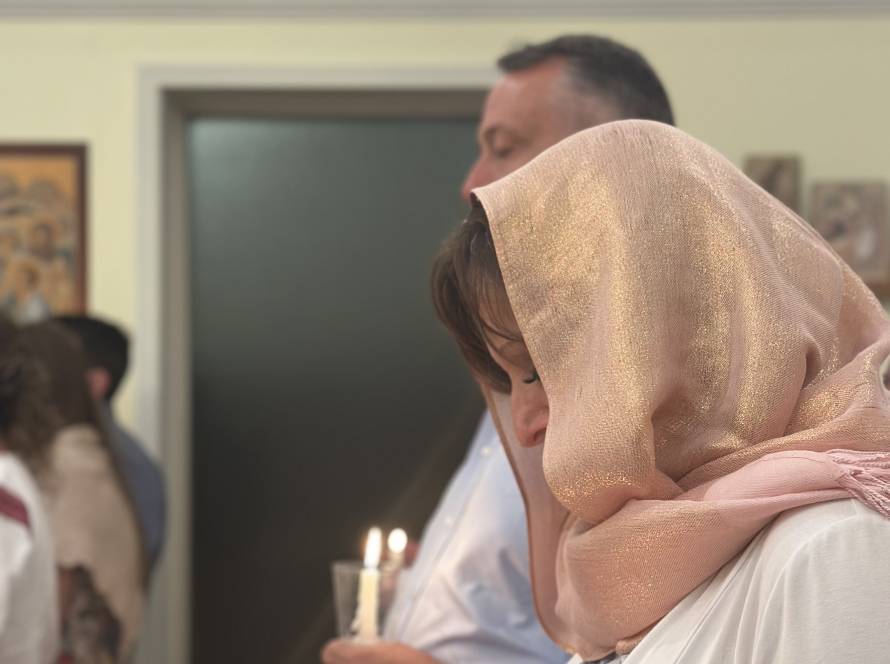
High school today is loud, fast, and relentless. The pressure to perform, to belong, and to figure out who you are is tremendous for young adults. As parents, we are always worried and questioning, “how to keep our children safe and help them grow with faith in their lives?”.
The Orthodox faith offers exactly that: a formed life, shaped by practices, rhythms, and sacraments that have steadied people through far harder circumstances than a difficult semester.
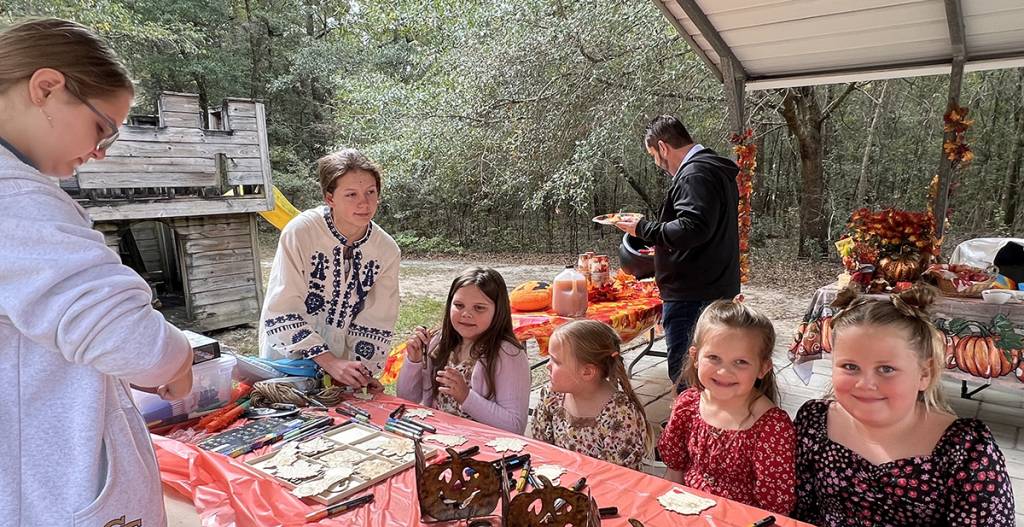
At St. Mary Magdalene Orthodox Church, Savannah these are not traditions kept behind church walls. They are carried into every day. Our youth group brings these values to life with volunteer outreach, group activities and fellowship.
Beginning Your Day With the Sign of the Cross
One of the most distinctive practices of Orthodox Christianity is the Sign of the Cross. For Orthodox teens, it is not just something we do in church, but something we carry into daily life. In moments of stress, fear, or pressure, making the Sign of the Cross can help steady the heart and remind us that we do not face anything alone.
Before an exam, a hard conversation, or any moment that feels overwhelming, an Orthodox teen can make the Sign of the Cross and quietly call upon the Father, the Son, and the Holy Spirit. This is not superstition or empty habit. It is an act of faith, a conscious turning toward God before stepping into whatever is in front of us. What begins as a moment of anxiety can become a moment of prayer, peace, and trust.
A Simple Prayer to Help With Tough Situations
One of the most practical gifts Orthodox Christian prayers give a young person is structure. Before the phone, the noise, and the demands of everyone else, an Orthodox prayer establishes a rhythm at the start and end of each day that belongs entirely to God.
“Lord Jesus Christ, Son of God, have mercy on me, a sinner.”
This short prayer can be carried anywhere, and in difficult moments it has a way of gathering the heart and turning it back toward God. Its words are simple, but its depth is great. When anxiety, frustration, or distraction begins to take over, the Jesus Prayer helps bring the soul back to stillness, humility, and trust.
Many Orthodox Christians also use a prayer rope as they pray throughout the day. A prayer rope is a small knotted cord that easily fits in a pocket or around the wrist, making it a quiet and practical help to prayer. It gives restless hands something to hold and keeps the mind focused, all without drawing attention to oneself.

A Sense of Direction with the Divine Liturgy
A teenager’s life is often dictated around school and extracurriculars. For them the Sunday morning Divine Liturgy feels like an obligation. But the weekly service at the St. Mary Magdalene Orthodox Church in Savannah is a way to center and bring a sense of structure to their Orthodox journey.
The Divine Liturgy leads us from hearing the Scriptures to the Holy Eucharist, where the faithful receive the consecrated bread and wine as the Body and Blood of Christ. We stand together, listen to the Word of God, and take part in the same worship that has formed Orthodox Christians for centuries. For a teenager whose week has been filled with noise, pressure, and constant comparison, the Liturgy offers something the world rarely gives: stillness, order, and peace. After standing before God in this way, the things that once felt overwhelming often no longer seem so large.
The liturgical calendar along with the diving liturgy provides a sense of direction. It gives teenagers and parishioners always something to prepare for and something worth celebrating. For families in Savannah and Rincon raising teenagers, that rhythm provides something the school year and the social calendar simply cannot: a sense that the days belong to something larger than themselves.
Fasting Builds What the World Tears Down
Fasting is one of the most ancient traditions of Orthodox Christianity, and one of the least understood. The Church’s lenten fasting period is not about punishing the body but about re-training appetite, impulses, and will power .
The Orthodox understanding of fasting goes beyond food. In fasting seasons, we are also called to step back from the things that fill our minds, drain our attention, and keep the heart restless. The same self-control we try to practice with what we eat should also shape how we use our screens, our entertainment, and the other distractions we too easily let take over our lives.
For teenagers across the Lowcountry who have grown up with a phone in their hand, this is one of the most practical and countercultural things the Church offers.
Prayer Corners, Icons, and Saints for Guidance
A prayer corner is a tradition many Orthodox families maintain at home. It typically includes one or more icons, a candle, and a space set aside for daily prayer. Icons are not decorations. They are sacred images through which the faithful venerate Christ, the Theotokos, and the saints.
For a teenager, a dedicated space that belongs to prayer changes the texture of a bedroom full of distractions. Parents who establish this practice give their children something many teenagers are quietly searching for: a place that is still.
Closely connected to this is the tradition of the Name Day. In Orthodox Christianity, each person bears the name of a saint, and the feast of that saint becomes a personal day of remembrance and celebration. For a teenager trying to understand identity, purpose, and belonging, that matters. You are not left to define yourself on your own. A saint bears your name, prays for you, and reminds you that the faith is personal, living, and deeply human.
A Name Day is also often treated almost like a birthday. In many Orthodox countries, it is seen as just as important, and sometimes even more important, because it is tied not only to your life in this world but to your life in Christ and your connection to the saints. Even in places that are not traditionally Orthodox countries, many Orthodox families still keep that same spirit by celebrating Name Days in the home with joy, love, and gratitude.

Confession as a Means to Cleanse the Soul
As St. James wrote, “If any of you lacks wisdom, let him ask of God, who gives to all liberally and without reproach, and it will be given to him” (James 1:5).
Confession is not a ritual of guilt. It is a sacrament of honesty, a private, spiritually guided opportunity to set down what you have been carrying and return to God without pretense.
The teenage years carry a weight of mistakes that often go unspoken. The Orthodox Christian faith offers something no peer group can. A confessional is a safe place for high schoolers to unburden and return to whenever possible.
A spiritual father in Confession is not a judge. He is a guide.
Why These Traditions Need Community
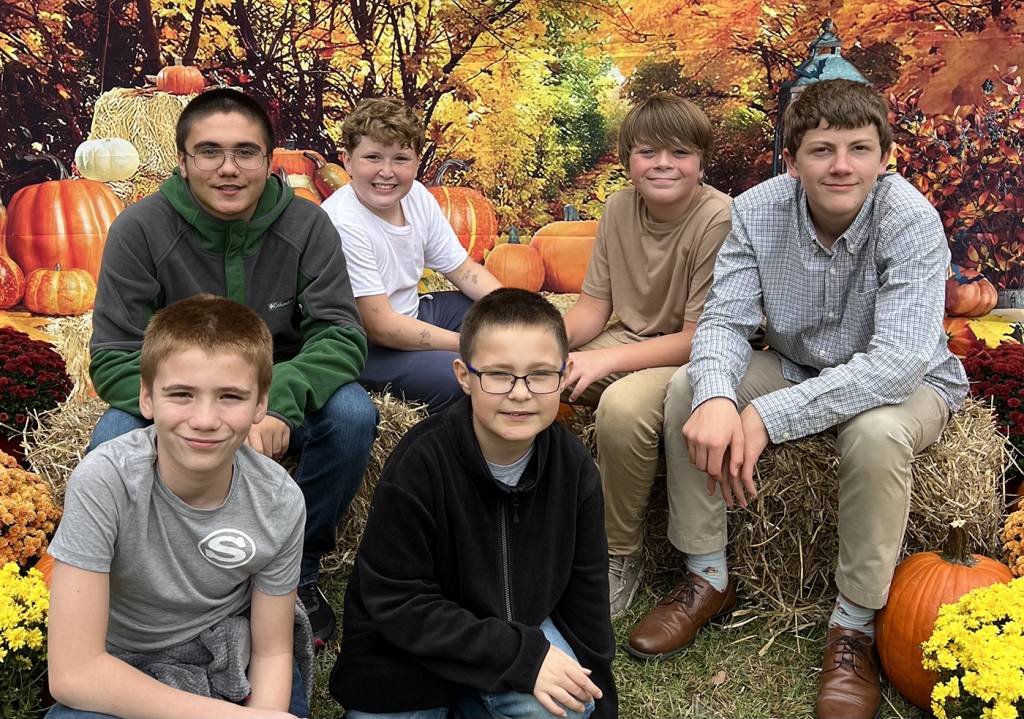
None of these practices are meant to be carried alone. The church youth group at St. Mary Magdalene Orthodox Church Savannah is where the Sign of the Cross, the prayer rope, the Liturgy, fasting, and Confession are not solitary disciplines but a shared way of life among young people navigating the same world.
These traditions are not additions to a teenager’s life. They are the structure underneath it. For parents across Rincon and Savannah who want more than academic success for their children, and for teenagers who are looking to connect with something deeper, St. Mary Magdalene Orthodox Church Savannah is here for you.