


Every year around Pascha, many people repeat the claim that Easter is pagan. They hear that the English word Easter sounds like the name of an old goddess, or they notice eggs and springtime customs, and they assume the Christian feast must have borrowed its meaning from pagan religion. The Orthodox Church teaches something very different. The feast Christians celebrate is the Resurrection of Jesus Christ, rooted in the saving events of the Gospel, proclaimed by the Apostles, and kept by the Church from the beginning.
Orthodox Christians believe that Pascha is not a baptized pagan holiday. It is the Passover of the New Covenant, the victory of Christ over sin, death, and the devil. As Saint Paul says, “Christ, our paschal lamb, has been sacrificed” (1 Corinthians 5:7). That is why the center of this feast is not spring, fertility, or nature, but the crucified and risen Lord.
It is true that words, languages, and local customs can vary from place to place. It is also true that some people confuse cultural extras with the heart of the feast itself. But a change in vocabulary does not change the faith, and a local custom does not create the meaning of the feast. The Orthodox Church has always known what She is celebrating at Pascha: the Resurrection of Christ in fulfillment of the Scriptures and for the life of the world.
Why Orthodox Christians Celebrate Pascha
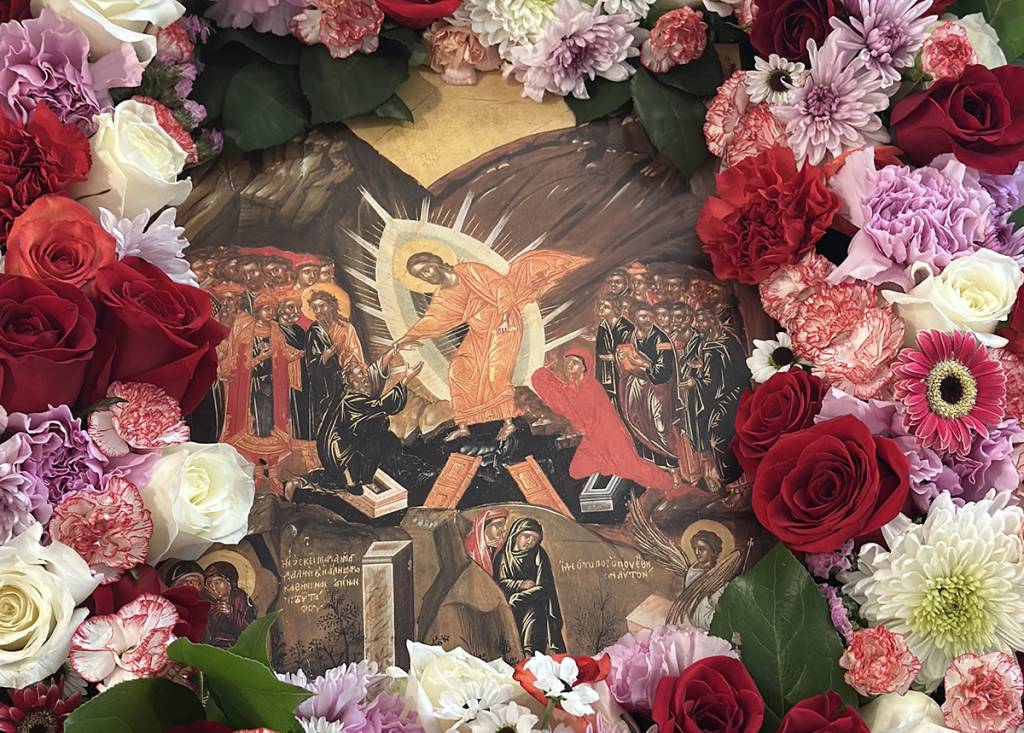
The most important thing to understand is that the Christian feast of Pascha comes from Passover, not from pagan worship. In the New Testament, the death and Resurrection of Jesus take place at Passover, and this is not accidental. Christ is the true Lamb, the One who delivers His people not from Pharaoh, but from death itself. The Gospel story gives the feast its meaning, its timing, and its content.
In Greek, the word is Pascha. That word comes from the Hebrew word for Passover. Most of the Christian world, especially in the ancient languages of the Church, still uses some form of Pascha. Orthodox Christians say Pascha because we want to speak about the feast in the same way the Church has received it: as the Passover fulfilled in Christ.
When Saint John the Forerunner points to Jesus and says, “Behold, the Lamb of God, who takes away the sin of the world” (John 1:29), he is preparing us to understand this mystery. When Saint Paul says, “Christ, our paschal lamb, has been sacrificed,” he is teaching the Church how to read the whole event. The Orthodox Church teaches that the Old Testament Passover was a shadow, and Christ is the reality.
The early Christians did not gather to celebrate a spring myth. They gathered to proclaim that Jesus, who was crucified under Pontius Pilate, truly rose from the dead on the third day. This preaching runs through the Book of Acts and through the writings of the Fathers. The Resurrection is the beating heart of Christianity. If Christ is not raised, as Saint Paul says, our faith is in vain, but Christ is raised, and that changes everything.
Why the English Word “Easter” Does Not Make the Feast Pagan
One reason people get confused is the English word Easter. In English, and in some related languages, the name for the feast developed differently than it did in Greek, Arabic, Slavonic, or Latin-based languages. Some writers connect the English term to an old Germanic word connected to a season or month. Even if that word history is accepted, it still does not prove that Christians were worshiping a pagan goddess. It only shows that one language used a local word for the time of year.
This matters because words travel. Languages often take old terms, reshape them, and fill them with new meaning. Christians did not invent language from scratch when they preached the Gospel. They spoke in the languages people already knew. A word can survive while its old associations disappear. Translating a feast into a local tongue does not turn the Resurrection into paganism.
We see this kind of thing all the time. The names of days and months in English have older roots too, but using those names does not mean people are secretly worshiping old gods. The Church has always baptized language for holy use. Orthodox Christianity is not afraid of words, because the faith is not controlled by etymology. It is controlled by the truth of Jesus Christ.
So even if someone says that Easter may have an English word history connected to Eostre or Eostur, that still does not establish a religious connection between that figure and Christ. The content of the Christian feast comes from Scripture, from apostolic preaching, and from liturgical life. The English word is not the source of the feast. Christ is.
This is why Orthodox Christians often prefer to say Pascha. It keeps us close to the biblical roots of the feast and avoids a lot of confusion. But even when English-speaking Christians use the word Easter, they are not therefore confessing pagan beliefs. They are speaking English. The question is not what a word may have meant centuries ago in another setting, but what the Church means when she proclaims the feast now.
Pascha is grounded in Scripture.
The Gospels make clear that the Lord’s Passion happens at Passover. Christ eats the Mystical Supper with His disciples, offers His Body and Blood, goes willingly to the Cross, and rises in glory. This is why Orthodox worship during Holy Week and Pascha is full of biblical language. The services do not sound pagan because they are not pagan. They sound like Scripture because they are saturated with Scripture.
The Fathers speak of Pascha as the feast of Christ’s victory.
Saint Melito of Sardis, writing very early in the life of the Church, speaks of Christ as the One who fulfills the Passover and brings salvation through His death and Resurrection. Saint Gregory the Theologian speaks of Pascha as the feast of feasts and the triumph of Christ. Saint John Chrysostom’s Paschal Homily, read in Orthodox churches every year, does not mention spring gods or nature myths. It announces the destruction of death by the risen Christ.
The liturgy shows what the Church believes.
Orthodox Christians believe that worship teaches doctrine. If someone wants to know what the Orthodox Church believes about Pascha, he should listen to the services. We sing, “Christ is risen from the dead, trampling down death by death.” We hear the Gospel of the empty tomb. We circle the church in the dark and then enter into light. Everything points to the Resurrection of Jesus, not to pagan religion.
What about eggs and other customs?
Sometimes people point to Easter eggs and say that they must be pagan because they involve spring and new life. But symbols can be used in many ways, and Christians have long used ordinary things to teach spiritual truth. Bread, wine, water, oil, palms, candles, flowers, and even tombs are used in worship because God created the world good and because Christ has sanctified matter by His Incarnation. An egg used as a Christian symbol does not become pagan. It becomes a simple witness to life coming forth from what seems closed and lifeless.
In Orthodox tradition, red eggs are especially common at Pascha. The red color reminds us of the blood of Christ, and the egg itself points to the tomb and to new life. There is also a cherished Christian tradition about Saint Mary Magdalene. According to this tradition, she met the emperor, testified to the Resurrection, and an egg turned red as a sign. Whether one treats that story as pious tradition or simply as an old Christian memory, the point is the same: the egg in Christian use is tied to the Resurrection of Christ, not to pagan worship.
People sometimes make a mistake here. They assume that if non-Christians somewhere also used eggs, flowers, or spring images, then Christians cannot use them. But that is not how the Church has ever lived. The Church takes what is human, ordinary, and created, and offers it back to God with thanksgiving. The meaning comes from Christ and from the Church’s prayer, not from internet guesses or shallow comparisons.
The charge of “pagan” is often too simple.
Not everything old is pagan, and not everything similar is the same. Two groups can use an object without sharing a religion. A meal is not pagan because pagans ate meals. Candles are not pagan because pagans used fire. Spring is not pagan because nature blooms in April. Christians celebrate the Resurrection in spring because that is when the events of salvation took place, not because the Church was borrowing a myth.
Why these claims spread so easily today.
Many people now learn religion through short videos, memes, and angry posts instead of through careful reading. Big claims get attention, especially when they sound secret or shocking. Saying “Easter is pagan” sounds bold and clever. But most of the time it rests on weak history, confused word studies, and a failure to distinguish between the name of a feast, the timing of a feast, and the meaning of a feast.
The Orthodox Church teaches patience in these matters. We should not panic every time someone posts a dramatic claim online. We should ask simple questions. What did the Apostles preach? What do the Scriptures say? What do the Fathers teach? What does the Church pray? When we ask those questions, the answer becomes clear: Pascha is the Christian celebration of Christ’s Resurrection.
Orthodox Christians keep Pascha as a living reality.
Pascha is not just an idea to defend. It is a mystery to enter. We prepare through repentance, fasting, confession, prayer, Holy Week, and the long expectation of the Church. Then in the darkness we hear the call to receive the light, and the whole Church bursts into joy because Christ is risen. This is not folklore dressed in Christian clothing. This is the life of the Gospel.
The deepest answer to the charge that Easter is pagan is not only an argument. It is the witness of the Church herself. Come to Holy Week. Stand at the Cross. Wait in the dark. Hear the Gospel. Listen to Saint John Chrysostom’s Paschal Homily. Receive the proclamation that death has been overthrown. Then you will see what Orthodox Christians mean when we say that Pascha is the feast of feasts and the triumph of Christ.
So no, Easter is not pagan. In the Orthodox Church, Pascha is the fulfillment of Passover, the center of the Christian year, and the joy of the Resurrection. The English language may use one word, Greek another, Arabic another, and Slavonic another, but the faith is one. Christ died and rose again, and the Church celebrates that saving truth with one voice.
If you have heard these claims before and felt unsettled, do not be troubled. The Church has nothing to fear from confused accusations. Orthodox Christians believe what the Apostles preached, what the martyrs confessed, and what the saints handed down. We do not celebrate a goddess, a season, or a myth. We celebrate Jesus Christ, who was crucified, buried, and raised on the third day for our salvation.
If you want to understand this more deeply, the best place is not an argument online but the worship of the Church. Come and see the services of Holy Week and Pascha. Listen to the Scriptures, pray with the faithful, and let the Church show you what she has always believed. There you will find not paganism, but the radiant joy of the empty tomb and the living Christ who tramples down death by death.
FAQ
Is Easter a pagan holiday in the Orthodox Church?
No. The Orthodox Church celebrates Pascha, the Resurrection of Jesus Christ, which is rooted in the biblical Passover and the Gospel accounts of Christ’s death and rising. The feast is Christian in origin, meaning, and worship.
Why do some Christians call Pascha “Easter”?
In English, the feast came to be called Easter, while many other languages use a form of Pascha. A difference in language does not change the faith or make the celebration pagan.
Are Easter eggs pagan symbols?
Not in Christian use. Orthodox Christians often use red eggs as a symbol of Christ’s blood and the new life of the Resurrection, and the tradition has long been connected with Christian teaching and piety.
What does the word Pascha mean?
Pascha comes from the biblical word for Passover. The Orthodox Church teaches that Christ fulfills Passover by becoming the true Lamb who saves His people from sin and death.
What is the best way to understand Orthodox Pascha?
The best way is to attend the services of Holy Week and Pascha. The worship of the Church makes clear that this feast is entirely about the crucified and risen Christ.

