Avicii’s song The Nights has lasted because it speaks to something simple and deeply human. It is built around a father giving his son advice about life, urging him not to let fear control him and not to waste the brief time he has been given. The song is energetic and emotional because it touches a desire many people carry inside them: to live a life that matters.
One line especially fits the heart of the song: “One day you’ll leave this world behind.” That is not a complicated thought, but it is a serious one. Every person knows, at some level, that life is short and that the days we are given should not be wasted.
That desire is not wrong. Childhood is brief, parents grow older, children grow up, and ordinary days pass more quickly than we realize. A good parent wants his children to remember love, joy, wonder, and presence, not only rules, pressure, and fear.
Almost Christian: A Life Worth Remembering
This is why a song like The Nights connects so naturally to the way we think about family memories. A trip, a meal, a song in the car, a vacation, or one shared afternoon can stay with someone for the rest of his life. Those moments matter because love becomes visible in them, and memory becomes one of the ways we carry love with us.
The song is “almost Christian” because it recognizes that life should not be wasted. It understands that fear can shrink the soul and make a person bury his life instead of offering it. It knows that a father’s words can shape a child long after childhood is gone.
At the same time, Orthodox Christianity takes this longing much deeper. The world often defines a life worth remembering by excitement, travel, success, pleasure, risk, fame, or personal achievement. The Orthodox Church teaches that a life worth remembering is a holy life.
That does not mean Christians reject joy, adventure, travel, beauty, or family memories. Orthodox Christians believe these things can be good gifts from God when they are received with gratitude. They become dangerous only when they become the final goal of life.
Memory, Family, And The Kingdom Of God
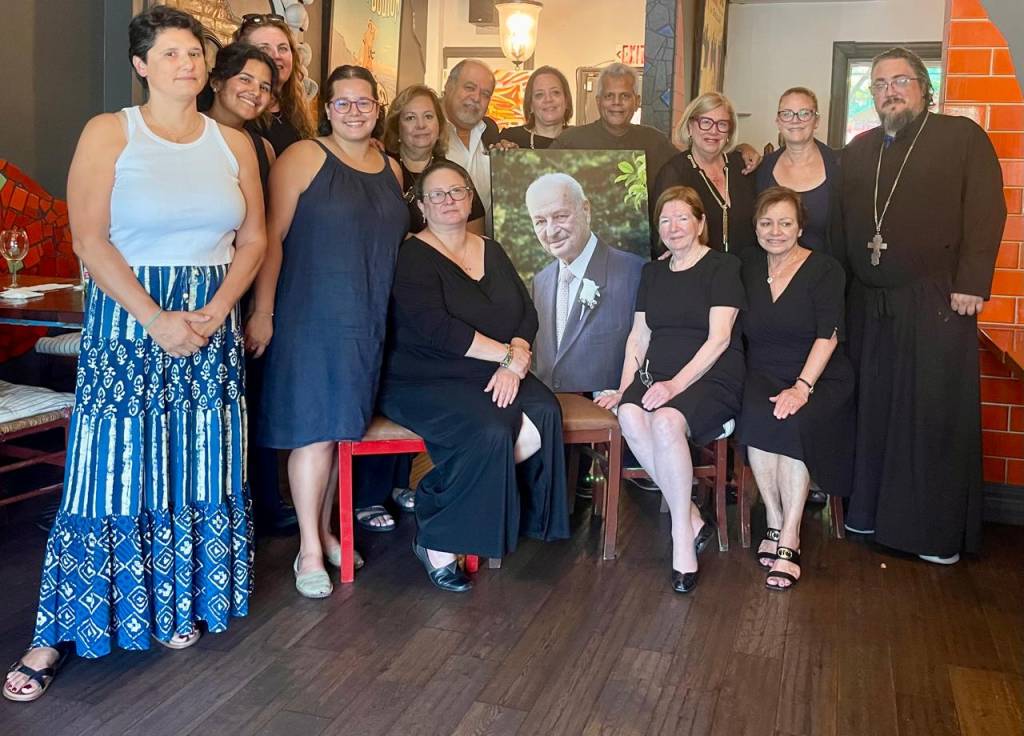
The song says, in effect, “Live a life you will remember.” Christianity says, “Live a life that becomes eternal.” That is the difference between nostalgia and communion, between being remembered by people and being remembered in the Kingdom of God.
There is something very tender about the fatherly voice behind the song. It matters that the advice comes from a father to a son. Human beings are not meant to grow by drifting alone through life, inventing themselves from nothing.
We are formed by those who love us, warn us, correct us, and bless us. Parents, grandparents, godparents, priests, spiritual fathers, and faithful friends all teach us how to live. Sometimes one sentence given at the right moment stays with us for years.
That is why childhood memories matter so much. They are not merely sentimental. They become part of the soil in which a person grows.
A child who remembers being loved has received a gift. A child who remembers prayer, forgiveness, laughter, meals, feasts, church, and family presence has received something even deeper. These memories do not save us by themselves, but they can point the heart toward God.
Why does this song matter?
It matters because many people are afraid of wasting their lives. They feel time passing. They know they are getting older, and they wonder if they are becoming the kind of person they hoped to be.
The Nights speaks into that fear by saying that life is short and should be lived fully. That is a real truth, but it is not the whole truth. The Christian life does not only ask whether we lived fully. It asks whether we lived faithfully.
There is a great difference between doing many things and becoming someone holy. A person can travel the world, chase every thrill, collect every memory, and still remain spiritually empty. Another person can live quietly, work honestly, love faithfully, repent often, and become radiant with grace.
The saints show us what a human life looks like when it is fully alive in God. Most saints were not trying to become famous. They were trying to be faithful.
What does the world call a life worth remembering?
The world often tells us to make life unforgettable by making it impressive. It tells us to have better vacations, bigger stories, richer experiences, and more visible achievements. It trains us to think a meaningful life must be exciting enough for other people to notice.
This is one reason social media can make people feel so restless. Everyone else seems to be traveling, celebrating, succeeding, and living a more interesting life. Even memory becomes a performance when we feel we must prove our life is worth something.
Orthodox Christianity does not deny that life can include beautiful experiences. It simply refuses to confuse experience with holiness. A beautiful moment is a gift, but it cannot become our god.
The Church reminds us that the deepest memories are not always the dramatic ones. Often they are the moments when someone made us feel loved, safe, seen, forgiven, or close to God. Many of the most important moments in life are too quiet to impress anyone else.
What does the Church call a life worth remembering?
The Church defines a life worth remembering as a life that becomes holy. This is why the Church’s calendar is full of names. Day after day, Orthodox Christians remember martyrs, monastics, bishops, mothers, fathers, fools for Christ, missionaries, and ordinary faithful people whose lives became transparent to God.
The saints are the true example of remembered lives. They are not remembered because they built a brand or chased attention. They are remembered because Christ was glorified in them.
Some saints lived dramatic lives. Some suffered martyrdom, crossed deserts, preached to nations, or endured prisons and torture. Others lived in hidden obedience, prayer, repentance, and quiet service.
This is important for us because most of our lives are ordinary. A mother raising children, a father praying quietly, a young adult resisting temptation, a widow remaining faithful, a priest serving while exhausted, and a worker doing honest labor can all become holy. Holiness does not require a stage.
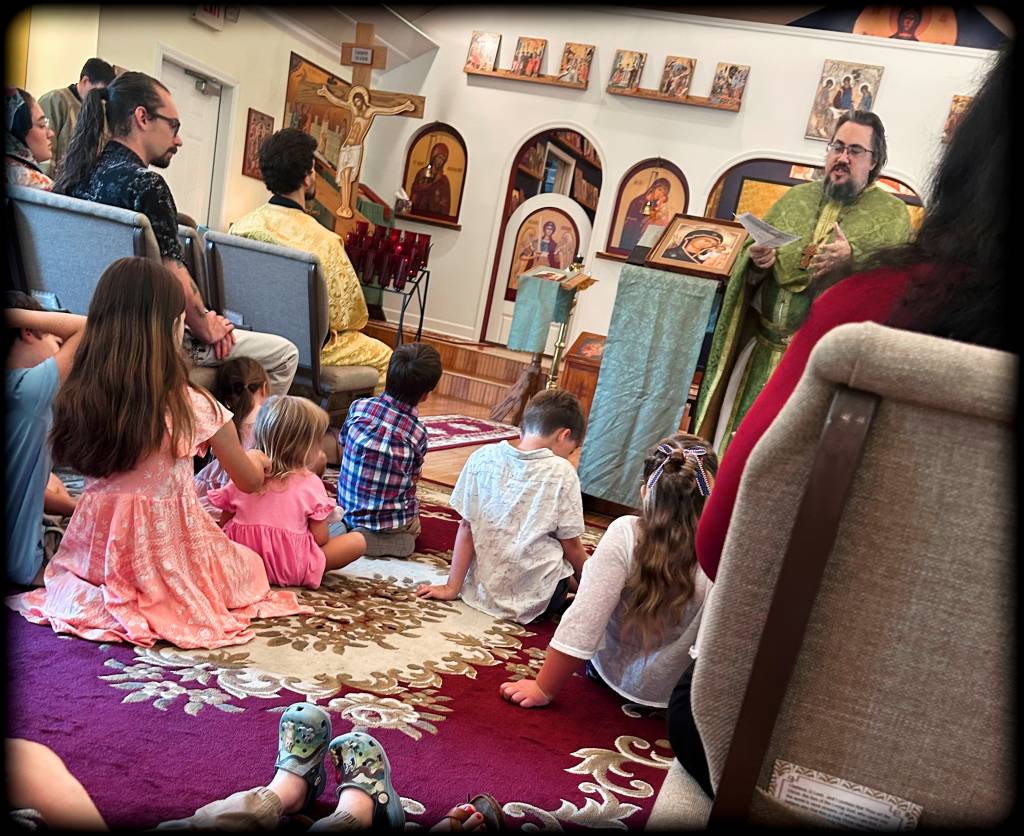
Why fear wastes the heart
The song understands that fear can keep a person from truly living. Fear can make a person hide, avoid love, avoid sacrifice, and avoid responsibility. Fear can make someone choose comfort over courage.
In the Gospel, the servant who buries his talent is condemned not because he had little, but because he did nothing faithful with what he had been given. He was afraid, so he buried the gift. Fear made him inactive.
Orthodox Christians believe life is a gift that must be offered back to God. We are not called to preserve ourselves in selfish safety. We are called to love, repent, forgive, worship, serve, and give ourselves away.
This is not the same as recklessness. Christianity is not a baptized version of thrill-seeking. Courage in the Church means the willingness to be faithful even when faithfulness costs us something.
Christianity is not playing it safe
Some people imagine the Christian life as small, dull, and fearful. They think the Church exists to stop people from living. That is not the Orthodox vision of life.
The Orthodox Church teaches that sin makes life smaller. It turns the person inward. It promises freedom but often leaves a man enslaved to appetite, pride, anger, lust, envy, or fear.
Holiness makes life larger because it opens the heart to God and neighbor. The Christian life calls us to courage, not passivity. It asks us to forgive enemies, confess sins, care for the suffering, stay faithful in marriage, raise children with love, pray when we are tired, and stand firm when the world mocks righteousness.
That is not a safe life in the shallow sense. It is a brave life. The saints were not cowards who hid from reality. They were men and women who faced reality in the light of eternity.
Do not waste your life
There is a Christian way to say, “Do not waste your life.” It does not mean, “Do everything on your bucket list.” It means, “Become the person God created you to be.”
It means repent while there is time. Love while there is time. Forgive while there is time. Pray while there is time. Serve while there is time.
Psalm 90 says, “So teach us to number our days that we may get a heart of wisdom.” The point is not panic. The point is wisdom.
Death gives urgency to life, but Jesus Christ gives death an answer. Without the Resurrection, memory eventually fades. With God, nothing good is lost.
The thief’s prayer
The clearest prayer for this topic comes from the thief on the cross. Near the end of his life, with no time left to build a reputation or impress anyone, he says, “Remember me when thou comest in thy kingdom.”
That prayer is not about earthly fame. It is not about being remembered in stories, monuments, family albums, or songs. It is about being remembered by the Lord.
This is where the Christian understanding of memory becomes so powerful. To be remembered by God is not simply to be thought about. It is to be held in life, mercy, and communion.
The thief had almost nothing left to offer except repentance and trust. Yet that was enough. His life, which looked wasted from the outside, was gathered into mercy at the end.
Memory eternal is not nostalgia
When Orthodox Christians say, “Memory eternal,” we are not merely saying, “I hope people remember you fondly.” We are praying that the departed may be remembered by God in His Kingdom. That is much deeper than nostalgia.
Nostalgia looks backward. Communion reaches into eternity. Nostalgia tries to preserve a feeling, but the Church prays for life with God.
This matters because human memory is fragile. Families forget stories. Photographs fade. Names disappear from public notice.
But the Church teaches that those who are alive in God are not lost. The saints are not simply figures from the past. They are alive in Christ, praying with the Church and showing us what salvation looks like in human lives.
The saints are the Church’s answer
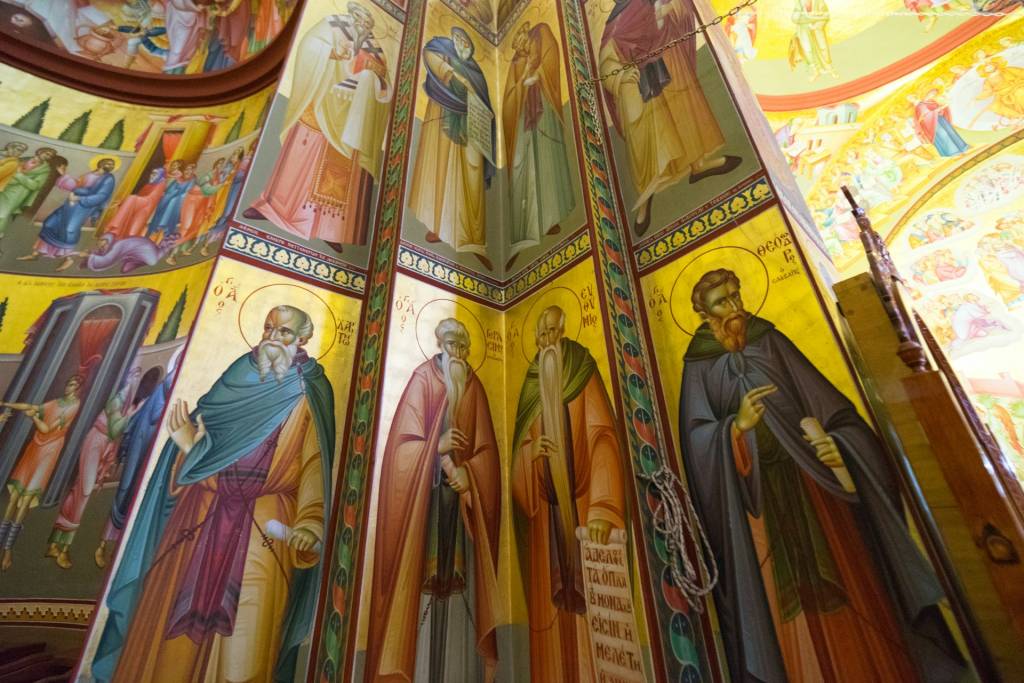
The saints answer the question, “What does a life worth remembering look like?” Their answer is not the same as the world’s answer. The world asks, “How many people knew your name?” The Church asks, “Did your life become holy?”
Saint Irenaeus wrote that “the glory of God is a living man.” This does not mean merely being biologically alive. It means becoming truly alive in God.
Saint John Chrysostom often taught that true wealth is found in virtue, mercy, and the care of the soul. A person may possess many things and still be poor before God. A person may possess very little and yet become rich in holiness.
This is why the saints matter so much. They show us that holiness is not an abstract idea. It can be seen in real people, real families, real suffering, real repentance, and real love.
Family memories as gifts, not idols
This is also where the connection to family memories becomes important. Christians do not need to despise vacations, trips, celebrations, music, meals, or joyful experiences. These can be received as gifts when they are ordered toward love and gratitude.
A family trip may be remembered because it was a time when everyone was fully present. A song may be remembered because it brings back a parent, a child, a spouse, or a season of life. A meal may become precious because it was shared with someone who is now gone.
These things are not meaningless. They are part of human life. The danger comes when we ask them to carry more weight than they can bear.
A memory can remind us of love, but it cannot replace eternal life. A vacation can refresh a family, but it cannot become the purpose of the family. A song can move the heart, but it cannot heal the heart by itself.
Almost Christian, but incomplete
The Nights is almost Christian because it sees that life is brief, fatherly wisdom matters, fear can waste a life, and people should live with purpose. These are true things. They are worth hearing.
But the song remains incomplete because it cannot tell us what life is finally for. It can tell us to live a life we will remember, but it cannot give us the Kingdom. It can stir courage, but it cannot define holiness.
Orthodox Christianity receives the true longing and places it in its proper home. We are not made simply to collect memories. We are made for communion with God.
The Christian goal is not to become a legend. It is to become holy. The life worth remembering is the life that becomes an offering.
A pastoral word for parents
Parents should hear something important in this song. Your children will remember more than your instructions. They will remember your presence, your patience, your prayers, your repentance, and whether they felt loved.
This does not mean parents must create a perfect childhood. No parent can do that. It means the ordinary work of love matters more than we often realize.
Take the trip if it is good and possible. Share the meal. Sing in the car. Go to church. Say you are sorry. Pray at bedtime.
These small things can become part of a child’s inner world. They can teach a child that love is not only spoken about, but lived.
A pastoral word for young people
Young people should also hear the warning clearly. Do not waste your life. But do not confuse wasting your life with missing out on every pleasure the world offers.
You waste your life when you refuse to become holy. You waste your life when you give yourself to sin, bitterness, selfishness, laziness, or despair. You waste your life when you live as if your soul does not matter.
The Church does not call you to a smaller life. It calls you to a deeper one. The world says, “Chase the moment.” The Church says, “Become eternal.”
That is not less adventurous. It is the greatest adventure a human being can enter, because it reaches beyond death.
A pastoral word for the weary
Some people hear a song like this and feel sadness. They think of missed chances, lost years, grief, addiction, regret, broken relationships, or choices they wish they could undo. They wonder if their life has already been wasted.
The Gospel does not leave us there. Repentance means that no one has to remain trapped in the story of his worst years. God can gather even a wounded life and make it fruitful.
The thief on the cross is proof that the end of a life can still be filled with mercy. The Church does not preach despair over the past. It calls us to repentance now.
If you are alive, you can turn. If you can turn, you can pray. If you can pray, your life is not beyond hope.
From a song to the Church
This is the purpose of the “Almost Christian” approach. We can listen carefully to the culture around us and notice where it echoes truth. We can recognize beauty, longing, courage, sacrifice, and moral seriousness without pretending the work is fully Christian.
The Nights gives us a strong emotional picture of a life that should not be wasted. The Orthodox Church gives that longing its fullness. It teaches us that the life worth remembering is the life united to God.
So yes, make good memories. Love your children. Be present with your family. Do not let fear bury the gifts God has placed in your hands.
But do not stop there. Let every good memory teach gratitude. Let every joy point beyond itself. Let every reminder of death teach wisdom.
In the end, the question is not only, “Will people remember me?” The deeper question is, “Have I become the kind of person who can enter the Kingdom with joy?” That is the question the saints place before us.
A life worth remembering is not always famous, exciting, or impressive. Sometimes it is quiet, hidden, faithful, and full of prayer. But when a life becomes holy, it is not lost.
That is why the Church remembers the saints. They show us that the human person is made for more than memories. We are made for eternal life.
If you have a song, film, book, or story you would like covered in the Almost Christian series, you can send suggestions to Fr. Stephen at frsteve@savannahorthodox.com.
FAQ
Is Avicii’s The Nights a Christian song?
No, The Nights is not a Christian song in a formal sense. However, it reflects themes Christians can recognize, such as the brevity of life, the importance of fatherly wisdom, and the desire to live with purpose.
What is the meaning of The Nights by Avicii?
The song is about a father encouraging his son not to waste his life or be ruled by fear. From an Orthodox Christian view, that longing is good, but it must be fulfilled through holiness rather than self-expression alone.
How do Orthodox Christians understand a life worth remembering?
Orthodox Christians believe a life worth remembering is a life that becomes holy. The saints are remembered because their lives were filled with faith, repentance, love, and communion with God.
What does Memory eternal mean in Orthodox Christianity?
Memory eternal is a prayer that the departed may be remembered by God in His Kingdom. It is much deeper than nostalgia because it points to life, mercy, and communion with God.
Why are saints important in the Orthodox Church?
The saints show what human life looks like when it is healed and filled with grace. They are not simply heroes from the past, but living witnesses who point the faithful toward the Kingdom of God.