


On the first Sunday of Great Lent, the Orthodox Church celebrates the Sunday of Orthodoxy, a feast that commemorates the restoration of holy icons in the year 843 after a long and painful struggle within the Church. Yet this day is not simply a historical remembrance. It is a proclamation of faith. It is a declaration that the Church has preserved the truth handed down from the apostles and defended it when it was challenged.
The controversy over icons was never merely about religious art or cultural expression. At its core, it was about who Jesus Christ is and what it means to confess that He became man. When icons were attacked and removed from the churches, the deeper issue was whether matter could truly bear the presence of God and whether Christ’s humanity was real, enduring, and depictable.
The Church answered that question with clarity and courage. Icons are not optional decorations added to worship. They arise naturally from the Gospel itself. If the Son of God truly entered the world in a visible and tangible way, then the Church must confess that reality not only in words but also in visible form.
Sunday of Orthodoxy therefore stands as a yearly reminder that doctrine matters. What we believe about Christ shapes how we worship, how we pray, and how we understand the world around us. Icons are not a side issue. They are woven into the Church’s confession of the Incarnation.
The Triumph of the Incarnation
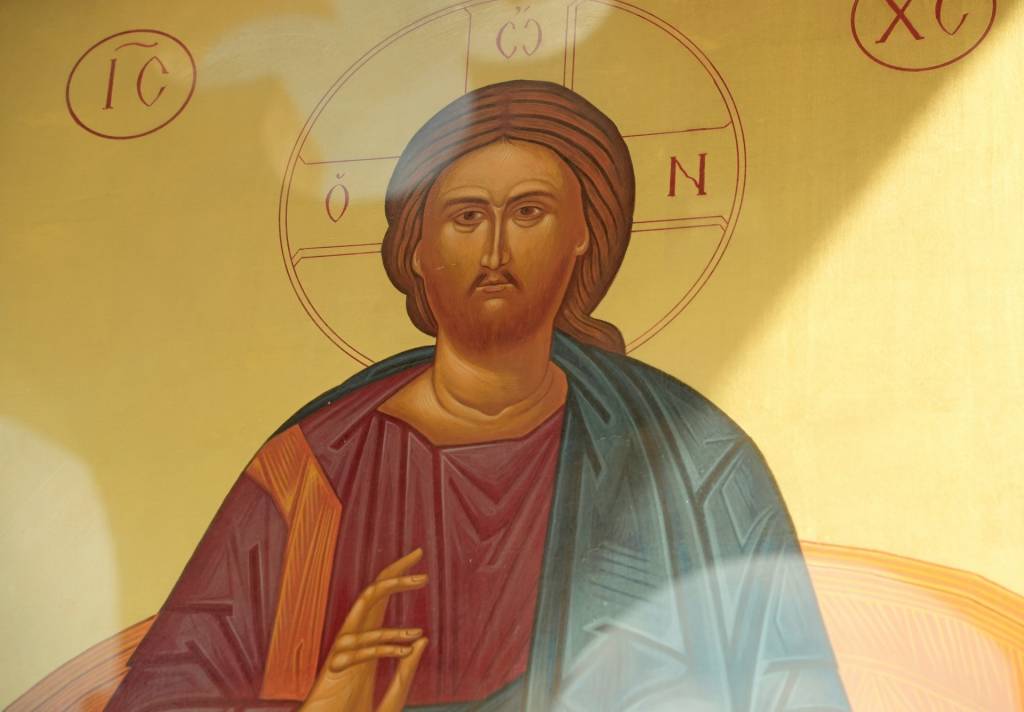
The heart of Christianity is the Incarnation. The eternal Son of God did not merely send a message or inspire a teacher. He Himself became man. Without ceasing to be divine, He assumed our human nature completely. Born of the Virgin Mary, He entered history as one of us. He experienced the full reality of human life, including weakness, sorrow, suffering, and death.
This truth is not symbolic or poetic language. It is the foundation of our salvation. The Fathers taught that what is not assumed is not healed. Because Christ assumed our humanity, our humanity can be healed. Because He took on a real body, our bodies can be sanctified. Because He entered creation, creation itself can be restored and renewed.
During the icon controversy, the question arose whether Christ could be depicted in His humanity. The Orthodox Church answered yes, not as a matter of artistic freedom but as a matter of theological necessity. We do not attempt to depict the divine essence, which remains invisible and beyond comprehension. But we depict the One who was seen, touched, and heard. To forbid His depiction would risk suggesting that His humanity was temporary, incomplete, or unreal.
The defense of icons was therefore a defense of the Gospel. It affirmed that salvation is concrete and embodied. The Word became flesh and dwelt among us. Because God entered matter, matter can serve as a witness to Him. Icons stand within the same sacramental vision that sees water, bread, wine, and oil as instruments of divine grace.
Icons Teach Theology Visually
Icons proclaim visually what the Church proclaims verbally. They are often described as theology in color because every detail within them communicates truth. They are not simply illustrations of biblical events. They are confessions of faith rendered in image.
The halo signifies participation in divine glory. The gold background points to the light of the Kingdom. The calm and disciplined expressions reflect inner transformation and spiritual stillness. The stylized features remind us that we are seeing humanity transfigured by grace, not merely recorded in its fallen state.
In a culture saturated with images that form our desires toward distraction and self absorption, icons reshape our vision. They train the eye and the heart to recognize holiness. They remind us that the saints are alive in Christ and that the Christian life is a path toward transformation.
Through icons, the Church teaches that faith is not confined to abstract ideas. It involves the whole person. It engages the senses. It sanctifies the imagination. Icons help form a Christian way of seeing the world, rooted in the reality of the Incarnation.
Veneration and the Redemption of Creation
It is important to address clearly the claim that Orthodox Christians worship icons. The Church worships God alone. Worship belongs only to the Holy Trinity. What we offer to icons is veneration, which means honor and reverence, not adoration.
The honor given to an icon passes to the person depicted. When we kiss an icon of Christ, we express love for Christ Himself. When we venerate an icon of a saint, we honor the work of God’s grace in that person’s life. This distinction safeguards true worship while allowing us to express reverence properly.
Icons also proclaim that creation is redeemable. The material world is not evil by nature. It is fallen, but it is not abandoned. God created it good, and in Christ He entered it to restore it. When wood and paint are set apart for holy use, they become signs of what God intends for all creation and for every human life.
Sunday of Orthodoxy is therefore a public confession. As we process with icons, we are proclaiming that the Word became flesh and dwelt among us. We are affirming that matter can be sanctified, that the saints are alive, and that the apostolic faith continues unbroken in the life of the Church.
If you would like to explore this more deeply, I encourage you to listen to our class Orthodox Icons, which walks through the theological foundations of iconography and addresses common questions in detail. You can also listen to Icons, Energies, and Theosis: Seeing God the Orthodox Way, where we examine how icons connect to the Church’s teaching on divine energies and our participation in the life of God.

1 Comment
David Hanks
Very interesting and thoughtful article to read. Thank you.