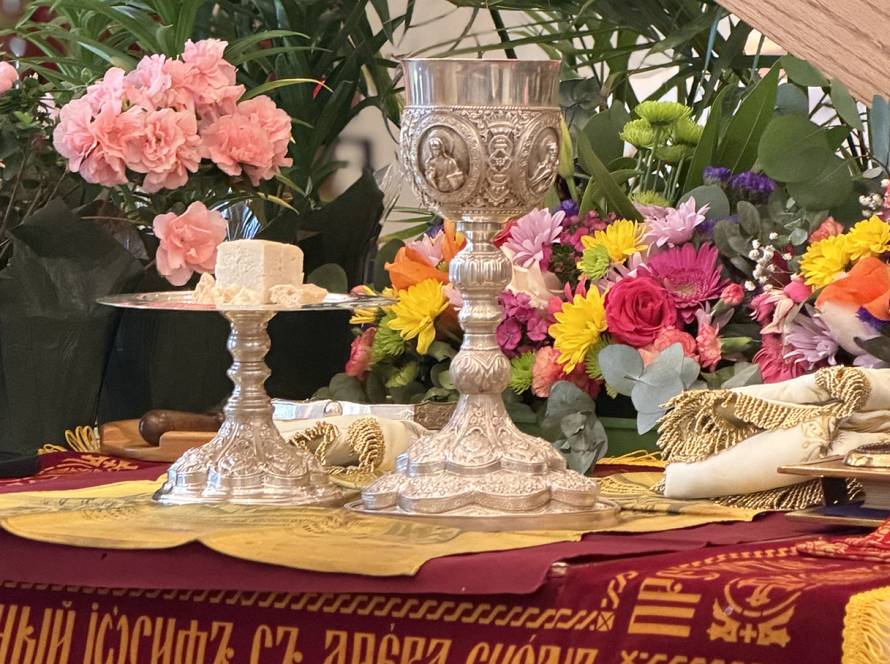
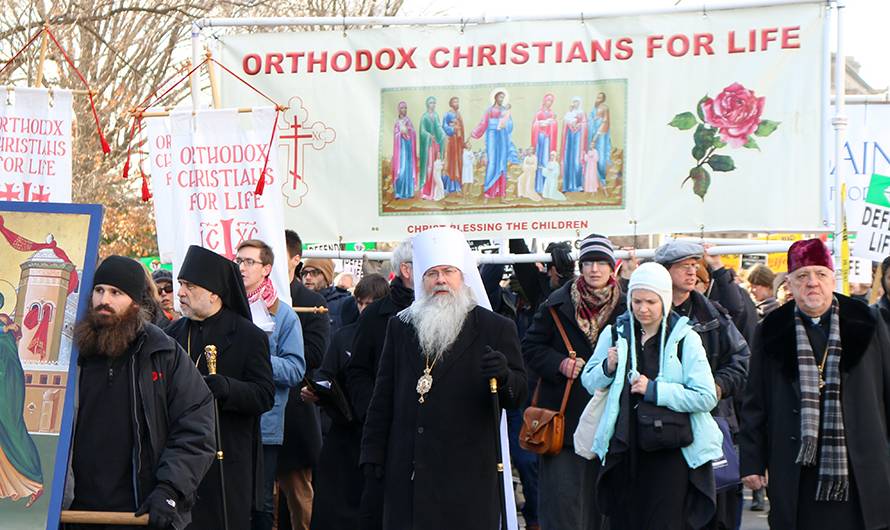
Men and women are both created in the image of God, both loved by Christ, both called to holiness, and both necessary in the life of the Church. The Orthodox Church does not teach that men are more valuable than women, or that women are less spiritual, less intelligent, or less important. In Christ, human dignity is not measured by power, office, status, or public visibility. It is measured by our creation in the image of God and our calling to become holy.
At the same time, the Orthodox Church does not teach that men and women are interchangeable. Equality does not mean sameness. God made man and woman as gifts to one another, and the Church receives that difference as part of God’s good creation. The modern world often turns men and women into rivals, as if dignity comes from competing for the same roles. The Church offers a different way: men and women serving together in holiness, each with real dignity, real responsibility, and real gifts.
Created in the Image of God
Holy Scripture begins with the creation of mankind: “So God created man in His own image; in the image of God He created him; male and female He created them” (Genesis 1:27). This is the foundation of the Church’s teaching. Man and woman are both created in the image of God. Both are called to know God, love God, worship God, and become like Him by grace.
This means the Church rejects every form of misogyny. Women are not second-class Christians. Women are not spiritually inferior to men. Women are not merely helpers in the sense of being unimportant. In the life of the Church, women have always prayed, suffered, taught, served, led, raised children, guided souls, preserved the faith, founded monasteries, strengthened parishes, and borne witness to Christ.
The clearest example is the Theotokos, the Mother of God. She is honored above all the saints. She is “more honorable than the cherubim and more glorious beyond compare than the seraphim.” No bishop, priest, monk, theologian, or martyr is honored above her. She was not ordained to the priesthood, yet she is the highest example of human holiness. This alone shows that holiness and dignity are not measured by ordination.
The Church also honors the holy women who followed Christ, the myrrh-bearing women who came to His tomb, the women martyrs who confessed Him before rulers and persecutors, the women monastics who gave their whole lives to prayer, and the countless mothers and grandmothers who handed down the faith in homes, villages, parishes, and monasteries. The Church’s calendar is full of holy women. Their lives matter because they show that the path to holiness is open to all.
St. Paul writes, “There is neither male nor female; for you are all one in Christ Jesus” (Galatians 3:28). This does not erase the difference between male and female. It means that men and women alike are baptized into Christ, clothed with Christ, and called to salvation. No one is closer to God simply because he is male, and no one is farther from God simply because she is female.
The Church also teaches spiritual motherhood and spiritual fatherhood. Not every woman is called to biological motherhood, and not every man is called to biological fatherhood. Some are married. Some are single. Some are monastics. Some are widowed. But every Christian is called to bear spiritual fruit. A spiritual mother or father helps others grow in Christ through prayer, wisdom, sacrifice, correction, encouragement, and love.
Priesthood, Service, and the Life of the Church

The Orthodox Church has a male priesthood. This is not because men are better than women. It is not because women are less holy. It is not because the Church thinks women have nothing to offer. The Church has a male priesthood because she has received the priesthood from Christ, the apostles, and the continuous life of the Church in this way.
Christ chose male apostles. The apostles appointed bishops, priests, and deacons in the life of the Church. From the beginning, the priest stands liturgically as an icon of Christ the Bridegroom in relation to His Bride, the Church. This is not about worldly power. It is about sacramental sign, obedience to what has been received, and faithfulness to the pattern given to the Church.
St. Paul speaks of marriage as a mystery that points to Christ and the Church (Ephesians 5:32). The Church is the Bride, and Christ is the Bridegroom. This does not mean men are Christ or women are merely the Church in some simplistic way. It means the priesthood carries a particular icon within the worshiping life of the Church. The priest is not acting as a private individual. He serves at the altar as one ordained to represent Christ’s priestly ministry in the Church.
This is why ordination is not about status or rights. The priesthood is not a reward, a promotion, or a statement of personal worth. In fact, no man has a “right” to be ordained either. A man may desire the priesthood and still not be called, blessed, or suited for it. The Church ordains those whom the Church receives, tests, blesses, and appoints. Priesthood is icon, sacrifice, and service, not power.
This is one place where the Orthodox Church differs from much of modern culture. Modern culture often measures dignity by access to the same titles, offices, or forms of public authority. The Church does not. If ordination were the measure of dignity, then most men would also be without dignity, since most men are not ordained. But that is not how the Church thinks. Holiness is not the same thing as office.
The Orthodox Church also does not accept modern feminism when it treats men and women as interchangeable, turns the relationship between men and women into a power struggle, rejects motherhood, dismisses fatherhood, or measures human dignity by whether someone holds the same office as someone else. The Church is not interested in making men and women compete for power. The Church calls men and women to serve together for salvation.
At the same time, rejecting modern power politics does not mean dismissing women. The ministry of women in parish life is real and necessary. Women serve as teachers, chanters, choir directors, godmothers, parish leaders, monastics, administrators, organizers, servants of mercy, and spiritual mothers. Women care for the poor, visit the sick, teach children, guide younger women, help form converts, sing the services, lead works of charity, and strengthen the life of the parish in countless visible and hidden ways.
Many parishes would collapse quickly without the faithful labor of women. This should not be treated as a small thing. The Church is not only what happens in front of everyone. Much of the real life of the Church happens through prayer, service, teaching, hospitality, sacrifice, and quiet faithfulness. God sees all of it.

Deaconesses, Misunderstandings, and Serving Together
The historic question of deaconesses is often raised today. The Church did have women called deaconesses in certain places and periods, especially in connection with the pastoral needs of women, including baptismal preparation, modesty, charitable work, and care for women in situations where male clergy could not appropriately serve in the same way. Their role was not the same as the male diaconate as it later developed and is not a back door into the priesthood.
There is a growing modern movement that wants to restore deaconesses in a way that often goes beyond what the Church historically practiced. This is not the path of the Orthodox Church. A modern return that treats deaconesses as a step toward women’s ordination, or as a way to revise the Church’s teaching on priesthood, is not faithful to the received life of the Church. The Church does not need to invent new clerical roles in order to prove that women matter.
Saying this does not diminish the role of women. It actually protects a deeper truth: women do not need ordination in order to be honored, holy, wise, influential, or necessary. The Theotokos was not ordained. The myrrh-bearing women were not ordained. St. Mary of Egypt was not ordained. St. Nina, Equal-to-the-Apostles, was not ordained. St. Macrina was not ordained. Yet their witness continues to shape the whole Church.
The Church must avoid two errors at the same time. The first error is misogyny, which treats women as lesser, weaker, or unimportant. The second error is modern power politics, which treats men and women as rivals and makes ordination the test of dignity. Both are foreign to the Orthodox mind. The Church calls us to something better than rivalry.
Men and women need one another in the life of the Church. Fathers and mothers both matter. Monks and nuns both matter. Priests and laypeople both matter. Godfathers and godmothers both matter. Teachers, chanters, choir directors, parish council members, youth leaders, cooks, cleaners, readers where blessed, and servants of mercy all matter. The Church is a body, and the body has many members.
St. Paul writes, “The eye cannot say to the hand, ‘I have no need of you’” (1 Corinthians 12:21). This is a good way to understand the life of the Church. Different members have different roles, but all belong to the same Body. The answer is not to make every member do the same thing. The answer is for every member to serve faithfully in the place God gives.
This also means men must not use the Church’s teaching as an excuse for pride, laziness, control, or harshness. A husband is not called to dominate his wife. A priest is not called to enjoy authority. A father is not called to rule by fear. Christ gives the pattern: “Whoever desires to become great among you, let him be your servant” (Matthew 20:26). Christian authority is always cruciform. It takes the shape of the Cross.
Women also should not be told that their worth depends on imitating men or holding clerical office. Motherhood, marriage, monasticism, teaching, hospitality, prayer, mercy, and spiritual guidance are not lesser things. The hidden work of holiness is often greater than the visible work of leadership. The Kingdom of God is not built by status. It is built by saints.
Most Commonly Asked Questions
Does the Orthodox Church believe men and women are equal?
Yes. Men and women are both created in the image of God, both loved by Christ, and both called to holiness. The Church teaches equal dignity, but not interchangeable roles. Equality does not mean sameness.
Why does the Orthodox Church not ordain women as priests?
The Orthodox Church has received the priesthood from Christ, the apostles, and the continuous Tradition of the Church as a male priesthood. This is not because women are less holy or less important. Priesthood is an icon of Christ the Bridegroom serving His Bride, the Church, and the Church does not have authority to remake that sacramental pattern.
Does this mean women have no authority or ministry in the Church?
No. Women have always served in vital ways in the Church as saints, martyrs, monastics, teachers, mothers, godmothers, chanters, choir directors, parish leaders, servants of mercy, and spiritual mothers. Ordination is not the only form of responsibility, influence, or holiness. The Theotokos is the greatest example of human holiness, and she was not ordained.
What about deaconesses?
Deaconesses existed in some places in the early Church, especially for particular pastoral needs involving women, modesty, baptismal preparation, and charitable service. Their role was not the same as the priesthood and should not be used today as a way to push for women’s ordination. The Church can honor women fully without turning deaconesses into something they were not.
How do I start living this teaching well?
Start by rejecting both pride and resentment. Men should not use Church teaching to dominate, and women should not be told that their dignity depends on holding the same role as men. Serve faithfully where God has placed you, ask for guidance, and learn from the saints, especially the Theotokos.
Serving Together in Holiness
The Orthodox vision of men and women is not competition. It is communion. Men and women are not enemies, rivals, or interchangeable parts. They are persons made in the image of God, called to holiness, and needed in the life of the Church.
The Church does not measure worth by power, office, or public recognition. She measures life by faithfulness to Christ. The priest must become a servant. The mother must become holy. The father must become sacrificial. The monastic must become humble. The teacher must speak truth. The godparent must pray. The whole Church must become the Body of Christ in the world.
If you’re working through this and need guidance, reach out to Fr. Stephen at frsteve@savannahorthodox.com AND Anthony at anthony@anthonyally.com. CC us both.