


Last week, we began our five-part November journey through Panem with “The Ballad of Songbirds and Snakes.” We looked at a young Coriolanus Snow who knew what it meant to be hungry, yet allowed that experience to teach him fear and control rather than compassion. Christian fasting offers another response to hunger: gratitude, dependence upon God, self-control, and greater awareness of those whose hunger is not voluntary.
This week, we move forward twenty-four years to “Sunrise on the Reaping” and the Fiftieth Hunger Games. This time our focus is Haymitch Abernathy, long before he became the drunken, sarcastic mentor we meet alongside Katniss and Peeta. Haymitch is sixteen years old, in love with Lenore Dove, trying to care for his family, and about to become one of forty-eight children selected for the Second Quarter Quell.
Because “Sunrise on the Reaping” is still primarily a novel for us right now, this article will rely on the book rather than pretending we have an entire film to work from. We will use the movie trailer once as a visual companion, but otherwise our images will come from the world surrounding the story. More importantly, we are continuing the question we began last week. If “The Ballad of Songbirds and Snakes” asks what hunger does to the person experiencing it, “Sunrise on the Reaping” asks something darker: What happens when someone else’s suffering becomes something we consume?
When Suffering Becomes Entertainment

By Haymitch’s time, the Hunger Games have become something much larger than the crude spectacle Snow experienced as a teenager. The Capitol has learned how to package suffering. There are ceremonies, interviews, costumes, personalities, narratives, favorites, and an audience waiting to see what happens next.
For the Fiftieth Hunger Games, the cruelty is doubled. The Second Quarter Quell requires each district to send twice the usual number of tributes. Forty-eight young people are taken from their homes and placed into the arena. Their terror becomes programming.
That is one of the most disturbing ideas running through “Sunrise on the Reaping.” The Capitol does not merely tolerate the suffering of the districts. It has learned to consume it. People watch. They discuss. They choose favorites. They become invested in personalities and stories while the people at the center of those stories are actually dying.
And that word, “consume,” gives us our connection to fasting and Thanksgiving. Gluttony is not merely about eating too much food. The deeper spiritual problem is an appetite that has forgotten how to say, “Enough.”
The Capitol Is Hungry for More Than Food
The Games Turn People Into Products

The tributes are human beings, but the Capitol needs them to become characters. Each needs a story that can be presented to the audience. The more compelling the story, the more useful the tribute becomes to the spectacle.
Haymitch understands that what the Capitol shows people is not necessarily the whole truth. The Games are not merely violence. They are violence with a narrative wrapped around it.
This is important because human beings are much easier to use when we stop seeing them as human beings. Once someone becomes a character, symbol, enemy, celebrity, statistic, or piece of content, we can forget that there is an actual person underneath the label.
Orthodox Christianity begins somewhere completely different. Every human being bears the image of God. That remains true when the person is useful to us, inconvenient to us, interesting to us, or completely unknown to us.
We Can Consume People Without Eating Them
That sounds strange until we consider how easily another person’s life can become entertainment.
We watch celebrity scandals unfold because we want to know what happens next. We read arguments between strangers. We watch videos of people having public breakdowns. We consume crime stories, family tragedies, humiliations, fights, and disasters. Sometimes our first instinct when something terrible happens is not to help, but to reach for a phone.
The technology is different from Panem, but the temptation is recognizable. Another human being’s worst day can become five minutes of entertainment during ours.
That does not mean Christians can never watch the news, documentaries, true stories, or difficult material. The question is what we are doing with another person’s suffering. Are we becoming more compassionate, more prayerful, and more willing to act? Or are we simply hungry for the next story?
Gluttony Is an Appetite Without Proper Limits
When we hear the word “gluttony,” we usually imagine someone sitting at a table eating an absurd amount of food. That certainly can be gluttony, but the spiritual problem goes deeper.
Gluttony is about allowing appetite to rule us. Food is the most obvious example because hunger is one of our strongest natural appetites, but human beings can become ravenous for many things.
We can hunger for attention. We can hunger for praise. We can hunger for outrage. We can hunger for gossip. We can hunger for entertainment. We can hunger for information to the point that we cannot sit quietly for five minutes without checking a screen.
The Capitol is gluttonous because it has lost the ability to recognize a boundary around its appetite. Food, fashion, entertainment, violence, bodies, personalities, and suffering can all become things to consume.
Christian Fasting Teaches Us to Stop
This is one reason the Church teaches us to fast. Fasting gives us practice saying a very simple word to ourselves: no.
I want this, but I do not have to take it. I could eat this, but I do not have to eat it. I could satisfy this appetite immediately, but I can wait.
That may sound small, but it is training in freedom. If every desire automatically becomes a command, then we are not actually free. We are being led around by whatever appetite happens to shout the loudest.
St. Paul writes, “All things are lawful for me, but I will not be brought under the power of any” in 1 Corinthians 6:12. The Christian does not simply ask, “Am I allowed to have this?” We also ask, “Is this beginning to master me?”
Fasting Is Not the Opposite of Feasting
This becomes particularly important during November because Orthodox Christians find themselves in an interesting situation. The Nativity Fast begins while American culture is preparing for Thanksgiving.
It can look like the Church and the culture are giving opposite instructions. One says fast. The other sets a turkey on the table and says feast.
But Christianity does not actually place fasting and feasting against one another. The Church does both. We fast, and we feast. In fact, we fast precisely so that we can learn how to feast rightly.
A person who never says no to an appetite eventually loses the ability to receive something as a gift. Everything becomes expected. Everything becomes ordinary. Everything becomes something we deserve.
Fasting restores wonder. After going without something, receiving it again feels different. The food has not changed. We have.
The Capitol Can Feast, but It Cannot Give Thanks
This is where Panem gives us such a useful contrast. The Capitol knows how to throw a feast. It knows how to decorate a table. It knows luxury, abundance, presentation, and excess.
But abundance is not the same thing as thanksgiving.
Thanksgiving requires us to recognize that what we have is gift. It requires humility because I cannot truly give thanks for something while simultaneously acting as though I am entitled to it.
The Capitol receives the labor and resources of the districts without learning gratitude toward the people whose work makes its abundance possible. Its tables can be full while its heart remains empty.
That is a warning worth hearing before our own Thanksgiving tables are full.
The Rich Man Had a Full Table Too
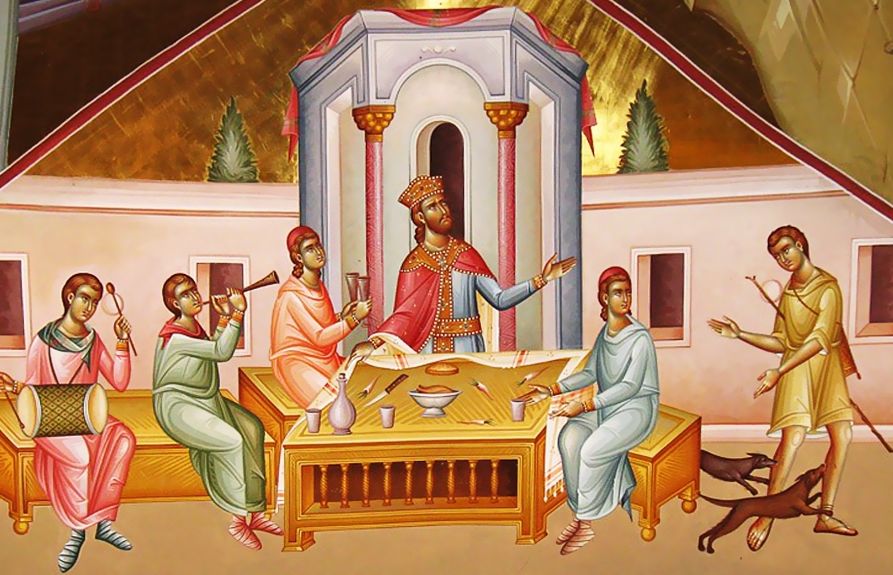
Jesus Christ gives us a disturbing image of this in the story of the rich man and Lazarus in Luke 16. The rich man dresses magnificently and feasts every day while Lazarus lies suffering at his gate.
Notice what makes the story so uncomfortable. Lazarus is not somewhere far away. He is at the gate.
The rich man does not have to search for suffering. He has simply learned not to see it.
That is remarkably close to the spiritual condition of the Capitol. The suffering of the districts is not hidden. The Capitol literally broadcasts it. Yet visibility does not necessarily produce compassion.
We can look directly at suffering and still fail to see the person who is suffering.
Haymitch Refuses to Play the Part Correctly
Haymitch becomes dangerous because he gradually recognizes the machinery surrounding him. The Capitol wants a story. It wants a tribute who can be packaged, presented, watched, and ultimately consumed.
But Haymitch is not merely fighting the other tributes. He is increasingly fighting the story the Capitol wants to tell about him.
This is one of the reasons his story fits so naturally into the larger “Hunger Games” series. Katniss will eventually discover the same thing. The arena is physical, but the narrative surrounding the arena is another battlefield entirely.
If the Capitol controls what people see, it can influence what people believe. If it controls the story, it can make cruelty appear necessary, rebellion appear hopeless, and victims appear responsible for their own suffering.
We Need Sobriety, Not Just Information
Orthodox spirituality frequently speaks about watchfulness and sobriety. That does not simply mean avoiding alcohol. Spiritual sobriety means learning to pay attention to what is happening within us.
What am I allowing into my mind? What is it doing to my heart? What passions are being stirred? Am I becoming more compassionate, or merely more angry? Am I learning truth, or simply feeding an appetite?
This is especially important in a world where almost every tragedy can immediately become content. We can spend hours consuming terrible news while convincing ourselves that being informed is automatically virtuous.
Sometimes it is necessary to be informed. But there is a difference between knowing enough to respond faithfully and endlessly consuming suffering because our minds have become addicted to the next terrible thing.
The Arena Wants Everyone to Become an Enemy
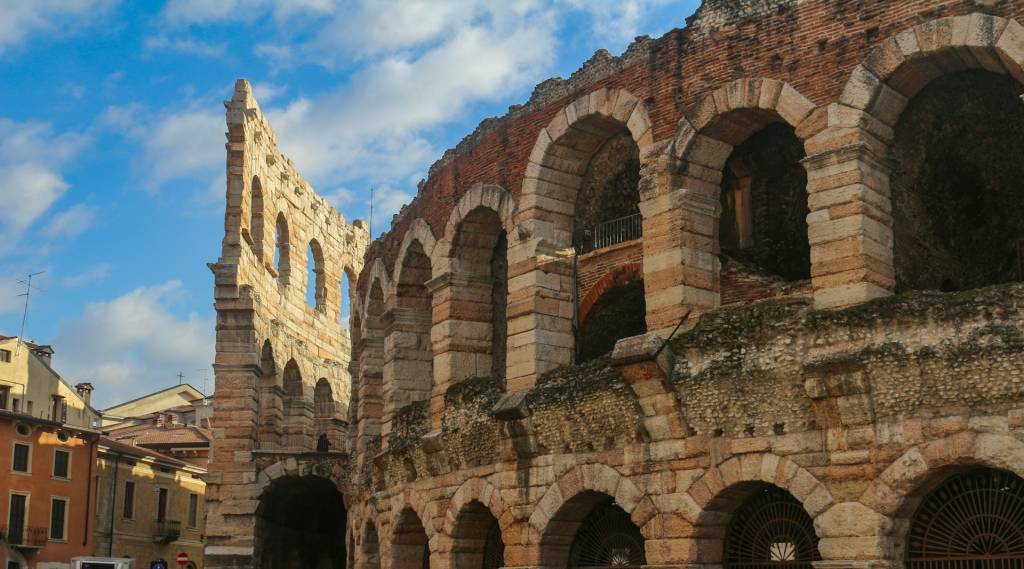
The Hunger Games work because the Capitol forces the tributes into a false moral universe. There is not enough for everyone. Only one person can survive. Therefore, everyone around you must eventually become a threat.
Scarcity is turned into competition.
That is one of the darkest ways food functions throughout Panem. If there is only enough bread for one of us, your hunger threatens mine. If your survival means my death, compassion becomes dangerous.
The Christian vision is radically different. My neighbor’s hunger is not competition with mine. It is a call to love.
Fasting Should End in Generosity
This is why Orthodox fasting has traditionally been connected with almsgiving. We do not simply consume less and congratulate ourselves for being disciplined.
We consume less so that we have more freedom to give.
If my grocery bill becomes smaller during the fast, but nothing about my generosity changes, I should at least ask what I am doing. The goal is not to finish forty days having successfully avoided cheese. The goal is repentance.
The Fathers repeatedly connect fasting with mercy because the hunger I voluntarily accept should awaken me to the hunger someone else did not choose.
Someone Else’s Pain Is Not Content
This may be the most uncomfortable lesson “Sunrise on the Reaping” gives us.
The people watching the Hunger Games can tell themselves that they did not create the Games. They did not select the tributes. They did not build the arena. They did not personally kill anyone.
They only watched.
But the entire spectacle depends upon people continuing to watch.
That should at least make Christians examine what we allow ourselves to consume. Not every tragedy needs our commentary. Not every argument needs our attention. Not every humiliation needs another viewer.
Sometimes the most human thing we can do is refuse to turn another person’s suffering into entertainment.
Haymitch Is a Person Before He Is a Victor
When we first meet Haymitch in “The Hunger Games,” it is easy to see the drunken mentor before seeing the wounded man. “Sunrise on the Reaping” reverses that perspective.
Before the alcohol, before the sarcasm, before decades of mentoring children who would almost certainly die, there was a sixteen-year-old boy.
He had a mother. He had a younger brother. He loved Lenore Dove. He had hopes for a life that had nothing to do with becoming a symbol.
That is important because suffering often becomes easier to consume when we encounter the label before the person.
“Victor” is a label. “Tribute” is a label. “Rebel” is a label. “Enemy” is a label.
Christian love keeps insisting that underneath every label is a human being created in the image of God.
The Image of God Cannot Be Reduced to a Role
This is one of the deepest disagreements between Christianity and Panem.
Panem constantly reduces people to usefulness. Tributes become entertainment. Victors become propaganda. Stylists become image-makers. Gamemakers become architects of spectacle. Even children become tools through which the state demonstrates power.
The Orthodox Church teaches that the value of a human being comes before usefulness. We do not possess dignity because we are productive, attractive, entertaining, politically useful, wealthy, healthy, intelligent, or successful.
Human dignity begins with the fact that we are created by God in His image.
That means a human being can never properly become merely something for another person to consume.
Thanksgiving Should Open the Door
As Thanksgiving approaches, this gives us a practical challenge.
We will sit around tables and say that we are thankful. Good. We should. Gratitude is profoundly Christian.
But the Christian question comes immediately afterward: What does gratitude make us do?
If I thank God for food, I should care that someone else is hungry. If I thank God for my home, I should become more aware of those without one. If I thank God for my family, I should remember those spending the holiday alone.
Thanksgiving should open our hands, our wallets, our homes, and sometimes literally our doors.
A table becomes more Christian not merely because we pray over it, but because the gratitude expressed in that prayer begins changing the people sitting around it.
There Is a Difference Between Seeing and Loving

The Capitol sees the tributes constantly. Their faces are everywhere. Their stories are broadcast. Their suffering is discussed.
Yet seeing is not the same thing as loving.
That distinction matters in our own age because we see more human suffering than almost any generation before us. Within minutes, we can watch war, natural disasters, crime, poverty, grief, and violence from almost anywhere on earth.
That access can awaken compassion. It can also numb us.
The Christian response cannot simply be to consume more suffering. We pray. We give. We serve. We mourn. When possible, we act. And sometimes we turn the screen off because continuing to watch is no longer helping anyone.
The Christian Table Is Supposed to Form Us Differently
The Capitol table teaches consumption. The Christian table should teach communion.
This reaches its fullness in the Eucharist. The very word “Eucharist” means thanksgiving. But the Eucharist is not simply a symbolic meal about sharing. Orthodox Christians believe that we truly receive the Body and Blood of Christ.
That should transform the way we understand every other table.
We do not approach creation merely as consumers asking what we can take from it. We receive God’s gifts with thanksgiving and learn to offer ourselves in love.
That is why fasting, feasting, almsgiving, hospitality, and Eucharist belong together. They are teaching us how to receive without becoming possessive and how to give without fearing that generosity will leave us empty.
What Are We Consuming?

Last week, Coriolanus Snow gave us one question: What will hunger make of us?
Haymitch gives us another: What are we consuming?
Not simply what is on our plates. What are we feeding our minds? What are we allowing to entertain us? Whose humiliation are we watching? Whose anger are we consuming? Whose tragedy has become something we follow because we cannot wait to see what happens next?
Fasting is not merely about changing the ingredients in our meals. It is training the whole person to recognize that appetite does not have to become obedience.
Sometimes holiness begins with learning to say, “I have had enough.”
From Consuming to Giving
“Sunrise on the Reaping” shows us a society that has learned to consume almost everything. The Capitol consumes food, fashion, entertainment, personalities, narratives, and finally human suffering itself.
The Christian life moves in the opposite direction.
Instead of asking constantly what we can consume, we learn to ask what we can give. Instead of turning our neighbor into content, we learn to see a person. Instead of allowing every appetite to rule us, we practice restraint. Instead of letting someone else’s suffering entertain us, we allow it to call us toward mercy.
That is what fasting is supposed to teach us.
And next week, that lesson becomes much more personal. We finally arrive at Katniss Everdeen, Peeta Mellark, District 12, and a loaf of burned bread. In “The Hunger Games,” food will become something more than scarcity or spectacle. Food will become gift, mercy, sacrifice, and one of the simplest ways one human being can say to another: I want you to live.
If you have a film, song, book, television series, or other piece of media you would like me to cover in a future “Almost Christian” article, send your suggestion to me, Fr. Stephen, at frsteve@savannahorthodox.com.
Frequently Asked Questions
What is “Sunrise on the Reaping” about?
“Sunrise on the Reaping” follows sixteen-year-old Haymitch Abernathy during the Fiftieth Hunger Games, also known as the Second Quarter Quell. The story shows the young man behind the damaged mentor readers later meet in the original trilogy and explores propaganda, power, manipulation, love, loss, and resistance.
Why are there forty-eight tributes in Haymitch’s Hunger Games?
The Fiftieth Hunger Games are a Quarter Quell, and the special rule requires each district to send twice the normal number of tributes. Instead of twenty-four children entering the arena, forty-eight are selected.
What does “Sunrise on the Reaping” say about propaganda?
The novel repeatedly shows that controlling people involves controlling the stories they hear and the images they see. Haymitch gradually recognizes that the Capitol is not only controlling bodies through violence but shaping how events are understood through spectacle and narrative.
What does Orthodox Christianity teach about gluttony?
Gluttony is not simply enjoying food or celebrating a feast. It is the disordered rule of appetite, which is why Orthodox fasting trains Christians to practice self-control while connecting that restraint with prayer, repentance, and generosity.
Why do Orthodox Christians connect fasting with almsgiving?
Christian fasting is supposed to turn us outward rather than make us obsessed with our own dietary discipline. Voluntarily going without should make us more attentive and generous toward people whose hunger and poverty are not voluntary.

