The Orthodox Church has clergy because the Church is not a loose gathering of people who happen to believe similar things. The Church is the Body of Christ, with worship, sacraments, teaching, authority, obedience, and love. In the Body, every part has a place. No one gives himself a ministry. A man is blessed, tonsured, or ordained by the Church, and he serves within the order the Church has received from the Apostles.
This matters especially for catechumens. Orthodoxy is not self-made Christianity. We do not invent our own church, choose our own authority, or build a parish around personal preference. We enter the Church, receive the faith, and learn to live under blessing. The clergy hierarchy is not about who matters more. It is about order, obedience, and service, so that the people of God can worship rightly, receive the sacraments, and remain united in the apostolic faith.
The Five Orders of Clergy
The Orthodox Church has a clear hierarchy of clergy. The five basic orders are reader, subdeacon, deacon, priest, and bishop. Each order has its own role in the worship and life of the Church. These are not simply church jobs or volunteer positions. They are ministries given by the Church through blessing, tonsure, or ordination.
Readers and subdeacons are often called the minor orders. Deacons, priests, and bishops are called the major orders. The word “minor” does not mean unimportant. It means these orders do not carry the same sacramental authority as the major orders. A reader is not a priest. A subdeacon is not a deacon. A deacon is not a priest. Each order serves in the place given to it.
This is one of the first lessons of Orthodox life: ministry is not self-appointed. A man may have a good desire to serve, read, chant, assist in the altar, teach, or lead, but good desire still has to be placed under the order of the Church. The Church tests, blesses, and appoints. This protects the person serving, and it protects the people being served.
St. Paul teaches that the Church is one Body with many members, and that each member has its own place and function. He writes, “God has set the members, each one of them, in the body just as He pleased” (1 Corinthians 12:18). That is the spirit of the Orthodox clergy hierarchy. It is not a ladder of ego. It is a pattern of service.
The hierarchy of the Church is not about power in the worldly sense. Christ told His Apostles, “Whoever desires to become great among you, let him be your servant” (Matthew 20:26). The higher a man is placed in the Church, the more deeply he is called to sacrifice, obey, serve, and answer before God.
The Reader and Subdeacon
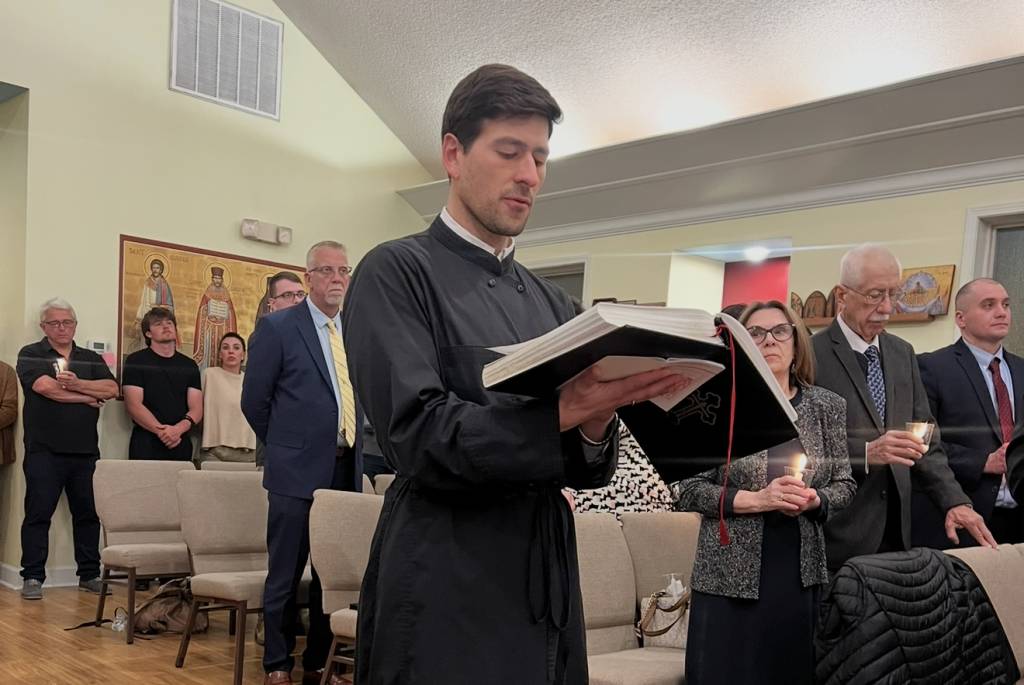
The reader is blessed to read the appointed Scriptures and assist in the services. In many parishes, readers also help with chanting, service books, and the order of worship. The reader’s role teaches us that reading Scripture in church is not casual. The Church does not treat the holy readings as public speaking, entertainment, or a chance to show talent. The reader stands before the people and gives voice to the Scriptures appointed by the Church.
The subdeacon assists in the altar and helps maintain liturgical order. He may help prepare for services, care for liturgical items, assist the bishop or priest, and help keep the worship of the Church reverent and orderly. His role is quiet, but it is not meaningless. Much of the Church’s life is built on hidden faithfulness.
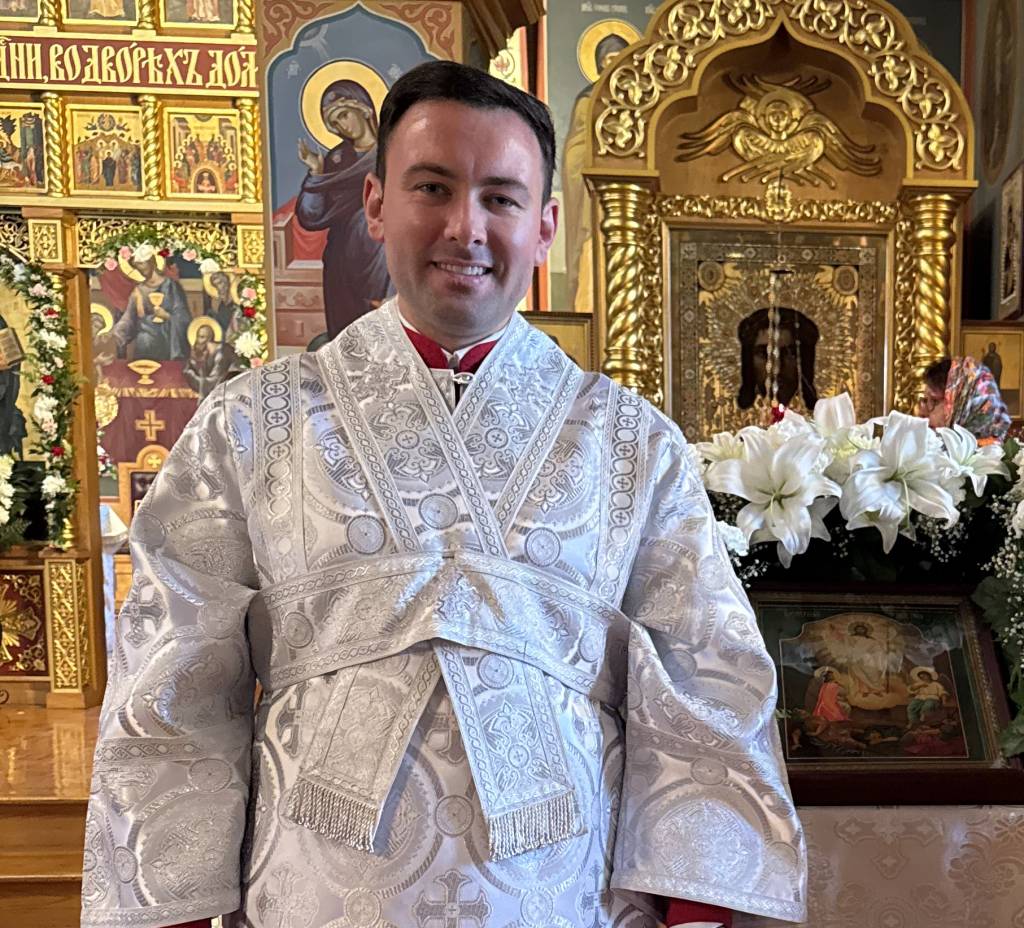
These are real liturgical roles, not simply volunteer jobs. Of course, many people volunteer in the parish, and that service is good and necessary. But the minor orders remind us that even small acts in the worship of God should be done with reverence, humility, and blessing. The Church does not separate “important” service from “unimportant” service in the way the world often does. Anything done before God should be done carefully.
Different Orthodox jurisdictions have different practices concerning who is formally tonsured or ordained to these minor orders. In some places, most men who read in church are formally tonsured readers. In other places, a man may be blessed to read without being formally tonsured. Some parishes have subdeacons serving regularly, while others do not. These practices can vary, but the principle remains the same: liturgical service belongs to the order and blessing of the Church.
The Deacon

The deacon is the first of the major orders. His ministry is centered on service, prayer, obedience, and liturgical order. During the Divine Liturgy, the deacon leads the people in the litanies, calls the faithful to prayer, assists the bishop or priest, and serves at the altar. He does not stand apart from the people as a performer. He helps gather the prayers of the people and directs them toward God.
The word “deacon” is connected to service. In the New Testament, the Apostles appoint men through prayer and the laying on of hands to assist with the needs of the Church, especially so the ministry of prayer and the word would not be neglected (Acts 6:1-6). Historically, deacons helped care for the poor, maintain order, assist the bishop, and serve the Church in practical ministry.
A deacon does not celebrate the Divine Liturgy by himself. He does not hear confessions. He does not bless on his own authority unless he has been given specific permission. This is not because the deacon’s role is small. It is because his role is specific. The deacon’s ministry is not to replace the priest or act independently. His ministry shows the beauty of obedience and service.
This is important because many people today think every role must include complete independence in order to matter. The Church teaches something different. A deacon’s ministry is meaningful precisely because it is obedient. He serves under the bishop and priest, and through that obedience he teaches the faithful how to pray, how to serve, and how to stand in order before God.
The Priest
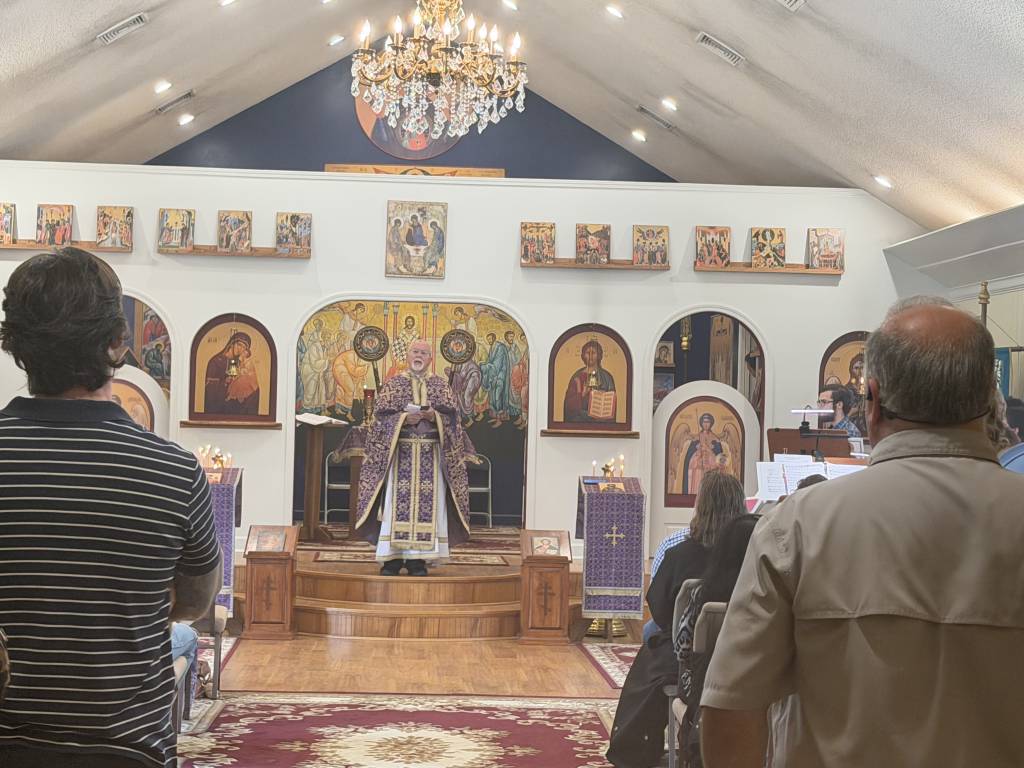
The priest is assigned by the bishop to shepherd a local parish. He celebrates the Divine Liturgy, hears confessions, gives blessings, preaches, teaches, visits the sick, guides catechumens, and cares for the spiritual life of the faithful. The priest is often the clergyman people know best because he is the one serving day by day in the parish.
But the priest does not act independently. He is not the owner of the parish. He is not a religious entrepreneur. He does not create his own version of Orthodoxy. The priest serves as the representative of the bishop in the local community. This is why the priest commemorates the bishop during the services.
When the priest serves the Divine Liturgy, he does so under the blessing of the bishop. When he hears confessions, teaches, blesses, and shepherds, he does so as one entrusted with ministry by the bishop. The parish is not its own separate church. It is part of the diocese under the bishop.
This is one reason Orthodox parish life is different from much of modern American Christianity. A parish cannot simply vote itself into whatever it wants to become. The priest cannot simply reinvent the faith to fit the mood of the room. The faithful are not gathered around the personality of the priest. They are gathered into the Church, under the bishop, around the holy altar, to receive the life of Christ.
For catechumens, this means the priest is not merely a teacher or religious advisor. He is a spiritual father in the parish, entrusted with the care of souls. That does not make him perfect, and it does not mean he replaces your conscience. It does mean his guidance should be received seriously, prayerfully, and with humility.
The Bishop

The bishop is the chief shepherd of a diocese. He oversees the clergy, parishes, and faithful entrusted to him. He ordains clergy, guards the Orthodox faith, preserves the unity of the Church, and teaches as a successor of the Apostles. The bishop is not simply an administrator or religious CEO. He is a father, teacher, shepherd, and guardian of the apostolic faith.
The bishop is the visible center of unity for the local Church. This does not mean he replaces Christ. Christ alone is the Head of the Church. But the bishop is the one through whom the local Church remains visibly gathered, ordered, and united in the apostolic faith. Every priest and deacon serves with the blessing and authority of the bishop.
St. Ignatius of Antioch, writing in the early second century, speaks very strongly about the bishop’s place in the Church. He teaches that the faithful should gather around the bishop and that the Eucharistic life of the Church is not separated from the bishop. His point is not that the bishop is a worldly ruler. His point is that the Church is not a private gathering. The Church is visible, ordered, sacramental, and united.
This is why an Orthodox parish is Orthodox because it belongs to a diocese under a canonical Orthodox bishop. Icons, incense, vestments, ancient music, and beautiful services are all part of Orthodox worship, but they are not enough by themselves. A group does not become the Orthodox Church by imitating Orthodox externals. The parish must be under a bishop who stands in the communion and apostolic succession of the Orthodox Church.
The bishop bears a heavy responsibility. He must guard the faith, correct error, ordain carefully, care for clergy, guide parishes, and preserve unity. He will answer to God for how he shepherds the people entrusted to him. That is why the bishop is not merely a religious executive. He is a spiritual father with an apostolic burden.
Clergy Ranks and Awards
Within the clergy, there are also ranks, titles, and awards. These can be confusing when someone is new to Orthodoxy. You may hear titles like archpriest, protodeacon, archdeacon, igumen, archimandrite, archbishop, or metropolitan. These titles matter, but they do not create new sacramental orders of clergy.
An archpriest is still a priest. A protodeacon is still a deacon. An archdeacon is still a deacon. An igumen or archimandrite is still a priest, usually connected to monastic life, leadership, or a particular responsibility. A metropolitan or archbishop is still a bishop.
These titles usually recognize service, responsibility, seniority, monastic leadership, or a particular role in the Church. They may affect how a clergyman is addressed, what he wears in certain services, or what responsibilities he has. But they do not create new sacraments or new kinds of clergy.
This distinction is important. The basic sacramental orders remain reader, subdeacon, deacon, priest, and bishop. Awards and ranks are distinctions within those orders. They should never distract us from the real purpose of clergy, which is to serve the Church, guard the faith, lead worship, and help the faithful live in Christ.
How the Episcopacy Works
The episcopacy refers to the office and ministry of the bishop. In Orthodoxy, the bishop is essential to the life of the Church. A parish is Orthodox because it belongs to a diocese under a canonical Orthodox bishop. The bishop connects the local parish to the whole Orthodox Church across the world.
Bishops do not act alone as if each one were a law unto himself. They serve in synods with other bishops. This is part of the conciliar life of the Church. It protects the Church from private rule, isolated authority, and one man’s personal opinions becoming the faith of the Church.
This is why Orthodoxy is both hierarchical and conciliar. It is hierarchical because there is real order: bishop, priest, deacon, and the faithful. It is conciliar because bishops serve together and answer within the life of the Church. It is sacramental because the Church does not live by ideas alone, but by Baptism, Chrismation, the Eucharist, Confession, Marriage, Ordination, Unction, prayer, fasting, and worship.
The priest is the bishop’s representative in the parish. The deacon serves under the bishop and priest. The minor orders assist in the worship of the Church. The faithful receive this order not as a burden, but as a gift. It means the parish is not floating alone. It is held within the larger life of the Church.
This also guards us against individualism. Modern people often want spirituality without authority, community without obedience, and worship without accountability. The episcopacy teaches us that the Church is not built on personal preference. It is received, guarded, and handed down.
Laying on of Hands and Ordination

Clergy are ordained through the laying on of hands. This practice comes from the Apostles and is seen in the New Testament. St. Paul tells St. Timothy, “Do not neglect the gift that is in you, which was given to you by prophecy with the laying on of the hands of the presbytery” (1 Timothy 4:14). He also warns him, “Do not lay hands on anyone hastily” (1 Timothy 5:22). Ordination is holy, serious, and not rushed.
Ordination is not simply hiring someone for a religious job. The Church is not filling a position the way a company fills a vacancy. In ordination, the Church sets a man apart for sacred ministry. The bishop lays hands on the candidate and prays for the grace of the Holy Spirit. This happens within the worship of the Church, usually during the Divine Liturgy.
That setting matters. Ordination belongs to the Church’s worship because clergy exist for the worship, sacraments, teaching, and pastoral life of the Church. A man is not ordained for himself. He is ordained for service. His ministry is received in the Church and for the Church.
During the ordination, the people respond with Axios, meaning Worthy. This does not mean the man is sinless. It means the Church receives him as one who has been presented, tested, and set apart for this ministry. The people’s response shows that ordination belongs to the whole Church, not just to the individual being ordained.
This is why ordination should never be treated casually. A man does not become clergy because he wants religious importance. He is set apart to carry a burden. He is placed under obedience. He is entrusted with holy things, and he will answer to God for how he serves.
Apostolic Succession
Apostolic succession means that the ministry of the Church is handed down from the Apostles through the bishops. The bishops are successors of the Apostles. This does not mean every bishop is personally holy or perfect. Bishops are human beings, and they will answer to God for their ministry. Apostolic succession means the Church’s teaching, sacraments, and pastoral authority are not invented in each generation.
The Orthodox Church does not begin from one person’s private reading of the Bible. It does not begin from a reform movement, a personal vision, or a new spiritual idea. The faith is received, preserved, and handed down. Orthodoxy is the living faith of the Church handed down from Christ to the Apostles, from the Apostles to the bishops, and from the bishops to the faithful.
St. Irenaeus of Lyons, writing in the second century, argued against false teachers by pointing to the public teaching and succession of the bishops in the apostolic churches. His point was simple: the true faith is not a secret invention. It is the faith openly handed down in the Church.
Apostolic succession protects the Church from becoming a self-made religion. Without it, Christianity can become whatever a preacher, committee, denomination, or individual decides it should be. But in the Orthodox Church, the faith is not reinvented. It is received. It is guarded. It is lived. It is handed on.
This is why the bishop matters so much. The bishop does not replace the Gospel. He guards the Gospel. He does not stand above Holy Tradition. He is bound to preserve it. He does not invent the sacraments. He serves the sacramental life entrusted to the Church from the beginning.
Why This Matters for Catechumens and Everyone Else
Catechumens need to understand that Orthodoxy is not individualistic. We do not choose our own version of Christianity, build a private faith around our preferences, or treat the Church as a place that exists to affirm whatever we already think. We enter the Church, receive the faith, and learn obedience within the Body of Christ. This is not only for catechumens. Every Orthodox Christian has to keep learning this.
The clergy hierarchy helps preserve unity, order, worship, and right teaching. The bishop keeps the parish connected to the whole Orthodox Church. The priest shepherds the local community in the bishop’s name. The deacon teaches the Church the beauty of service. The minor orders remind us that even small acts in worship are holy when done with blessing.
This matters in daily parish life. When a priest gives guidance, he is not merely sharing a personal opinion. He is shepherding within the order of the Church. When a deacon leads the litanies, he is not performing. He is calling the people to prayer. When a reader reads the Scriptures, he is not filling space. He is serving the Word of God within the worship of the Church. When the bishop is commemorated, the parish is reminded that it belongs to the whole Church, not to itself.
This also matters because all of us are tempted to make the Church smaller than it is. Catechumens may be tempted to treat Orthodoxy as a new set of interesting beliefs. Converts may be tempted to treat it as a personal discovery. Longtime Orthodox Christians may be tempted to treat the parish as something familiar, cultural, or routine. The hierarchy of the Church reminds all of us that we are not the center. Christ is the center, and we are being gathered into His Body.
The life of the Church is not measured by visibility. Not everyone is called to be in the altar, at the chanter stand, in front of the parish, or in a role people notice. The hidden prayers of a faithful grandmother, the quiet obedience of a catechumen, the steady service of a reader, the sacrifice of a priest, and the burden of a bishop all belong to the one life of the Church when offered to God.
The hierarchy of the Church is not about who matters more. It is about everyone serving in the place given to them by God. That is a hard lesson in a world that teaches us to chase attention, authority, and control. But in the Church, salvation is learned through humility, obedience, worship, repentance, and love.
Most Commonly Asked Questions
Why does the Orthodox Church have bishops, priests, and deacons?
The Church has bishops, priests, and deacons because this is the order received from the Apostles and preserved in the life of the Church. These roles are not about creating distance between clergy and laity. They exist so the Church can worship rightly, teach the faith clearly, care for the faithful, and remain united in the sacraments.
Is a priest the head of the parish?
The priest shepherds the parish, but he does so in the name of the bishop. The parish belongs to the diocese, not to the priest as a private possession. This is why the priest commemorates the bishop in the services and serves under his blessing.
Can a deacon do the same things as a priest?
No. A deacon has a real and holy ministry, but he does not celebrate the Divine Liturgy by himself, hear confessions, or bless on his own authority unless specifically permitted. His ministry is centered on service, prayer, obedience, and assisting the bishop or priest.
Are clergy ranks like archpriest or metropolitan new orders of clergy?
No. An archpriest is still a priest, and a metropolitan is still a bishop. These titles usually recognize service, seniority, responsibility, or a particular role, but they do not create new sacramental orders.
What should I do next as a catechumen?
Start by learning to receive the Church as the Church, not as a place where you design your own spiritual life. Attend the services, listen carefully, ask questions, and learn obedience in small things. The more you enter the worship and order of the Church, the more this will begin to make sense from the inside.
A Pastoral Word
The clergy hierarchy of the Orthodox Church is not about control, status, or religious politics. It is about the Church remaining faithful to Christ, the Apostles, the sacraments, and the worship handed down from the beginning. The bishop, priest, deacon, minor orders, monastics, and laity all serve in different ways, but they belong to one Body.
For a catechumen, this is part of learning how to become Orthodox in real life. We do not come into the Church to rule ourselves. We come to be healed, taught, corrected, fed, and joined to Christ in His Body. The hierarchy of the Church teaches us that salvation is not individualism. It is life under blessing, in communion, with obedience, humility, and love.
If you’re working through this and need guidance, reach out to Fr. Stephen at frsteve@savannahorthodox.com AND Anthony at anthony@anthonyally.com. CC us both.