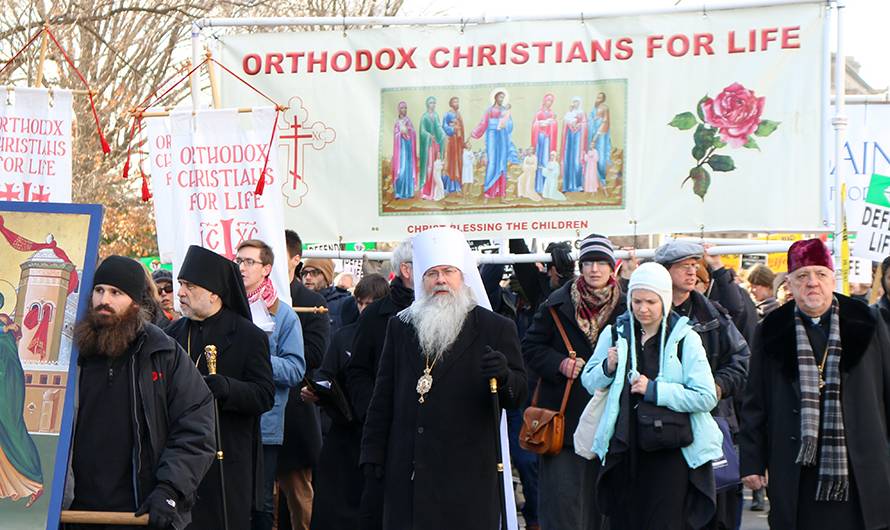
Western Rite Orthodoxy is the Orthodox Christian faith lived through approved forms of Western Christian worship. A canonical Western Rite parish belongs to the same Orthodox Church as a Byzantine Rite parish. Its people confess the same doctrine, receive the same sacraments, and live under the authority of Orthodox bishops. The difference is in the liturgical tradition through which that faith is expressed.
Becoming Orthodox means receiving the faith of the apostles and learning to live it. It does not require every Christian people to use identical music, vestments, or service books. Yet familiar ceremonies cannot make a community Orthodox by themselves. The faith we confess, the worship we offer, and our communion with the Church belong together.
One Faith Expressed through Different Liturgical Traditions
Most Orthodox parishes we encounter today use the Byzantine Rite. This tradition developed in the Christian East and shapes the worship of Greek, Russian, Antiochian, Serbian, Romanian, and many other Orthodox communities. Even within this shared tradition, there are differences in language, music, and local customs.
The ancient Church also included the Christian communities of Rome, Britain, Ireland, Gaul, Spain, and other Western lands. These Christians had their own liturgical traditions. Before the schism between Rome and the Orthodox East, Eastern and Western Christians shared communion while maintaining different forms of worship.
This history was not free from disagreements. Nevertheless, the Church did not require every parish to celebrate every ceremony identically. Her unity rested in the apostolic faith, the sacraments, and the communion of her bishops. St. Paul expresses that foundation clearly: “one Lord, one faith, one baptism” (Ephesians 4:5).
The word “rite” describes an established tradition of worship and the practices connected with it. It includes more than the Sunday Eucharist. A rite also shapes the daily services, church calendar, prayers, music, vestments, and fasting customs. A particular Eucharistic service is one part of that larger tradition. The Liturgies of St. John Chrysostom and St. Basil, for example, are different Eucharistic services within the Byzantine Rite.
St. Gregory the Great addressed differences in worship when answering St. Augustine of Canterbury’s questions about the English mission. He permitted Augustine to draw carefully from sound customs found in different churches for the people entrusted to him. His counsel shows that one faith could be expressed through different local practices. This was pastoral guidance within the Church’s authority, rather than permission for private invention.
All Christian Eucharistic worship begins with Christ, who gave His disciples His Body and Blood at the Mystical Supper and commanded, “Do this in remembrance of Me” (Luke 22:19). The apostles handed on what they received. Over time, local churches developed recognizable patterns of prayers, readings, hymns, and ceremonies around that apostolic inheritance.
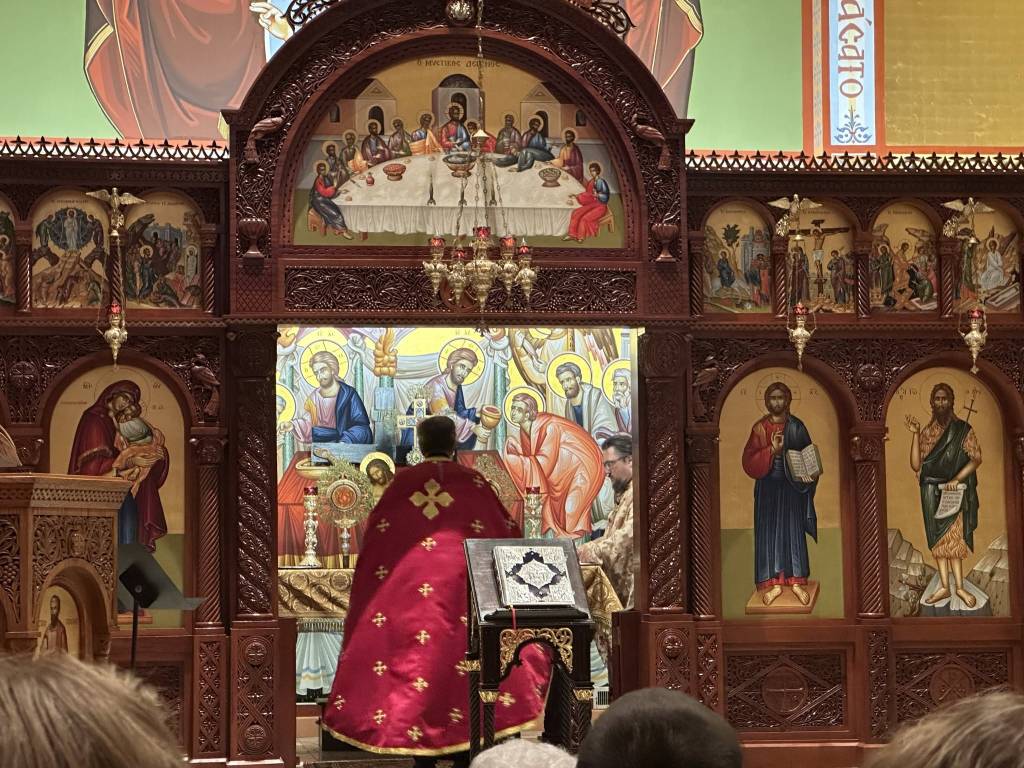
The Liturgy of St. James is one of the oldest surviving Eucharistic liturgies still celebrated in the Orthodox Church. It bears the name of St. James, the Brother of the Lord and first bishop of Jerusalem, and preserves the ancient worship tradition of Jerusalem and its surrounding region. Its received text developed over centuries. We should not imagine that every word of the present service was written down by St. James himself.
The Jerusalem and Antiochian traditions associated with St. James are closely related to the wider liturgical family in which Byzantine worship developed. However, it would be historically inaccurate to say that every Eastern and Western liturgy came directly from the surviving Liturgy of St. James. Rome, Alexandria, and the Syriac-speaking churches also preserved ancient traditions with their own development. Their common foundation is the apostolic Eucharist, rather than one surviving service book from which every other book was copied.
The following overview describes the major historic liturgical families and several important Western uses. These categories sometimes overlap because churches influenced one another. It also matters who uses a rite today: an ancient liturgical inheritance does not, by itself, establish present communion with the Orthodox Church. Several traditions below are now principally used by Oriental Orthodox, Roman Catholic, or other Christian bodies that are not in Eucharistic communion with the Eastern Orthodox Church.
The Jerusalem-Antiochian tradition and the Liturgy of St. James: This ancient Eastern tradition developed around Jerusalem and Antioch. The Liturgy of St. James is one of its chief witnesses and remains in occasional use in the Eastern Orthodox Church, often in connection with the saint’s feast. A related Syriac form holds a central place in West Syriac worship. It reminds us of the Church’s roots in the lands where Christ and His apostles lived and preached.
The Byzantine Rite: This is the principal rite of the Eastern Orthodox Church today. It developed through the worship of Constantinople and the influence of other churches and monasteries, especially those of Palestine. Its principal Eucharistic services are the Liturgies of St. John Chrysostom and St. Basil the Great. During Great Lent, it also includes the Liturgy of the Presanctified Gifts, at which the faithful receive Gifts consecrated at an earlier Eucharistic Liturgy.
The Alexandrian Rite: Rooted in the ancient Church of Alexandria in Egypt, this family is associated with the Eucharistic tradition of St. Mark the Evangelist. Its later forms include the Coptic and Ethiopian traditions, each with its own rich development. Today these are principally used by Oriental Orthodox and corresponding Eastern Catholic churches. Their ancient roots belong to the history of Christianity, but their present ecclesiastical setting must be distinguished from Eastern Orthodox communion.
The West Syriac Rite: This tradition grew within the Syriac-speaking world of Antioch and is closely associated with the Syriac Liturgy of St. James. It is known for its extensive body of hymns and Eucharistic prayers. Today it is used principally by the Syriac Orthodox Church, related Malankara churches in India, and certain Eastern Catholic churches. It shares ancient roots with other Antiochian traditions while having its own later history.
The East Syriac Rite: This tradition developed among Christians in Mesopotamia and the Persian world. One of its most ancient Eucharistic prayers is associated with St. Addai and St. Mari. Today it is used by the Assyrian Church of the East, the Ancient Church of the East, and the Chaldean and Syro-Malabar Catholic churches. Its history shows that ancient Eastern Christian worship was never limited to the Byzantine world.
The Armenian Rite: This tradition developed in the ancient Christian Church of Armenia, drawing from neighboring traditions while taking on a distinct Armenian character. Its Eucharistic service is commonly called the Badarak, meaning the offering or sacrifice. Armenian sacred music, language, and ceremonial give it a recognizable form. Today it is principally used by the Armenian Apostolic Church, which belongs to the Oriental Orthodox communion, and the Armenian Catholic Church.
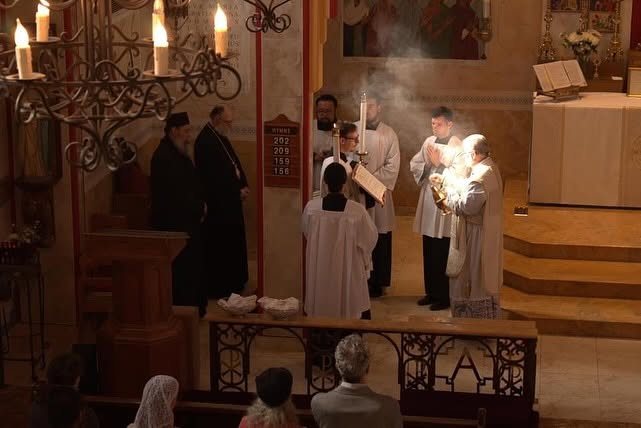
The Roman Rite: This is the historic liturgical tradition of the Church of Rome, which developed over centuries and became widespread throughout the Christian West. Its ancient inheritance includes the Roman Canon, the central Eucharistic prayer of the traditional Roman Mass. In Western Rite Orthodoxy, an approved form drawing from this tradition is commonly called the Liturgy of St. Gregory. Its use within Orthodoxy depends on Orthodox authorization and necessary corrections, rather than simply adopting any Roman Catholic service.
The Ambrosian Rite: Associated with Milan and named for St. Ambrose, this Western tradition preserves a distinct calendar, chant, and order of worship. Naming it after St. Ambrose does not mean he personally composed every part of its services. It remains principally a Roman Catholic rite today. Its history demonstrates that even the ancient Latin-speaking West did not have only one uniform liturgical practice.
The Gallican rites: These were a group of related Western traditions used in ancient Gaul and neighboring regions. They included local variations and gradually gave way to Roman forms, while also influencing the Roman tradition. Modern attempts to reconstruct Gallican worship require careful historical and ecclesiastical judgment. The label “Gallican” alone does not establish that a service is ancient in every detail or authorized for Orthodox use.
The Mozarabic or Old Hispanic Rite: This tradition developed in the ancient churches of the Iberian Peninsula, especially in what is now Spain. It preserves a distinctive arrangement of prayers, readings, and ceremonies. Although its roots reach back before the schism, its surviving use today is principally within Roman Catholicism. It is another witness to the variety of worship that once existed throughout the Christian West.
The Celtic traditions: Christians in Ireland, Britain, and neighboring regions had local liturgical customs shaped by monastic life and contact with other Western churches. “Celtic Rite” is a broad label, rather than the name of one complete and uniform service used everywhere. Surviving evidence must be handled carefully, especially when modern services claim to reproduce ancient Celtic worship. The holiness of St. Patrick, St. Columba, and other saints does not automatically authenticate every modern reconstruction bearing their cultural name.
The English or Sarum Use: Sarum was a medieval English form of the Roman Rite associated with Salisbury. It had distinctive ceremonial, music, and calendar customs, but it was a use within the Roman family rather than an entirely separate apostolic rite. Some Western Rite Orthodox communities draw on approved Sarum material. Any such use remains subject to the Church’s review and the bishop’s authorization.
The Liturgy of St. Tikhon: This is an authorized Western Rite Orthodox Eucharistic service drawing from the English prayer-book tradition, with corrections and additions for Orthodox use. Its name honors St. Tikhon’s connection with the examination of Western worship for possible Orthodox reception. It should not be understood as a complete service personally written by him. Alongside the Liturgy of St. Gregory, it is one of the principal services encountered in Western Rite Orthodox parishes.
This history helps us avoid two mistakes. We should not assume that the Byzantine Rite is the only form of worship the Church has ever known. We should also not assume that every historic rite, or every modern reconstruction of one, is presently authorized within Orthodoxy. We receive our worship through the living Church, under her bishops.
The Western Rite as a Way of Living the Orthodox Faith
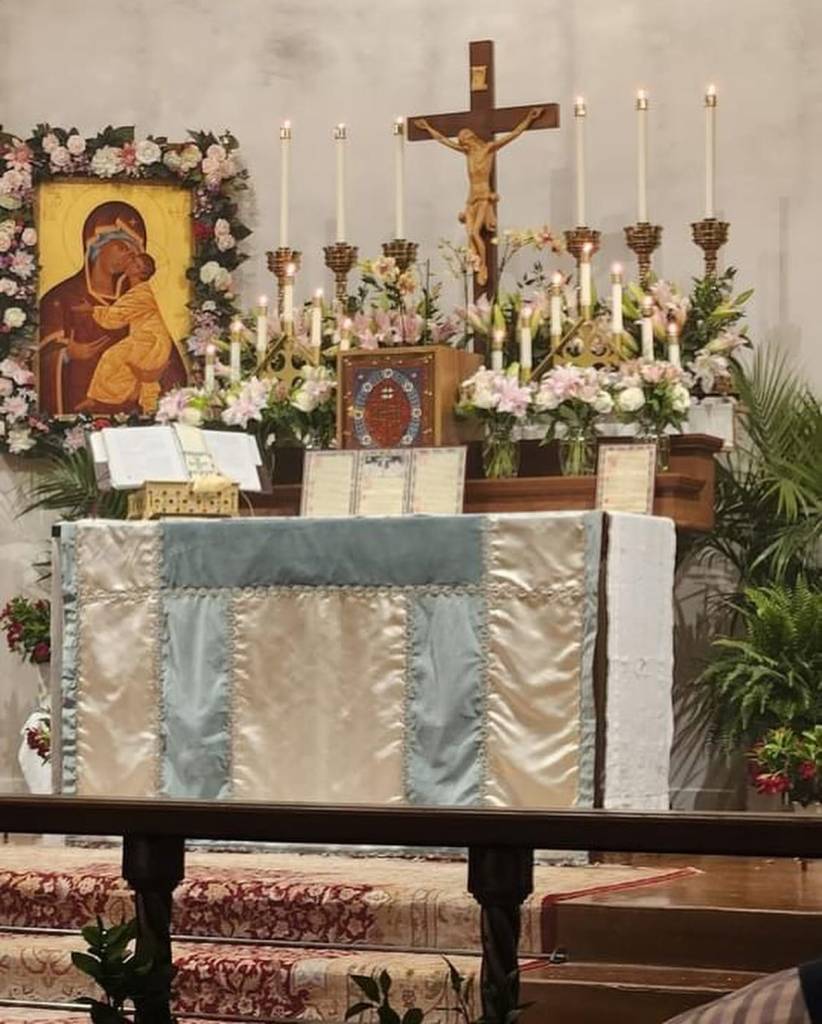
The modern Western Rite provides a way to practice the Orthodox faith through an approved Western liturgical inheritance. It can help those entering Orthodoxy from Western Christian backgrounds retain what the Church judges sound in that inheritance. It is also open to people without those backgrounds. Its purpose is to form faithful Orthodox Christians.
This is a restoration of Western liturgical life within Orthodoxy, rather than an uninterrupted survival of every ancient Western practice. The services have undergone development, review, and correction. Their place in the Church depends on their agreement with Orthodox teaching and their authorization by Orthodox bishops.
A visitor may recognize prayers, vestments, or ceremonies resembling traditional Roman Catholic or Anglican worship. That resemblance does not make a canonical Western Rite parish Roman Catholic or Anglican. Nor does calling its Eucharistic service the Mass establish a different doctrine of the Eucharist. We must consider the faith being confessed and the Church to which the parish belongs.
In both Byzantine and Western Rite Orthodox worship, the faithful receive the true Body and Blood of Christ. St. Paul asks, “The bread which we break, is it not the communion of the body of Christ?” (1 Corinthians 10:16). Holy Communion unites us to Christ and to one another within His Church. Different authorized ceremonies do not create different sacraments.
Music and vestments can nevertheless differ noticeably. Byzantine worship uses Eastern vestments and chant traditions, including Byzantine chant and various Slavic traditions. Western Rite worship draws from approved Western vestments, Gregorian chant, and hymnody. These forms should help the faithful pray, attend to Scripture, and approach the holy things with reverence.
Both traditions also have daily services. Byzantine worship includes Vespers, Matins, and the Hours. Western Rite worship has its own cycle of prayer, often called the Divine Office. Though the arrangement of psalms and readings differs, both teach us to offer the whole day to God.
That has a direct lesson for every catechumen. Christian life cannot be reduced to attending one service each week. We learn to pray when we rise, before we sleep, and throughout our work and responsibilities. Ask your priest for a manageable prayer rule and learn to keep it faithfully.
Fasting, confession, and preparation for Holy Communion also belong to both traditions. Particular rules and prayers can differ according to approved practice. Follow the guidance given in your parish rather than selecting whichever discipline seems easiest or combining several traditions into a private system.
Fasting should teach restraint, repentance, and generosity. Confession requires us to name our sins honestly and begin turning from them. Preparation for Communion calls us to examine our lives and seek reconciliation. Christ tells us to attend to reconciliation with our brother when we bring our gift to the altar (Matthew 5:23–24).
Both traditions honor the Theotokos and the saints. Western Rite communities often give special attention to Orthodox saints of the ancient West, including St. Ambrose, St. Benedict, St. Gregory the Great, and St. Patrick. These saints belong to the whole Church. Their lives teach us to pray, serve, repent, and remain faithful to Christ.
Entering a Western Rite parish requires full conversion to Orthodoxy. Familiar worship does not allow someone to retain beliefs contrary to the Church’s teaching. The person must receive the fullness of the Orthodox faith, including her teaching about the Holy Trinity, the Incarnation, the sacraments, the saints, and the moral life.
The Antiochian Western Rite Edict requires those entering the Church to profess the Orthodox faith in full. It also places liturgical texts and customs under Church review and authorization. Where a text or practice conflicts with Orthodoxy, it must be corrected or set aside.
This is why allowing the Western Rite is not ecumenism in the sense of compromising the faith. Preserving an approved Western custom does not mean accepting Roman Catholic or Protestant doctrines. It does not mean denominational differences are unimportant or that all Christian bodies are interchangeable. It means that a Western practice may be preserved when it faithfully serves Orthodox belief and worship.
A Western vestment is not a confession of papal supremacy. Gregorian chant does not teach Protestant beliefs about salvation. Yet words and ceremonies do teach, which is why they require careful attention. The Church judges what may be retained and what must change.
Neither rite permits a priest to invent his own worship. Byzantine and Western Rite clergy must serve according to the texts and practices authorized by their bishops. The priest receives a sacred responsibility within the Church. His personal preferences do not give him authority to rewrite the services or import unauthorized practices.
The faithful need the same humility. We can appreciate another tradition without abandoning the guidance of our own parish. We can ask questions without assuming that something unfamiliar must be wrong. Serious concerns should be brought to our priest and bishop with patience and respect.
Not every Orthodox jurisdiction maintains Western Rite parishes. Questions about particular texts and the restoration of Western practices have also received different assessments among Orthodox clergy and faithful. Such matters deserve careful answers. They do not justify treating a canonical parish as outside the Church simply because its worship looks different.
For a catechumen, the practical question is where you can receive sound teaching, enter the Church, and live faithfully. Learn the services, establish a prayer rule, confess your sins, support the parish, and serve the people God places before you. Liturgical knowledge should strengthen that commitment.
Acts 2:42 describes the first Christians continuing in the apostles’ teaching, fellowship, the breaking of bread, and prayers. That remains our pattern. Whether we worship in a Byzantine or Western Rite parish, we are called to repentance, communion with Christ, holiness, and love of our neighbor. The rite should help that life take root in us.
Most Commonly Asked Questions
Did every Christian liturgy come from the Liturgy of St. James?
No. The Liturgy of St. James is one of our oldest surviving Eucharistic liturgies and an important witness to the worship of Jerusalem and the Antiochian tradition. Other ancient traditions developed in places such as Rome, Alexandria, and Mesopotamia. Their common source is the Eucharist given by Christ and handed on by the apostles.
Are all ancient Christian rites currently used in the Orthodox Church?
No. Some are principally used today by Christian bodies outside Eastern Orthodox communion, while others survive only partly or through later reconstructions. Ancient roots alone do not establish present Orthodox authorization. A parish’s faith, canonical membership, and obedience to its bishop must also be considered.
Is Western Rite Orthodoxy just Catholicism or Anglicanism with a different name?
No. Not at all. Some outward forms may be familiar, but a Western Rite Orthodox parish must confess Orthodox teaching in full. Its services are authorized for Orthodox use, with corrections where necessary. Familiar worship does not remove the need for catechesis, repentance, and reception into the Church.
Can a Byzantine Rite Orthodox Christian receive Communion at a Western Rite parish?
Yes, at a canonical Western Rite parish within Orthodox communion, provided the person is otherwise prepared and eligible to receive. Contact the priest before your first visit so he knows who you are and can explain the local practice. Follow the preparation required by the Church and the pastoral guidance you have received.
What should I do next if I am interested?
Speak with a canonical Orthodox priest and begin attending services regularly. If a Western Rite parish is nearby, arrange a visit and ask about its worship and parish life. If you already belong to an Orthodox parish, discuss your interest with your priest. Seek a community where you can put down roots and grow through faithful participation.
Learning to Live the Faith
The Church’s liturgical history should deepen our gratitude for the faith we have received. Bring your questions, learn patiently, and let the Church’s worship shape your prayer and conduct. Its purpose is fulfilled as we learn to love and obey Christ.
If you’re working through this and need guidance, reach out to Fr. Stephen at frsteve@savannahorthodox.com AND Anthony at anthony@anthonyally.com. CC us both.