For the past two weeks, we have been following hunger through Panem. We began with young Coriolanus Snow, who knew what it meant to go hungry but allowed that experience to teach him fear and control rather than compassion. Then we moved to Haymitch Abernathy and “Sunrise on the Reaping,” where the Capitol had learned to consume something even darker than food: the suffering of other human beings.
Now we finally arrive at “The Hunger Games,” and our November theme comes directly to the table. This is a story filled with food. Katniss hunts because her family needs to eat. Poor families accept tesserae because they need grain and oil. Tributes search for food in the arena. The Capitol displays almost unimaginable abundance while people in the districts starve. And one of the most important relationships in the entire series begins with a loaf of burned bread.
That makes “The Hunger Games” especially appropriate as we approach Thanksgiving while Orthodox Christians continue through the Nativity Fast. Food can be hoarded, controlled, wasted, weaponized, or consumed without thought. But food can also become something else. It can become an act of love. Sometimes giving someone bread is simply giving them bread. And sometimes giving someone bread means saying, without a single word, I want you to live.
When Bread Becomes a Gift
Long before Katniss Everdeen volunteers at the reaping, she knows hunger. After her father dies, her mother collapses into grief and depression, leaving Katniss to keep the family alive. She is still a child herself, but suddenly Prim’s survival depends largely upon her.
So Katniss learns to hunt. She gathers plants. She trades. She calculates what the family has and what they need. Food is not entertainment or luxury. Food is survival.
This is one reason Katniss notices food constantly when she enters the Capitol. Someone who has experienced genuine hunger sees abundance differently from someone who has always assumed the next meal will be there. A plate overflowing with food means something different when you know people back home who regularly go without.
But before Katniss learns to provide food for herself, there is a moment when she cannot. She is starving, desperate, and searching for something to eat. And that is when Peeta Mellark gives her bread.
The Boy With the Bread
Katniss Is Hungry Before She Becomes the Mockingjay
It is easy to remember Katniss as the girl with the bow, the tribute who defies the Capitol, and eventually the Mockingjay. But before any of those things, she is a hungry child trying to keep her little sister alive.
That matters because it keeps the story human. Katniss does not begin with grand political ambitions. She is not dreaming of becoming the symbol of a revolution. Her immediate concern is much smaller and much more personal: her family needs to eat.
Hunger has reduced life to some very basic questions. Where will the next meal come from? How long can they make what little they have last? What can Katniss trade? What can she gather? What can she hunt?
The Capitol eventually turns Katniss into a symbol, but hunger reminds us that underneath every symbol is a person.
Peeta Sees Someone Who Needs Food
The moment with Peeta’s bread happens years before the Games. Katniss is desperate enough to search through garbage behind the Mellark family bakery. Peeta sees her.
He could have ignored her. Her hunger is not his responsibility in any formal sense. He does not owe her anything.
Instead, Peeta deliberately burns bread and gives it to her, knowing there will be consequences for him. He takes something that belongs to his family’s business and makes sure it reaches the starving girl outside.
The bread matters because it costs him something.
Generosity that costs us nothing can still be good. But sacrificial generosity reveals something deeper. Peeta is willing to suffer so that Katniss can eat.
“I Was Hungry and You Gave Me Food”

There is no need to force Peeta into a Christ figure. He is not one, and “The Hunger Games” is not secretly an Orthodox Christian allegory.
But the action itself echoes something unmistakably Christian.
In Matthew 25, Jesus Christ describes the judgment of the nations and says, “I was hungry and you gave Me food.” Those who showed mercy ask when they ever saw Him hungry, and Christ answers that what they did for the least of His brethren, they did for Him.
That should make Christians uncomfortable in the best possible way. Feeding the hungry is not an optional hobby for unusually charitable Christians. Our Lord places the hungry directly in front of us and tells us that our treatment of them is connected with our treatment of Him.
Peeta sees a hungry person and gives her food.
Sometimes Christianity really is that practical.
Bread Gives Katniss More Than Calories
The bread keeps Katniss alive, but its importance goes beyond the calories it provides. The next day, she sees the first dandelion of spring and remembers what her father taught her about finding food. That moment helps push her toward the skills that will allow her to provide for her family.
Peeta does not solve Katniss’s life. He does not rescue her family from poverty. He gives her enough to make it through that moment.
Sometimes that is what mercy looks like.
We can become overwhelmed by the size of suffering. We cannot feed every hungry person. We cannot solve poverty. We cannot personally repair every injustice in the world.
But Christianity does not permit the impossibility of helping everyone to become an excuse for helping no one.
There is someone in front of us. There is something we can give. So we begin there.
Katniss Learns to Feed Her Family
After that desperate period, Katniss becomes extraordinarily capable of providing food. She hunts outside District 12’s fence, gathers edible plants, trades at the Hob, and does whatever she can to keep Prim and her mother alive.
Her hunting is not simply a hobby. It is an act of responsibility.
Katniss loves Prim in a very practical way. She feeds her.
That may sound less dramatic than the great declarations of love we expect from stories, but Christian love is often extremely ordinary. It cooks dinner. It washes dishes. It works a job. It changes diapers. It checks on an elderly parent. It makes sure someone has medicine. It gives someone a ride. It puts food on the table.
Love that never becomes action remains incomplete.
Then Katniss Gives More Than Food
At the reaping, Katniss’s years of caring for Prim reach their logical conclusion. She has spent years keeping her sister alive, and when Prim’s name is called, Katniss offers herself.
“I volunteer!”
Suddenly the girl who has been giving her sister food gives something far greater. She offers her own life.
This is why sacrifice sits so naturally beside food throughout “The Hunger Games.” Food sustains life. To give food is to give something that allows another person to continue living. Katniss’s volunteering takes that same movement of love to its extreme.
She would rather die than allow Prim to die in her place.
Christianity teaches that love naturally moves toward self-giving. “Greater love has no one than this, than to lay down one’s life for his friends,” Christ says in John 15:13.
The Tesserae Reveal a Corrupted Gift
But Panem has found a way to corrupt even the giving of food.
Children from poor families can take tesserae, receiving additional grain and oil for themselves and their families in exchange for entering their names additional times into the reaping. The poorer and hungrier the family, the greater the temptation to accept the bargain.
Think about how twisted that is.
The Capitol gives food, but the gift comes attached to greater danger. Hunger becomes leverage.
This is not generosity. It is exploitation disguised as provision.
A genuine gift seeks the good of the person receiving it. The tesserae take advantage of desperation.
That gives Christians another question worth considering. When we give, are we actually helping the person in front of us, or are we using our generosity to gain power over them?
A Christian Gift Does Not Humiliate
Christian almsgiving should preserve the dignity of the person receiving it. We are not superior because we happen to have something another person needs.
Everything we possess is ultimately something we first received.
Our money depends upon abilities, opportunities, health, relationships, circumstances, and ultimately life itself, none of which we created from nothing. Even when we worked very hard for what we have, we worked with gifts we first received.
That should kill the pride that sometimes accompanies charity.
I am not the great benefactor descending from above to rescue an inferior person. I am one beggar who happens to have bread today and has been given the opportunity to share it with another.
The Capitol Has Food Everywhere
When Katniss reaches the Capitol, food seems to be everywhere. The contrast with District 12 is staggering.
She encounters meals beyond anything she could have imagined at home. Rich dishes, desserts, drinks, and ingredients appear with an ease completely foreign to someone accustomed to calculating whether her family will have enough to survive.
The problem is not that the food is delicious.
This matters. Christianity is not suspicious of a well-cooked meal simply because it tastes good. God created taste. He created wheat, fruit, vegetables, herbs, spices, animals, vineyards, and everything else that eventually reaches our tables.
The sin is not that the Capitol knows how to cook.
The scandal is that enormous abundance exists alongside deliberate deprivation.
Food Is Good Because Creation Is Good
Orthodox Christianity begins its understanding of food with creation. God creates the world and calls it good. Human beings receive food as gift.
That means our relationship with food is fundamentally supposed to begin with thanksgiving.
We see this in the ordinary Christian practice of blessing a meal. We stop before eating because the food in front of us is not merely fuel that appeared for our consumption. We recognize the Giver.
That small prayer changes the meaning of the table.
The meal becomes something received rather than simply taken.
Eucharistia Means Thanksgiving
This brings us to the theological center of our November series.
The Greek word eucharistia means thanksgiving.
For Orthodox Christians, thanksgiving reaches its highest expression in the Eucharist. We bring bread and wine, gifts from God’s creation shaped by human labor, and offer them to God. In the Divine Liturgy we pray, “Thine own of Thine own we offer unto Thee, on behalf of all and for all.”
And God gives back to us something infinitely greater. Orthodox Christians believe that in Holy Communion we truly receive the Body and Blood of Christ.
This is much deeper than simply sharing a meal together. The Eucharist is communion with God.
But it also teaches us how creation itself is meant to be received: with thanksgiving rather than possession.
The Capitol Consumes. The Church Gives Thanks.
That gives us an important contrast running through all five of these articles.
Panem constantly asks, “What can I take?”
How much food can the Capitol take from the districts? How much entertainment can it extract from their suffering? How much control can it gain through scarcity? How much can one person possess while another goes without?
The Christian life asks another question: “What have I received, and how can I offer it back?”
That movement changes everything.
Food stops being merely something to consume. Money stops being merely something to accumulate. Time stops being merely something to protect. Talents stop being merely something to use for our own advancement.
Gift produces thanksgiving, and thanksgiving teaches us to become generous.
Rue Changes the Arena
Rue gives us another glimpse of this.
The Capitol has designed the arena around competition. Every tribute is ultimately supposed to become someone else’s enemy. Food, water, weapons, medicine, and shelter are limited resources.
Then Katniss and Rue form an alliance.
They share knowledge. They share resources. They care about one another. Katniss begins seeing Rue not as another obstacle standing between herself and survival, but as a person.
Rue reminds Katniss of Prim, but the relationship grows beyond that association. Inside a system designed to turn children against one another, friendship becomes an act of resistance.
The Capitol says scarcity should make them enemies.
Human love says otherwise.
Food Can Create Communion
There is a reason meals have always mattered so much in human relationships. We invite people to dinner when we want to know them. Families gather around tables. Parishes gather for coffee hour. Friends meet over lunch.
Eating together says something.
We are not simply refueling our bodies in the same room. We are sharing life.
Sin turns food inward. Communion turns food outward.
This is why hospitality is such a basic Christian virtue. A table can become a place where the stranger becomes a guest and the guest becomes a friend.
Panem repeatedly uses food to establish divisions between people. Christianity repeatedly uses the table to bring people together.
District 11 Sends Katniss Bread
After Rue dies, Katniss refuses to allow the Capitol to treat her death as just another moment in the Games. She gathers flowers and covers Rue’s body with them, treating her with tenderness and dignity even though the Capitol has spent the entire Games telling her that Rue was supposed to be her enemy.
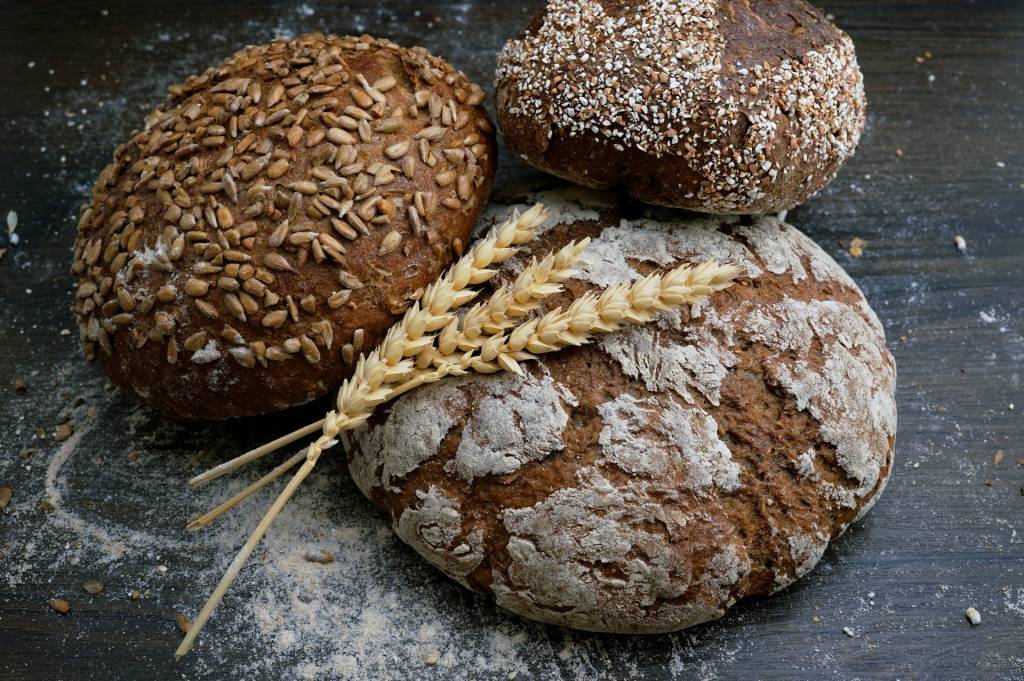
Then something remarkable happens in the novel. District 11 sends Katniss a loaf of bread.
That detail matters because District 11 is not wealthy. These are people who know hunger themselves. Bread is not something they can casually throw away. Yet they take some of what little they have and send it to the girl from another district because she loved one of their children when the Capitol expected her to kill her.
The gift also breaks the logic of the Games. The Capitol wants the districts isolated from one another. It wants District 12 thinking about District 12 and District 11 thinking about District 11. Every tribute is supposed to see the others as competition for food, resources, and ultimately survival.
But Rue and Katniss refuse that logic, and then District 11 does the same thing. Their bread crosses the boundary the Capitol has created between them.
Bread becomes gratitude.
Bread becomes solidarity.
Bread becomes grief shared between people who were supposed to remain strangers.
There is also something particularly beautiful about the fact that District 11 responds with food. Katniss gave Rue dignity when she could no longer give her life. District 11 responds by giving Katniss something that may help keep her alive.
Earlier in the story, Peeta’s bread essentially says to Katniss, I want you to live. Now District 11’s bread says something similar: We saw what you did for Rue. Thank you. Now eat.
That is very close to what Christian generosity is supposed to look like. We receive something, become thankful for it, and then thanksgiving moves us toward giving. Gratitude that never moves beyond a feeling has not yet reached its fullness.
The Capitol has far more food than District 11, but District 11 understands something the Capitol does not. Having an abundance of food does not make someone generous. Sometimes the people with the least understand most clearly what it means to give.
Generosity Is Not Measured Only by Amount
This is another lesson Christians need before Thanksgiving.
We often imagine generosity primarily in terms of how much someone gives. But Scripture repeatedly directs our attention toward sacrifice.
The widow who gives two mites gives very little in absolute terms, yet Christ praises her because she gives from her poverty.
District 11’s bread matters precisely because District 11 does not have endless bread to spare.
Peeta’s bread matters because giving it costs him.
Generosity is not merely the amount transferred from one person to another. It reveals what our possessions mean to us and what our neighbor means to us.
Fasting Should Put Bread in Someone Else’s Hands
This brings us directly back to the Nativity Fast.
If fasting only changes what is on my plate, I have barely begun.
The Christian tradition consistently joins fasting, prayer, and almsgiving. We eat less simply. We spend less. We restrain ourselves. And that restraint should create room for generosity.
Maybe the money saved goes toward feeding someone. Maybe we donate groceries. Maybe we support a food pantry. Maybe we invite someone to our table. Maybe we quietly help a family that is struggling.
The exact action will differ according to our circumstances.
But the principle remains: Christian fasting should gradually turn us from consumers into givers.
Thanksgiving Is Not About Having the Biggest Table
This is particularly worth remembering around American Thanksgiving.
There is nothing wrong with gathering family together and enjoying a beautiful meal. There is nothing spiritually superior about intentionally making Thanksgiving miserable.
The question is whether the feast produces thanksgiving.
A Thanksgiving table can be enormous and still teach us nothing about gratitude. We can eat until we cannot move, watch football, fall asleep on the couch, eat again, and somehow never seriously consider what it means to give thanks.
And yes, I am aware that for many Americans this description sounds less like a spiritual warning and more like the official Thanksgiving schedule.
But Christianity asks more from us.
Thanksgiving Should Change the Way We See What We Have
Giving thanks means recognizing that I am not the absolute owner of everything in my life.
I received life. I received abilities. I received people who loved me. I received opportunities. I received the earth that produced the food sitting on my table.
Even the things I legitimately worked to earn exist within a world I did not create.
Thanksgiving therefore produces humility.
And humility makes generosity possible.
If everything is mine because I earned it and deserve it, giving feels like losing something. But if what I have is ultimately gift, sharing becomes a way of continuing the gift.
Peeta Understands Something the Capitol Does Not
Peeta’s bread gives us one of the simplest pictures of this entire idea.
He has something.
Katniss needs it.
So he gives it to her.
He does not solve every problem in District 12. He does not overthrow the Capitol. He does not eliminate hunger.
He feeds one hungry person.
And years later, she still remembers.
We sometimes underestimate what small acts of mercy can mean because they do not feel dramatic enough. But the person who receives them may remember them for the rest of his or her life.
The Arena Cannot Completely Destroy Gift
The Capitol creates a world where everyone is supposed to protect himself. The arena makes generosity dangerous because anything given to another tribute is something you no longer possess.
Yet throughout the Games, characters continue to give.
They give food. They give medicine. They give information. They give protection. Eventually, some give their lives.
That is why the Capitol never completely succeeds in reducing people to pieces in its game.
Human beings continue doing irrational things like loving one another.
From the perspective of pure self-preservation, sacrifice makes no sense. From the perspective of Christianity, sacrifice reveals what love actually is.
The Berries Refuse the Capitol’s Logic
At the end of the Games, Katniss and Peeta are told that only one victor can survive.
The Capitol wants the final logic of the arena to triumph: eventually, even these two must turn against one another.
Instead, they prepare to eat the poisonous nightlock berries together.
The moment is politically complicated, and Katniss’s motives are not reducible to one simple idea. But something important happens. The Capitol says one of them must kill the other in order to live, and they refuse to give the Capitol that ending.
Once again, food becomes more than food.
The berries become a refusal to accept the Capitol’s definition of survival.
Life Is More Than Staying Alive
This is another place where Christianity speaks clearly.
Physical survival is good. Life is a gift, and we should protect it.
But Christianity has never taught that remaining physically alive is the highest possible good. If it were, there could be no martyrs.
The martyrs teach us that there are things we must not surrender even when surrender would make survival easier. Faithfulness matters more than comfort. Truth matters more than safety. Communion with God matters more than extending earthly life at any cost.
The arena is built upon the assumption that survival will eventually overpower every other loyalty.
Again and again, the people inside it prove that assumption wrong.
What Is Our Bread Saying?
We began this article with Peeta throwing burned bread toward a starving girl.
By itself, bread is ordinary. Flour, water, yeast, heat. Nothing particularly dramatic.
But a gift carries the intention of the giver.
Peeta’s bread says, “Live.”
District 11’s bread says, “Thank you.”
The Capitol’s abundance says, “We can have as much as we want.”
The tesserae say, “We will feed you, but there is a price.”
The same basic human need for food can become mercy, gratitude, domination, exploitation, communion, or gluttony depending upon what we do with it.
That should make us look differently at our own tables.
Give Thanks, Then Become Thanksgiving
It is good to bow our heads before Thanksgiving dinner and thank God.
Do that.
But then get up from the table and live as though the prayer was true.
If the food was a gift, become generous. If your family is a gift, love them patiently. If your home is a gift, practice hospitality. If your money is a gift, give some of it away. If your time is a gift, spend some of it on someone who cannot repay you.
Orthodox Christianity does not call us merely to feel thankful. Thanksgiving becomes a way of living.
This is ultimately what separates the Christian table from the tables of Panem. The question is not how much food is present. The question is whether what we receive turns us inward toward consumption or outward toward communion.
Peeta gives bread to Katniss because she is hungry.
It is an extraordinarily simple act.
And perhaps that is why it works so well.
Sometimes loving our neighbor begins with theology, prayer, repentance, sacrifice, and profound spiritual struggle.
And sometimes our neighbor is hungry.
Give him some bread.
Next week, we continue with “Catching Fire,” where the contrast becomes almost grotesque. Katniss, who knows what it means to starve, enters a Capitol party where people have so much food that they deliberately make themselves sick simply so they can continue eating. We will look at gluttony, abundance, the strange relationship between fasting and feasting, and why being able to consume something does not mean we are free.
If you have a film, song, book, television series, or other piece of media you would like me to cover in a future “Almost Christian” article, send your suggestion to me, Fr. Stephen, at frsteve@savannahorthodox.com.
Frequently Asked Questions
Why is Peeta’s bread important in “The Hunger Games”?
Peeta gives bread to Katniss when she and her family are starving, providing both immediate food and a moment of hope. The memory becomes central to the way Katniss understands Peeta because his first significant act toward her is one of costly generosity.
What do the tesserae represent in “The Hunger Games”?
Tesserae allow children to receive additional grain and oil for their families in exchange for adding their names additional times to the reaping. They show how Panem exploits poverty by forcing hungry families to accept greater risk simply to obtain basic necessities.
Why does District 11 send Katniss bread?
In the novel, District 11 sends Katniss bread after she cares for Rue and honors her after her death. The gift expresses gratitude and solidarity across district boundaries, making bread a quiet rejection of the Capitol’s attempt to keep people divided.
What does Christianity teach about food and thanksgiving?
Orthodox Christianity teaches that food is part of God’s good creation and should be received with thanksgiving rather than treated as something evil. Gratitude should also lead toward generosity, hospitality, and care for people who do not have enough.
What does Eucharist mean?
The word “Eucharist” comes from the Greek word for thanksgiving. In the Orthodox Church, the Eucharist is not merely a symbolic communal meal: in Holy Communion, Orthodox Christians truly receive the Body and Blood of Christ.