The Vegas Golden Knights are going to their third Stanley Cup Final in nine seasons, and as a priest who is also a diehard Golden Knights fan, I could not be happier. They have been treated by many hockey fans like the villains of the league: too successful too quickly, too bold, too annoying, too Vegas. But from the beginning, they have also shown something that every Christian should recognize as valuable: perseverance, hard work, discipline, and the refusal to quit when the work is difficult.
That does not make hockey Christian. It does not turn a playoff run into a sacrament. But it does give us a doorway into something true. Sports, at their best, can show us pieces of a rightly ordered life: courage, self-control, teamwork, humility, joy, and sacrifice.
I often tell my daughter, who most know plays hockey (Congrats on making the Savannah Sirens 12U team, Zoe!), something connected to a line from Golden Knights captain Mark Stone: you do not always have to be the best, but you can work the hardest. That is not the Gospel, but it is not far from the discipline required by the Christian life. A person who learns to show up, listen, be corrected, practice again, and work with others has already learned something that can be turned toward God.
Can Orthodox Christians Enjoy Sports?
Yes, Christians can enjoy sports. The Christian life is not a rejection of every earthly joy. The issue is not whether we can enjoy hockey, football, baseball, soccer, or other games. The issue is whether these things remain gifts or become idols.
A gift can be received with thanksgiving. It can be enjoyed with self-control, shared with others, and kept in its proper place. An idol is different. An idol begins to rule the heart.
Orthodox Christians believe that all of life must be ordered toward God. That includes work, family, money, entertainment, hobbies, and even the teams we love. When sports help us enjoy fellowship, beauty, discipline, and rest, they can be received gratefully. When they rule our mood, schedule, money, identity, and relationships, something has gone spiritually wrong.
Sports are “almost Christian” in this sense. They can point toward truths that belong fully to the life of the Church, but they cannot give us the Kingdom of God. They can train the body, form habits, and stir the heart, but they cannot heal the soul by themselves.
What Sports Can Teach the Christian Heart
Christianity is not anti-body. The Orthodox Church teaches that the human person is not a soul trapped inside a bad body. God made the body good, and the Christian hope includes the resurrection of the body. Because of the Incarnation, the human body is not something to despise.
This matters when we think about sports. Athletic skill, strength, coordination, endurance, balance, and movement can all reveal something good about the body. The body is not meant to be worshiped, but neither is it meant to be hated. It is meant to be offered to God.
The saints do not teach us to hate the body. They teach us to discipline it. That is a major difference. Despising the body is not holiness, but training the body to serve what is good can become part of a faithful life.
St. Paul uses athletic images because they are easy to understand. He speaks of running the race, fighting the good fight, and disciplining the body. He does not treat athletics as meaningless. He takes something familiar and uses it to teach us about the deeper struggle of salvation.
In 1 Corinthians 9, St. Paul says that athletes exercise self-control in all things, but they do it to receive a perishable crown. Christians seek an imperishable crown. The point is not that sports are bad. The point is that even the best earthly victory fades, while the true crown belongs to the Kingdom.
This is why sports can help us understand discipline. A good athlete does not become good by accident. Practice matters. Repetition matters. Correction matters. Endurance matters. So does humility.
The spiritual life works the same way. Prayer, fasting, repentance, confession, worship, and obedience are not mastered in a weekend. They require time. They require patience. They require a willingness to be corrected without quitting.

Fr. Stephen and his dad (Memory Eternal) at the Banner Raising Game 10/10/23
This is where the Golden Knights offer a useful image. Whether people love them or hate them, and let’s be honest, mostly everyone seems to hate them after they were voted the most hated team in the NHL, their success has not come from waiting for the league to approve of them. They have had to play, lose, adjust, answer criticism, fight through injuries, and keep going. That is part of what makes them so interesting. They did not slowly earn permission to matter. They arrived, worked, competed, and kept advancing.
Their motto, “Always Advance, Never Retreat,” is even etched into the collar of their jerseys. It is a fitting phrase for a team that has spent most of its short life being told it should not be this successful this quickly. Of course, a hockey motto is not the Gospel. It cannot forgive sins, heal the soul, or give eternal life. But it does point toward something Christians should recognize: the need to keep going when the work is hard, when people misunderstand you, and when obedience is not glamorous.
The spiritual life requires that same kind of perseverance, but on a much deeper level. We fall, repent, confess, get back up, and keep walking. We pray when prayer feels dry. We fast when our appetites complain. We forgive when pride wants to keep score. We come back to church when we feel tired, embarrassed, distracted, or spiritually cold. That kind of perseverance is not about proving ourselves to the world. It is about refusing to retreat from the life God has set before us.
So yes, the Golden Knights are still only a hockey team. Their victories are temporary, their banners belong to this age, and even the best season will eventually become history. But when a team keeps advancing through criticism, injuries, pressure, and hatred from the outside, it gives us a small picture of a larger truth. Christians are not called to retreat from repentance, prayer, humility, worship, or love. We are called to keep going, not because the crowd approves, but because the goal is greater than the crowd.
The same is true in the parish. Nobody becomes holy because they had one emotional moment. Nobody becomes prayerful because they bought a prayer rope and used it twice. We grow by showing up, stumbling, repenting, and returning again.
Team sports also teach something our culture often forgets: life is not only about the individual. Hockey, football, baseball, basketball, and soccer all require different roles. Not everyone is the star. Not everyone scores. Not everyone gets noticed.
Some players block, defend, pass, cover, protect, sacrifice, and do the unseen work that makes victory possible. A hockey player who blocks a shot may not make the highlight reel, but the team knows what happened. A football player who holds his assignment may never be praised by casual fans, but the play depends on him.
This connects naturally to parish life. The Church is one Body with many members. Some people chant, some clean, some teach, some cook, some greet visitors, some serve at the altar, some quietly pray in the back, and some give in ways almost nobody knows about.
Orthodox Christians believe that no faithful service is invisible to God. The person who quietly cleans the church, prepares food, watches a child, visits the sick, or prays for the parish may be doing something deeply important. The hidden work matters because love matters.
Sports can also teach humility because everyone loses. Every athlete makes mistakes. Every player eventually learns that talent is not enough. Even great baseball hitters fail most of the time. Even great goalies give up bad goals. Even great teams have ugly nights.
For a Christian, losing can become a lesson in humility. It can teach patience. It can reveal pride. It can show us how quickly we become angry when life does not go our way.
That may sound small, but it is not. The living room couch can become a little training ground for the soul. Can I watch a game without hating the other team? Can I lose without becoming bitter? Can I win without becoming arrogant?
Can I turn the game off when it is time for prayer, family, or church? Can I enjoy a playoff run without making it the center of my life? These are not silly questions. They reveal what is ruling the heart.
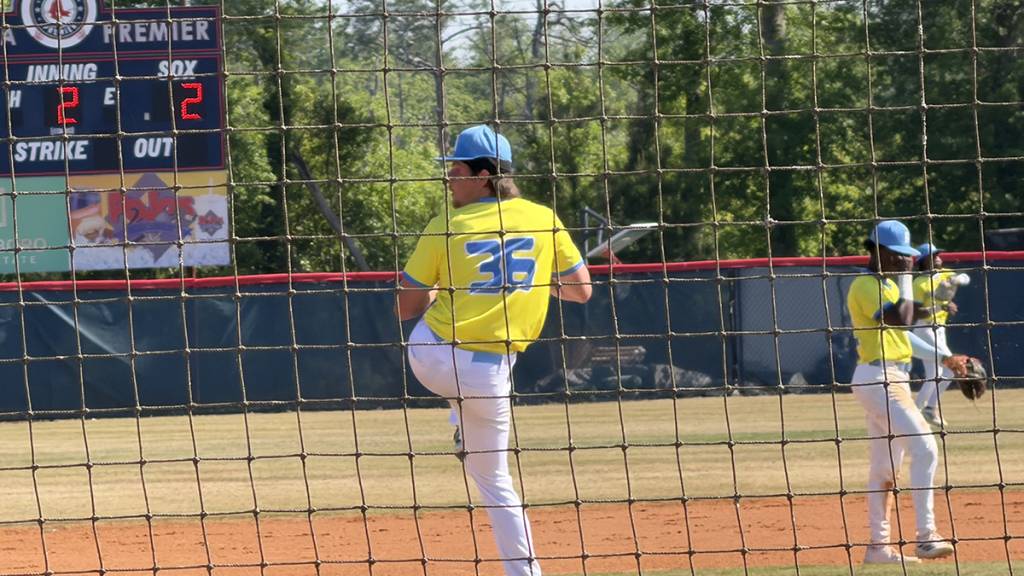
(Catechumen and star baseball player – Dawson Wickman)
Baseball gives us a special lesson in patience and rhythm. It is slow, seasonal, and full of failure. It refuses to be rushed. A person who cannot sit still may struggle with baseball, but that may be exactly why baseball is good for him.
There is something almost ascetical about baseball. You have to wait. You have to pay attention. You have to accept that not every moment is loud, dramatic, or instantly rewarding. In a world addicted to noise, that kind of patience can be healthy.
Hockey gives us a different lesson. It is fast, physical, and deeply team-oriented. Players take hits, block shots, backcheck, defend teammates, and sacrifice their own moment for the good of the team. At its best, hockey can show courage and brotherhood.
That is one reason I love the sport. A great hockey team is not just a collection of skilled individuals. It is a group of people willing to suffer for one another in small ways, again and again. That kind of sacrifice can point us toward something deeper.
Football gives us another image: order and responsibility. Every player has an assignment. One missed responsibility can affect the whole play. A missed block, a blown coverage, or a wrong route can change everything.
That is true in family life and parish life too. Our choices are not isolated. A father’s laziness affects his home. A mother’s faithfulness strengthens her children. A parishioner’s quiet service builds up the community. One person refusing his responsibility can wound the whole body.
But sports also reveal the passions. This is where we have to be honest. The problem is not the game itself. The problem is the disordered heart.
Anger, pride, tribalism, obsession, gambling, hatred of rivals, neglect of family, and missing worship because the game matters more than God are all real dangers. Sports can bring out what is noble in us, but they can also expose what is sick in us. Sometimes the game simply reveals what was already there.
There is a difference between love of the game and worship of the game. Enjoying the Stanley Cup playoffs, college football, the World Series, the World Cup, or a Sunday afternoon game is not automatically wrong. These things can be fun. They can bring families and friends together.
But when sports control our mood, schedule, money, identity, and relationships, they have become too important. If a team’s loss ruins the whole day, if anger at a referee becomes hatred, if gambling becomes bondage, or if worship is always optional when the game is on, then sports are no longer just entertainment. They have become a spiritual problem.
The Church Fathers speak often about the passions. They are not simply feelings. They are disordered movements of the soul. A desire may begin as something natural, but when it becomes uncontrolled, it enslaves us.
St. John Cassian writes often about self-control, watchfulness, and the need to examine the movements of the heart. That wisdom applies far beyond the monastery. It applies to the kitchen, the office, the car, the phone, and yes, the couch during overtime.
This is why sports fandom can become a place to practice repentance. Not because watching a game is a holy mystery, but because the heart comes with us into everything we do. The same anger that shows up during a game may show up in marriage. The same pride that cannot handle losing may show up at work. The same lack of self-control that cannot turn off the TV may show up in prayer.
A Christian can ask simple questions. Did I enjoy this with thanksgiving? Did I treat other people with love? Did I keep my responsibilities? Did I remember that this is only a game?
This does not mean we have to drain sports of all joy. Orthodox Christianity is not a call to become gloomy, suspicious people who cannot laugh, cheer, or enjoy anything. The Christian life is serious, but it is not joyless.
There is real beauty in a perfect pass, a diving catch, a clean goal, a brilliant save, a well-timed block, or a team working together with one mind. Beauty is not limited to icons and church music, though it is fulfilled in worship. Creation itself is filled with beauty because God is good.

Zoe Osburn’s First Game with the 8U Savannah Sirens.
Still, sports remain only “almost Christian.” They can teach discipline, teamwork, courage, humility, patience, and joy, but they cannot save us. They can reveal the goodness of the body, but they cannot raise the dead. They can form habits, but they cannot give eternal life.
At their best, sports are signs. They point beyond themselves. They remind us that discipline matters, that sacrifice matters, that the body matters, that community matters, and that joy matters. But Jesus Christ is the fulfillment, not the game.
This is the heart of the “Almost Christian” series. Popular culture often contains fragments of truth. Stories, songs, films, sports, and ordinary human joys can echo sacrifice, longing, courage, justice, repentance, and love. But an echo is not the voice itself.
The Orthodox Church teaches that the fullness of life is found in communion with God through the life of the Church. That means worship, prayer, fasting, confession, the Eucharist, love of neighbor, and repentance. Sports can point toward discipline, but the Church gives us the true arena of spiritual healing.
So watch the game. Enjoy the beauty of it. Cheer with your friends. Teach your children to work hard, lose well, win humbly, and respect the other team.
But keep it in its proper place. Do not let the game become your master. Do not let your team become your identity. Do not let a score have more power over your heart than prayer, family, worship, and love.
If your child plays sports, teach him or her that character matters more than trophies. Teach them to listen, practice, encourage teammates, accept correction, and work hard even when nobody is watching. That is a lesson worth carrying into the spiritual life.
If you are a fan, receive the joy without being possessed by it. Laugh, cheer, groan, and enjoy the ride. But when the game ends, return to what is eternal.
The true race is not for a trophy that tarnishes or a championship banner that eventually becomes history. The true race leads to the Kingdom of God. Every earthly joy is safest when it teaches us to give thanks and then points us beyond itself.
That is why Christians do not need to pretend that every ordinary joy is suspicious. We can enjoy what is good, receive it with thanksgiving, and keep it ordered toward God. Sports are not the Kingdom, but they can remind us that discipline, courage, humility, and joy belong to a life that is being healed.
Last but not least, GO KNIGHTS GO!
If you have a film, song, book, story, or piece of popular culture you would like to see covered in the “Almost Christian” series, you can send your suggestion to Fr. Stephen at frsteve@savannahorthodox.com.
Orthodox Christian and Hall of Famer, Troy Polamalu:
Frequently Asked Questions About Christianity and Sports
Can Orthodox Christians watch sports?
Yes. Orthodox Christians can watch and enjoy sports when they remain in their proper place. The danger is not enjoyment itself, but allowing sports to become an idol that replaces prayer, worship, family, or love of neighbor.
Are sports sinful for Christians?
Sports are not sinful by nature. They can become spiritually harmful when they stir up hatred, pride, gambling, obsession, or neglect of Christian responsibilities.
What does the Bible say about athletics?
St. Paul uses athletic images to describe the Christian life, including running the race, fighting the good fight, and disciplining the body. He uses sports as an image of discipline while reminding Christians that the eternal crown matters more than earthly victory.
Can sports teach Christian virtues?
Sports can teach discipline, teamwork, patience, courage, humility, and self-control. These virtues are not the fullness of salvation, but they can help prepare the heart for a more serious Christian life.
How can Christian parents approach youth sports?
Christian parents should teach children to work hard, respect others, accept correction, and keep sports below God, family, and worship. The goal is not only to build better athletes, but to help form better human beings.