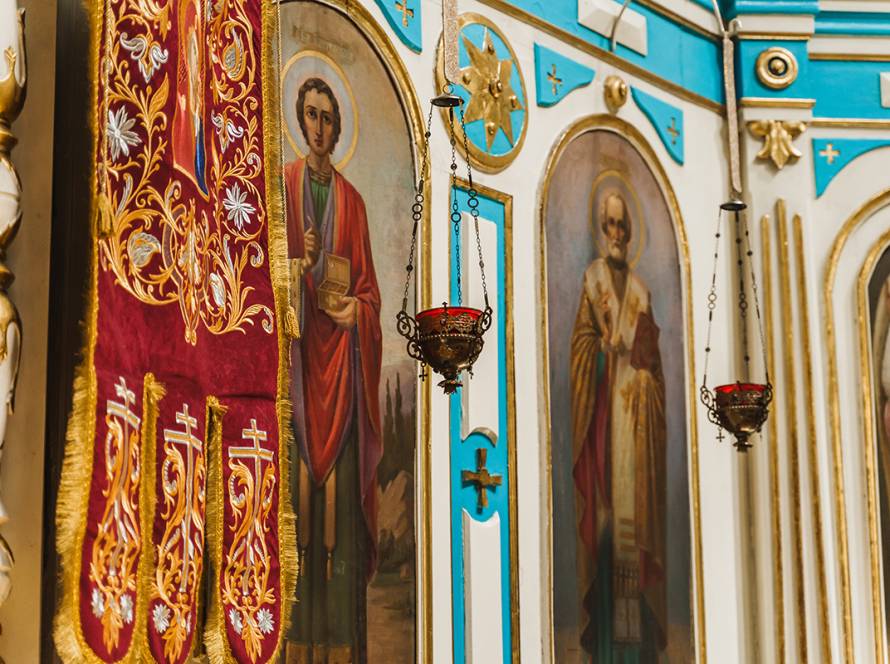
The division between the Orthodox Church and the Roman Catholic Church is one of the deepest wounds in Christian history. It did not happen because of one bad meeting, one angry bishop, or one theological argument. The schism developed slowly, over centuries, as the Christian East and West grew apart in language, culture, politics, theology, and their understanding of authority in the Church.
From the Orthodox Christian perspective, the heart of the problem is not simply that Rome and Constantinople had a fight. The deeper issue is this: what kind of Church did Christ establish, and how is that Church meant to preserve the apostolic faith? The Orthodox Church believes she has preserved the faith, worship, sacraments, and conciliar life of the ancient Church, not as a museum piece, but as the living Body of Christ.
The Schism Was Gradual, Not Sudden
Many people hear the date 1054 and assume that was the moment the Orthodox and Catholic Churches split. That date matters, but it can also mislead us. The mutual excommunications of 1054 between representatives of Rome and Constantinople were serious, but they were not the beginning of every problem, and they did not instantly create the full separation we know today.
The split was gradual. It developed over centuries. Christians in the East and West once shared the same sacraments, the same basic Creed, the same councils, and the same apostolic faith. But over time, they grew apart. Greek became the main language of the East, while Latin became the main language of the West. Theological terms were not always understood the same way. Customs differed. Political pressures differed. Distance made misunderstandings easier and trust harder.
This matters because the schism should not be treated like a simple argument where one side woke up angry and walked away. It was a long process of separation. By the time the break became obvious, the East and West had already been living with different instincts for a very long time.
The Orthodox Church does not look at this history with joy. Schism is a tragedy. Our Lord prayed that His disciples “may be one” (John 17:21). Saint Paul pleaded with the Corinthians that there be “no divisions” among them (1 Corinthians 1:10). Division in the Church is never something to celebrate. At the same time, unity cannot mean pretending that real differences do not matter.
True unity is unity in the truth. The Church is not held together by sentiment, politics, or nostalgia. She is held together by the apostolic faith, the Eucharist, the bishops, the councils, and the life of the Holy Spirit. That is why reconciliation is harder than many people think.
The Deeper Issue Was Authority
The biggest issue between Orthodoxy and Roman Catholicism became authority. More specifically, the question was this: what is the role of the Bishop of Rome in the Church?
In the ancient Church, the Bishop of Rome held a place of honor. Rome was the old imperial capital. The Roman Church was associated with the martyrdom of Saints Peter and Paul. Its witness mattered greatly. Orthodox Christians do not deny that Rome had a special place of honor in the ancient order of the Church.
But honor is not the same thing as universal authority. From the Orthodox perspective, the Bishop of Rome was first among bishops in honor, not a bishop with direct jurisdiction over the whole Church. The ancient Church was governed through bishops in council, not through one bishop ruling over all other bishops.
This is where the divide became very serious. The Orthodox Church preserved the conciliar model of authority. In this model, bishops are not independent spiritual kings, and they are not branch managers under one supreme bishop. They are successors of the apostles who guard the faith together, especially through councils.
This pattern is already visible in Scripture. In Acts 15, when the early Church faced a major dispute about Gentile converts and the Law of Moses, the apostles and elders gathered in council. They listened, discussed, judged, and spoke together. The decision was not presented as one man’s private ruling, but as the common discernment of the Church: “It seemed good to the Holy Spirit, and to us” (Acts 15:28).
That phrase is deeply important. The Church does not invent the faith. She receives it, guards it, and speaks it with the guidance of the Holy Spirit. This is why the Orthodox Church places such weight on the Ecumenical Councils. The councils defended the truth about Christ, the Trinity, the Holy Spirit, the Theotokos, icons, and the life of the Church. They did not create Christianity. They protected what had been handed down.
Saint Cyprian of Carthage, writing in the third century, said, “The episcopate is one, each part of which is held by each one for the whole.” His point was that the bishops share one apostolic office. No bishop is meant to stand apart from the Church or above the Church. Each bishop must hold the faith in communion with the others.
From the Orthodox perspective, the later Roman claims about the pope’s universal jurisdiction and infallibility changed the balance of the ancient Church. The issue is not whether Rome mattered. It did. The issue is whether Rome’s bishop had authority over the whole Church in the way later Roman Catholic doctrine came to teach. Orthodoxy says no.
This is one reason reconciliation is hard. It is not simply a matter of apologies, good intentions, or being nicer to one another. The Churches have different understandings of how authority itself works. That affects doctrine, worship, discipline, and the way the faithful live under the care of the Church.
Culture, Politics, and Power Made the Divide Wider
The East and West did not grow apart only because of theology. They also lived in different worlds. Those worlds shaped how Christians imagined order, leadership, and power.
In the East, the Church continued to live within an older Roman and conciliar world. Great cities like Constantinople, Alexandria, Antioch, and Jerusalem shaped the life of the Church. Patriarchates, councils, imperial structures, and a broader sense of Christian commonwealth shaped the Eastern Christian mind. Authority was shared, layered, and conciliar, even when emperors tried to interfere.
In the West, the collapse of Roman imperial structure changed everything. As political order broke down, society became more tribal, feudal, and eventually more monarchical. In many places, the Church became one of the few stable institutions left. Bishops and monasteries did not only serve spiritual needs. They often held land, wealth, courts, and political influence.
This does not mean every Western bishop was corrupt, and it does not mean the East was pure from every political temptation. That would be too simple. The Eastern Church also had wealth, imperial connections, and struggles with political pressure. But the larger economic and political settings were different.
In the West, the papacy became tied to territorial rule, especially through the Papal States. The pope was not only a bishop. Over time, he also became a political ruler with lands, armies, diplomacy, and legal power. This shaped the Western imagination. Centralized papal rule came to feel more natural because Western society itself was becoming more centralized and monarchical.
In the East, the Church remained more closely connected to the Christian empire and to the older patriarchal and conciliar structure. The emperor could be a problem, and often was, but the bishop of one city did not develop the same kind of universal monarchy over the whole Church. The East kept thinking in terms of councils, patriarchs, local Churches, and the shared guarding of the faith.
Money, land, and political power deepened the divide. When churches become tied to property, courts, armies, kings, and political survival, disagreements are no longer only theological. They become institutional. They become emotional. They become tied to identity, loyalty, and power.
This is one reason the schism became so hard to heal. By the time East and West tried to talk, they were not only discussing theological words. They were carrying centuries of different habits, fears, wounds, and political assumptions. Each side had learned to see the world differently.
For Orthodox Christians, this is a sober warning. The Church must live in the world, but she must not become a mirror of worldly power. Christ told His apostles, “The rulers of the Gentiles lord it over them… Yet it shall not be so among you” (Matthew 20:25–26). Authority in the Church is real, but it must be cruciform. It must serve the truth, not dominate others for earthly gain.
This also matters for daily Orthodox life. We do not enter the Church to join a religious tribe. We enter the Church to be healed, corrected, humbled, and united to Christ. If we study the schism only to win arguments, we have already missed the point. The history should make us more faithful, more sober, and more careful with our own pride.
The Filioque and the Wound of 1204
Another major issue was the Filioque. This is the Latin word for “and the Son.” In the original Nicene-Constantinopolitan Creed, the Church confessed that the Holy Spirit “proceeds from the Father.” In the West, the phrase “and the Son” was added, so the Creed said that the Holy Spirit proceeds from the Father and the Son.
From the Orthodox perspective, this created two problems. The first was theological. The Creed’s wording is not casual. It protects the Church’s teaching about the Holy Trinity. Orthodoxy teaches that the Father is the single source within the Trinity, the Son is begotten of the Father, and the Holy Spirit proceeds from the Father. This does not lessen the Son. It preserves the distinct persons of the Trinity as the Church received them.
The second problem was ecclesiastical. The Creed belonged to the whole Church. It had been received through Ecumenical Councils. From the Orthodox perspective, one part of the Church did not have the authority to alter the Creed on its own. Even if the West believed it had good theological reasons, changing the Creed without an Ecumenical Council was a serious violation of the Church’s conciliar life.
This shows again why the schism is not easy to solve. The Filioque is not only about one phrase. It is about how doctrine is guarded, who has authority to speak for the whole Church, and whether the received Creed can be changed apart from the common mind of the Church.
The formal break is usually associated with 1054, when mutual excommunications took place between Rome and Constantinople. But even after that, the separation was not always experienced in the exact same way everywhere at once. Some local relationships continued for a time. The wound deepened gradually.
Then came the Fourth Crusade. In 1204, Western crusaders sacked Constantinople. This was not a small incident. Constantinople was the great Christian city of the East. Its churches were violated, its holy places plundered, and its people traumatized. The sack of Constantinople burned the schism into the memory of the Orthodox world.
Many Orthodox Christians today still see 1204 as the moment when the separation became far more painful and far more difficult to heal. Before that, there were disputes and breaks. After that, there was a deep wound of betrayal. The people who came in the name of Christ attacked a Christian city, stole from its churches, and weakened the Eastern Christian world.
This does not mean Orthodox Christians should live in bitterness. We are commanded to forgive. But forgiveness is not the same thing as pretending history did not happen. Healing requires truth. A wound that is ignored does not become healthy. It only gets buried.
The Orthodox Church sees the schism as a tragedy. She does not believe the answer is hatred, mockery, or triumphalism. At the same time, she understands herself as preserving the apostolic faith, worship, sacraments, and conciliar life of the ancient Church. That is not a slogan. It is a responsibility.
For someone learning the Orthodox faith, this means we should approach the subject with humility and seriousness. We do not need to attack Roman Catholics. Many Roman Catholics love Christ deeply and are far more devout than many Orthodox Christians. But we also cannot pretend the differences are minor. Love must tell the truth.
The Orthodox Christian life is not built on being “not Catholic” or “not Protestant.” It is built on union with Christ in His Church. We pray, fast, confess, receive the Eucharist, honor the saints, keep the feasts, and learn to live the faith handed down from the apostles. If history helps us see that more clearly, then it has served its purpose.
Why Reconciliation Is Harder Than Doctrinal Agreement
Even if Orthodox and Catholic theologians could sit in a room and write careful statements about authority, the papacy, the Filioque, councils, doctrine, and the sacraments, that would still not automatically heal the schism. The problem is not only on paper. It is also in the hearts, habits, fears, politics, and pride of the people who would have to lead the Church through such a healing.
This is where we have to be honest. Bishops are successors of the apostles, but they are also men. They can be holy, courageous, and self-sacrificial. They can also be fearful, political, defensive, proud, and more concerned with protecting their own position than with seeking what is best for the whole Church. That does not cancel the office of bishop, but it does remind us that the Church is guarded by grace, not by human perfection.
For reunion to be real, the bishops would not only need to agree on doctrine. They would need humility. They would need repentance. They would need to care more about the unity, holiness, and salvation of the Church than about control, reputation, jurisdiction, money, or historical resentment. They would need to act like shepherds, not managers of religious institutions.
That is why reconciliation is harder than many people think. It would require truth, but also love. It would require courage, but also patience. It would require leaders willing to lose face, admit hard things, forgive old wounds, and place the good of Christ’s flock above their own egos. Without that, even the best theological documents would remain words on a page.
This is not a reason for despair. Christ is still the Head of the Church. The Holy Spirit still works in the Church. But Orthodox Christians should not be naive. Schism is not healed by slogans, photo opportunities, or polite ceremonies. It is healed through truth, repentance, humility, and a real return to the apostolic faith and conciliar life of the ancient Church.
A Pastoral Closing
The schism between Orthodoxy and Rome is painful because it involves real Christians, real history, and real wounds. But learning this history should not make us proud or bitter. It should make us more faithful to Christ, more grateful for the Church, and more serious about preserving the faith with humility.
If you are studying this as a catechumen or inquirer, do not rush. Let the Church teach you slowly through Scripture, worship, prayer, fasting, confession, and the rhythm of the liturgical life. Ask honest questions, but do not let the questions stay only in your head. Bring them into the life of the Church.
If you’re working through this and need guidance, reach out to Fr. Stephen at frsteve@savannahorthodox.com AND Anthony at anthony@anthonyally.com. CC us both.