Pascha is the feast of the Resurrection, and in Orthodox Christianity it stands at the very center of everything the Church believes, proclaims, and lives. Orthodox Christians call it the feast of feasts because every other feast finds its meaning in it. If the Lord had not risen from the dead, there would be no Gospel to preach, no victory to proclaim, and no new life to enter.
The Orthodox Church teaches that Pascha is not only an annual celebration, but the very heart of Christian life. It is the triumph of life over death, light over darkness, and joy over sorrow. It is the day when the Church sings with boldness that death has been trampled down and the grave has been robbed of its final power.
For many people, Pascha may look like the most joyful service of the year, and that is true. Yet its joy is not shallow or sentimental. The brightness of Pascha comes after repentance, prayer, fasting, tears, and the long journey through Great Lent and Holy Week, so that the joy of the Resurrection is received not as a pleasant idea, but as salvation breaking into the world.
Why Pascha Is the Feast of Feasts
To understand why Pascha is called the feast of feasts, we have to begin with what happened in the Resurrection itself. The Resurrection is not one event among many. It is the decisive act by which the power of sin, corruption, and death is overthrown, and humanity is opened again to communion with God.
Saint Paul writes, “If Christ has not been raised, your faith is futile and you are still in your sins” (1 Corinthians 15:17). That passage shows how central the Resurrection is to the Christian faith. The Church does not treat Pascha as an inspiring ending to a sad story, but as the turning point of all history.
Orthodox Christians believe that in the Resurrection, the Lord did not simply come back to earthly life as before. He rose in glory, conquering death from the inside and opening the path of eternal life for the whole human race. This is why the Church sings not only that He is risen, but that by His death He destroyed death.
That is also why Pascha is greater than every other feast day. The Nativity is wondrous, Theophany is glorious, and the feasts of the saints are precious, but all of them move toward the victory revealed in the empty tomb. Pascha is the feast in which the whole work of salvation shines forth with full brightness.
How the Church Understands the Victory of Pascha
The Scriptures point to this mystery from beginning to end. The Passover in Exodus, where the people of Israel were delivered from bondage and death, becomes an image of the greater Passover fulfilled in the New Covenant. Even the word Pascha comes from Passover, showing that this feast is about deliverance, liberation, and the saving act of God.
In the Gospel accounts, the women come to the tomb in grief and love, only to hear the announcement that the Crucified One is no longer among the dead. Their sorrow is transformed into joy, and their fear into proclamation. The Church places these events before us year after year so that we may not stand outside them as spectators, but enter them as participants.
The Fathers of the Church speak of Pascha with wonder because they knew that the Resurrection changes everything. Saint John Chrysostom, in the famous Paschal homily read in Orthodox churches, calls all to the feast, inviting both the diligent and the negligent, the rich and the poor, the fasting and the non-fasting. That invitation shows that Pascha is abundant, overflowing, and given as gift.
Saint Gregory the Theologian speaks of the joy of passing from death to life and from earth to heaven. Saint Athanasius writes of death being undone by the appearing of the Savior. The Fathers do not speak of Pascha as a symbol only, but as the real victory by which the human condition is healed and renewed.
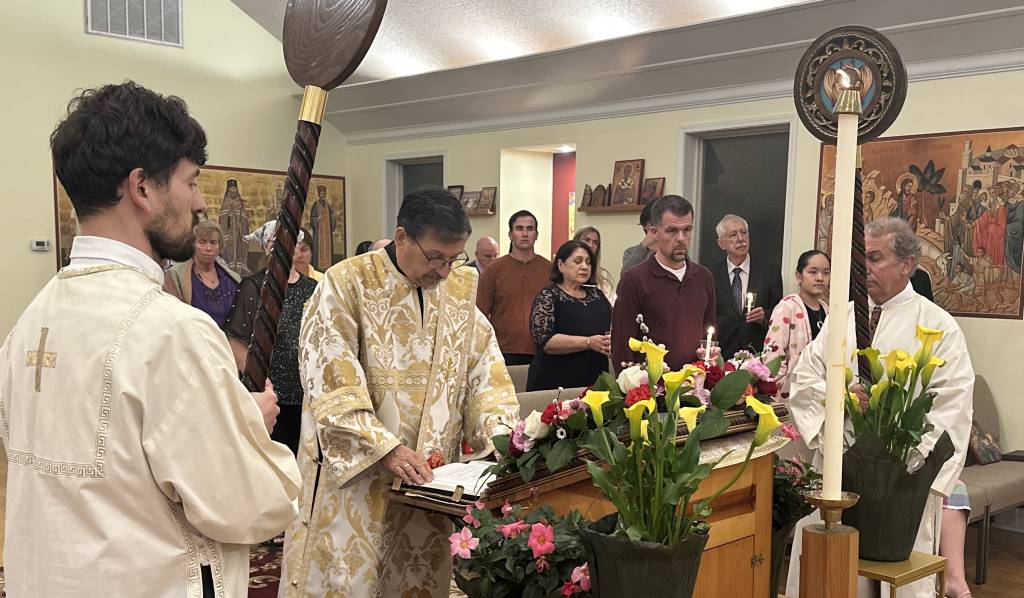
This helps explain why Orthodox worship during Pascha is so intense and so full of light. The midnight service begins in darkness, and then the light is passed from candle to candle as the faithful hear the proclamation that Christ is risen. That movement from darkness into light is not theatrical decoration, but a visible sign of what the Resurrection means for the whole world.
The service itself is filled with repeated hymns because the Church wants the truth of the feast to sink deep into the heart. We sing the Paschal troparion again and again because this is not ordinary information to be heard once and moved past. It is the great announcement by which the entire life of the Church is interpreted.
Orthodox Christians believe that Pascha is the key to understanding the Cross as well. The Cross is not separated from the Resurrection, and the Resurrection is never detached from the Cross. The suffering of Holy Week is not forgotten at Pascha, but revealed in its true meaning as the path by which death is defeated.
That is one reason the Church prepares for Pascha through Great Lent. Lent is not a gloomy obstacle standing in the way of celebration. It is a school of repentance, self-denial, mercy, prayer, and watchfulness that teaches the soul how to receive the joy of the feast rightly.
Without repentance, people often reduce joy to entertainment or religious excitement. The Orthodox Church teaches something deeper. Paschal joy is born from the knowledge that the chains of death are broken, that sin does not have the last word, and that the Kingdom has been opened to us.
This is why the journey of Holy Week matters so much. The Bridegroom services, the Passion Gospels, the veneration of the Cross, the burial hymns, and the stillness of Holy Saturday all prepare the heart for the explosion of Paschal light. The Church walks carefully through the sorrow so that the faithful may understand the greatness of the victory.
When the Church calls Pascha the feast of feasts, she also means that it gives shape to every Sunday of the year. Every Sunday is a little Pascha, a weekly celebration of the Resurrection. The Divine Liturgy itself is never detached from the risen life of the Lord, which is why Sunday has always held a unique place in Orthodox Christian worship.
In this way Pascha is not locked into one night only. It radiates through Bright Week, through the whole season of Paschaltide, through every Sunday, and through the entire sacramental life of the Church. The Resurrection is not a memory kept in a corner, but the living atmosphere of Orthodox Christianity.
Baptism also reveals why Pascha is the feast of feasts. Saint Paul says that in baptism we are buried with the Lord and raised with Him to newness of life. The Church therefore sees baptism as a Paschal mystery, an entrance into the death and Resurrection that give life to the world.
The Eucharist is also Paschal. At the holy table, the faithful do not merely think back to past events, but participate in the life of the risen Lord. The Divine Liturgy is full of Resurrection language because the Church gathers not around a dead teacher, but around the living Savior who gives Himself to His people.
This is also why Pascha matters for everyday life. It is not just a feast for church calendars, candles, or special foods, though all of those have their place. Pascha speaks to human fear, grief, weakness, loneliness, and mortality, because it proclaims that death is no longer the final master over mankind.
Every human being knows something of death’s shadow, whether through funerals, illness, anxiety, aging, or the slow sadness that comes from living in a fallen world. Pascha answers that darkness not with denial, but with victory. The empty tomb tells us that the deepest wound of humanity has been entered and overcome.
The Orthodox Church teaches that this is why Christian joy can exist even in a world still marked by suffering. The Resurrection does not pretend pain is unreal. It declares instead that pain, sin, and death are not ultimate, because the risen Lord has already begun the renewal of all things.
Pascha also reveals the true dignity of the human body. Since the Resurrection is bodily, Christians do not treat the body as a prison to escape. The body is part of God’s creation and part of His saving work, which is why Orthodox Christianity honors relics, buries the dead reverently, and awaits the resurrection of the body.
In many places, people think of religion mainly as moral teaching or private spirituality. Pascha shows that Orthodox Christianity is far more than that. It is the proclamation of a real victory in history, a cosmic triumph with personal meaning for every soul.
That personal meaning is important. Pascha is universal, but it is also intimate. Each believer is called not only to admire the feast, but to repent, believe, and enter its life through the worship and sacramental life of the Church.
This is why Pascha is full of movement, processions, singing, and shared joy. The whole community enters the feast together, because salvation is not an isolated private experience. The Church rejoices as one body, proclaiming with one voice that the risen Lord has brought life to the world.
The customs surrounding Pascha also reflect the abundance of the feast. The festal meal, the red eggs, the bright vestments, the repeated greeting, and the open joy all point to victory. These customs are not the center of the feast, but they help embody its meaning in family, parish, and daily life.
Still, the center remains the Resurrection itself. Everything else circles around that blazing truth. The feast is called great and holy because in it heaven and earth meet, prophecy is fulfilled, and the deepest hope of mankind is revealed.
Orthodox Christians believe that Pascha is the answer to the ache of the human heart. People long for life, for peace, for forgiveness, for beauty, and for communion that cannot be destroyed. In the Resurrection, these longings are not mocked, but fulfilled and transfigured.
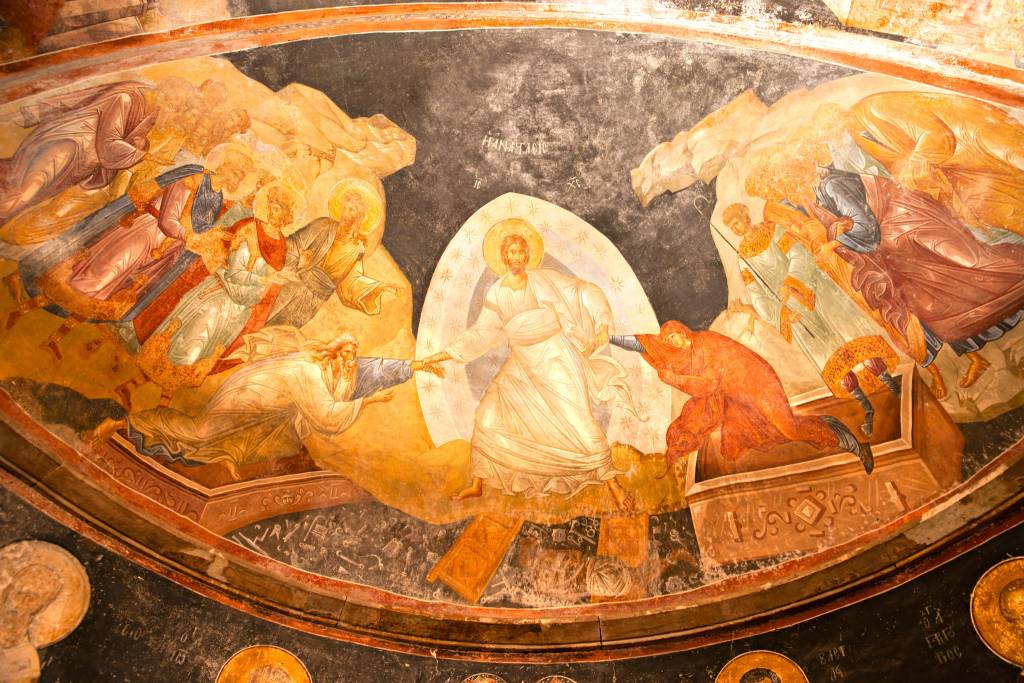
It is also important to say that Pascha is not merely about what happens after death. It certainly gives hope for eternal life, but it also changes life now. The Resurrection calls Christians to live with courage, repentance, mercy, endurance, and hope because the power of the age to come is already at work.
This gives strength in times of struggle. When Orthodox Christians suffer loss, battle temptation, or carry heavy burdens, Pascha remains the Church’s great song of hope. The faithful are reminded again and again that darkness does not reign forever and that the grave is not the end.
The feast of feasts is therefore not a poetic exaggeration. It is the Church’s sober and joyful recognition that everything depends on the Resurrection. Every hymn, every icon, every feast, every mystery, and every act of Christian life receives its deepest meaning from Pascha.
For that reason, the Orthodox Church does not simply ask people to understand Pascha from a distance. She invites them to come and see, to stand in the darkened temple, to hear the proclamation, to receive the light, and to taste the joy of the risen life. This feast is best understood not only by study, but by entering the worshiping life of the Church.
If you have never experienced Pascha in an Orthodox parish, come and see the feast for yourself. Come hear the hymns, behold the light, and stand among the faithful as the Church announces life to a dying world. In that holy joy, many begin to understand why Pascha is truly the feast of feasts.
FAQ
Why is Pascha called the feast of feasts in the Orthodox Church?
Pascha is called the feast of feasts because the Resurrection is the center of the Christian faith and the fulfillment of God’s saving work. Every other feast receives its meaning from the victory over death revealed on Pascha.
What does Pascha mean in Orthodox Christianity?
Pascha means Passover, and it points to the passage from death to life accomplished through the Resurrection. In Orthodox Christianity, it is the greatest feast of the year and the heart of the Church’s worship.
Is Pascha the same as Easter?
Yes, Pascha is the Orthodox Christian name for Easter, though the word Pascha more directly connects the feast to the biblical Passover. Orthodox Christians often prefer the word Pascha because it expresses the scriptural and liturgical meaning of the feast more fully.
Why do Orthodox Christians celebrate Pascha at midnight?
The midnight service expresses the movement from darkness into the light of the Resurrection. It helps the faithful experience the joy of the empty tomb in a vivid and prayerful way.
Why is Pascha more important than Christmas in Orthodoxy?
The Nativity is deeply important, but Pascha is greater because it reveals the victory over sin and death and completes the saving work of the Incarnation. The Church honors every feast, but Pascha stands above them all as the feast of feasts.