Why the Church Begins the Year With a Saint and Not a Resolution
January 1 marks the beginning of the civil new year, but for the Orthodox Church it is far more than a date on a calendar. On this day the Church celebrates the feast of St. Basil the Great, one of the most important saints in Christian history. At the same time, Orthodox Christians throughout the world bless and cut the Vasilopita, the traditional bread of St. Basil. Together, the feast and the bread teach us how to begin the year not with self confidence or fear, but with faith, gratitude, and trust in God.
St. Basil the Great lived in the fourth century and served as Archbishop of Caesarea in Cappadocia. He was a theologian, pastor, monk, and defender of the faith during a time when the Church faced intense persecution and widespread confusion about who Christ truly is. Basil did not seek greatness, but his faithfulness made him a pillar of the Church. His writings helped shape Orthodox theology, his pastoral care transformed communities, and his love for the poor became legendary.
One of the reasons the Church places his feast on January 1 is deeply intentional. The Church does not begin the year by looking inward or by making promises to improve ourselves. Instead, she places before us a saint who lived a life of repentance, humility, discipline, and mercy. St. Basil reminds us that time itself is a gift from God and that every year is an opportunity to grow closer to Christ.
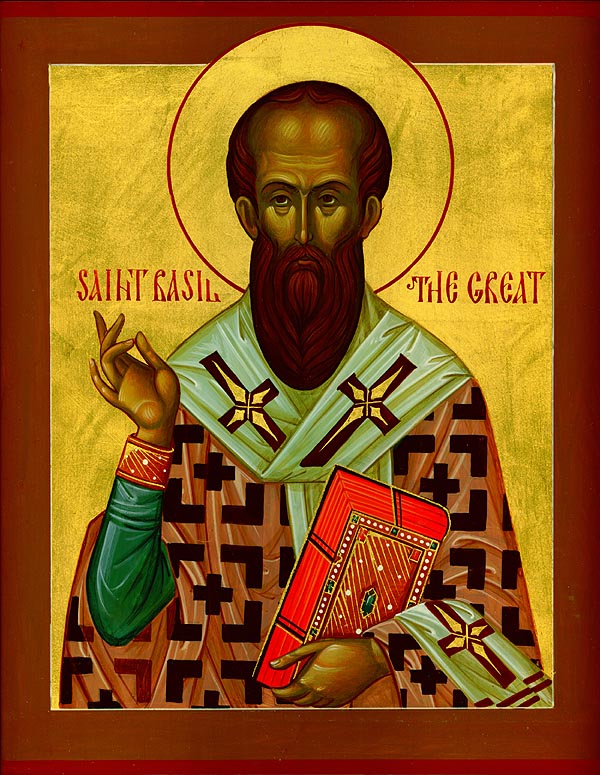
St. Basil taught often about time and how easily it is wasted. He warned that people spend great effort preparing for earthly things while neglecting the soul. For Basil, the passing of time was not something to fear, but something to steward carefully. Each day was given so that a person might repent, pray, and love more deeply. Beginning the year with his memory grounds the faithful in that perspective.
The Church also commemorates the Circumcision of Christ on January 1, reminding us that even as an infant, Christ submitted Himself to the Law in order to redeem humanity fully. This further reinforces the meaning of the day. The new year begins not with escape from discipline, but with obedience, humility, and offering ourselves back to God.
Closely connected to the feast of St. Basil is the tradition of Vasilopita. The bread is not merely a cultural custom or a seasonal dessert. It carries theological meaning and a memory of the saint’s charity. According to tradition, during a time of hardship, St. Basil sought to protect his people from unjust taxation or violence. He gathered gold and valuables from the faithful, intending to offer them to save the city. When the danger passed, Basil faced the problem of returning the items to their rightful owners. Trusting in God, he baked the valuables into loaves of bread and distributed them to the people. Each household received back what it had given.
Whether one reads this account historically or symbolically, the meaning remains the same. God provides. God remembers. God returns what is offered to Him, transformed and multiplied by grace. The Vasilopita becomes a sign of trust in divine providence rather than luck or chance.
In many parishes and homes, a coin is baked into the Vasilopita. When the bread is cut, the pieces are often dedicated first to Christ, then to the Theotokos, the Church, and the household. The person who receives the coin is often said to receive a blessing for the year. In Orthodox understanding, this is not superstition. It is not fortune telling or magical thinking. The coin does not guarantee success or protection. Instead, it reminds everyone present that blessing comes from God alone and often arrives quietly and unexpectedly.
The cutting of the Vasilopita also emphasizes community. The bread is not eaten privately. It is shared. Each person receives a portion. This reflects St. Basil’s deep conviction that the Christian life cannot be lived in isolation. Basil famously taught that wealth unused for the poor is a form of theft. He established hospitals, shelters, and systems of care that treated the sick and the poor as icons of Christ. To begin the year by sharing bread is to affirm that love of neighbor is not optional.
St. Basil’s legacy is inseparable from his care for the suffering. During times of famine and disease, he organized what came to be known as the Basiliad, a complex that provided food, shelter, and medical care to those in need. This was not charity as an occasional act, but charity as a way of life rooted in the Gospel. Basil believed that faith without mercy was hollow. Prayer and almsgiving belonged together.
This is why the Vasilopita matters. It is not simply about remembering the past. It is about shaping how the year begins. The bread teaches that gratitude comes before ambition. Sharing comes before accumulation. Trust in God comes before anxiety about the future.
Modern culture often treats the new year as a chance to reinvent oneself through discipline, productivity, or self improvement. While reflection and growth are not wrong, the Church offers a deeper starting point. Instead of asking how we will control the year, the Church asks whether we will receive it as a gift. St. Basil’s life answers that question clearly. A good year is not one without suffering, but one lived faithfully.
Orthodox Christians often hear St. Basil’s name during the Divine Liturgy as well. One of the primary liturgies of the Church bears his name and is served on his feast day and during Great Lent. This liturgy reflects his theological depth and his emphasis on repentance, humility, and God’s mercy. Even the structure of worship reminds the faithful that St. Basil continues to guide the Church through prayer.
Beginning the year with St. Basil also reminds us that holiness is not abstract. It is lived in families, cities, hospitals, and parishes. Basil was not a recluse removed from the world’s pain. He was deeply engaged with it, confronting injustice, caring for the vulnerable, and defending truth even when it cost him personally.
The Vasilopita, simple as it is, becomes a quiet sermon. Bread sustains life. Coin and blessing remind us that what we have is entrusted to us. Cutting the loaf together reminds us that we belong to one another. None of these lessons require spectacle. They work precisely because they are humble.
As the year begins, the Church does not promise ease. She promises meaning. St. Basil stands at the doorway of the year to remind us that time is holy when offered to God. The Vasilopita rests on the table to remind us that God provides and that generosity opens the heart.
Together, the feast and the tradition teach us how to step into the new year with clarity. Not chasing luck. Not relying on ourselves. Not fearing what we cannot control. But placing our lives, our time, and our future into God’s hands.
This is how the Orthodox Church begins the year. With prayer. With bread. With a saint who shows us what a faithful life looks like. And with the quiet confidence that whatever the year brings, Christ remains with His people.