


I was reflecting on the quote from King Baldwin to Balian of Ibelin: “A King may move a man, a father may claim a son, but remember that even when those who move you be Kings, or men of power, your soul is in your keeping alone. When you stand before God, you cannot say, ‘But I was told by others to do thus.’ Or that, ‘Virtue was not convenient at the time.’ This will not suffice. Remember that.” – King Baldwin IV in Kingdom of Heaven
And yes, before anyone sends it to me, I am well aware that this is also the King Baldwin IV from the hand-raise meme that has been all over the internet. Behind the silver mask and the memes, however, is one of the most interesting characters in Ridley Scott’s Kingdom of Heaven. More importantly for our purposes, this particular scene contains something worth taking seriously.
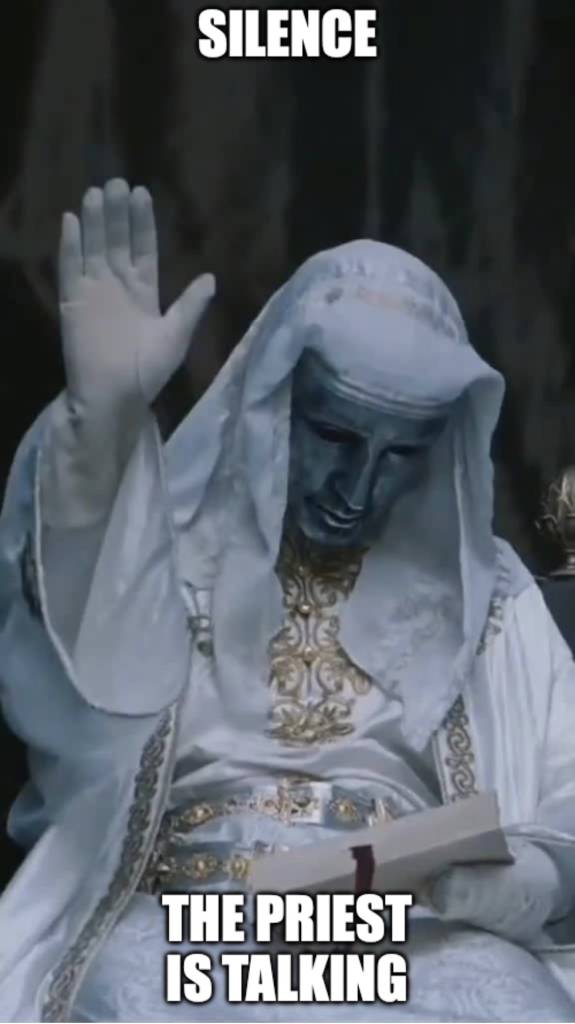
The film gets a great deal wrong about Christianity, and its portrayal of Christians during the Crusades is often deeply unbalanced. Yet in this moment, King Baldwin says something remarkably close to the Christian understanding of judgment, responsibility, and the care of the human soul. That tension makes Kingdom of Heaven a perfect film for Almost Christian: it is frequently suspicious of Christianity while depending upon deeply Christian ideas about mercy, sacrifice, humility, virtue, judgment, and the value of the human person.
Your Soul Is in Your Keeping
King Baldwin’s words immediately bring to mind St. Paul’s statement in Romans 14:12: “So then each of us shall give account of himself to God.” Christianity teaches that each human person will ultimately stand before God. We may be influenced by others, but we cannot hand our responsibility for our lives to someone else.
St. Paul makes the point again in 2 Corinthians 5:10, where he writes that we must all appear before the judgment seat of Christ and receive according to what we have done. Our choices matter. What we do with the life, freedom, relationships, authority, and opportunities given to us matters.
That does not mean circumstances are irrelevant. A king can command a subject. A father can influence a son. Governments, families, employers, friends, political movements, fear, anger, and social pressure can all place tremendous weight upon us. God knows those circumstances better than we do, but being pressured toward sin does not suddenly transform sin into virtue.
This is where Baldwin’s statement becomes especially striking: “Virtue was not convenient at the time.” We have probably never spoken those exact words, but we have lived them. We know the temptation to excuse something because telling the truth was difficult, forgiveness was painful, resisting anger required effort, or doing what was right would have cost us something.
Virtue Is Not Supposed to Be Convenient
Christianity has never promised us that faithfulness will be convenient. Jesus Christ tells His disciples to deny themselves, take up their cross, and follow Him. The image at the center of Christianity is not comfort, success, or getting our own way. It is the Cross.
The martyrs make this especially clear. Again and again, Christians were given opportunities to escape suffering through compromise. Sometimes all that was demanded was a small act of worship toward a pagan god or emperor, but the martyrs understood that even a small outward compromise could become a denial of the One to whom their lives belonged.
St. Polycarp of Smyrna provides one of the great examples. When threatened with death and commanded to deny Christ, the elderly bishop refused. He had every worldly reason to compromise and save himself, yet convenience could not determine truth. His martyrdom reminds us that Christian virtue is revealed most clearly when remaining faithful actually costs us something.
This does not mean Christians should seek suffering or manufacture opportunities to prove themselves. The Church has never taught us to chase martyrdom or behave recklessly. Rather, when obedience to God becomes difficult, suffering does not give us permission to abandon what is good.
A King Who Knows He Is Not the Highest King
King Baldwin IV is therefore one of the most interesting Christian characters in the film. He is a king with tremendous earthly authority, yet he is also a dying man. His leprosy constantly reminds both him and the viewer that crowns, armies, cities, wealth, and political power cannot defeat death.
Baldwin understands something many powerful people forget: his authority is temporary. He may rule Jerusalem, command armies, and move men according to his will, but he cannot stand in the place of God. Even a king remains accountable to Someone greater than himself.
This is an important Christian understanding of authority. The Orthodox Church does not teach that earthly authority is meaningless, but neither does it make earthly authority absolute. Parents, clergy, rulers, and other authorities have responsibilities before God, and those under authority never cease to possess moral responsibility simply because someone powerful gave an order.
Baldwin’s warning therefore applies far beyond medieval kings. “Everyone else was doing it” will not be enough. Neither will “My political party told me,” “My friends expected it,” “My family taught me this,” or “Speaking up would have caused problems.” We are responsible for forming our conscience according to God rather than allowing the world to form it for us.
Balian Acts More Christian Than Many of the Christians
One of the great ironies of Kingdom of Heaven is that Balian often displays Christian virtues while remaining skeptical of Christianity as he encounters it. He protects the innocent, shows mercy, rejects opportunities for personal advancement, refuses murder as a path to power, and eventually risks himself for the people of Jerusalem. The movie clearly wants us to recognize these things as good.
At the same time, many of the openly religious Christians surrounding him are portrayed as greedy, violent, ambitious, fanatical, or hypocritical. Characters use religious language while pursuing political power and personal revenge. The film repeatedly contrasts Balian’s moral behavior with the behavior of people who loudly identify themselves with the Christian cause.
There is a legitimate warning here. Wearing a cross does not mean we are carrying the Cross. Calling ourselves Christians does not automatically make our desires, politics, anger, or ambitions Christian. Every Orthodox Christian should be willing to examine whether the name we bear is actually visible in the life we live.
But the film sometimes pushes this contrast so far that Christianity itself seems to become the problem. Balian appears virtuous partly because he stands apart from the religious establishment around him. The result is a strange picture in which Christian virtues seem most pure when separated from Christian faith.
Hypocrisy Does Not Disprove Christianity
This is where the movie comes close to an important truth but stops short. Christian hypocrisy is real, and Christians should never be afraid to admit it. The history of Christianity contains saints who lived with extraordinary holiness and sinners who used Christian language while behaving terribly.
Yet hypocrisy is an argument against hypocrisy, not against Christianity. A Christian who behaves cruelly does not prove that cruelty is Christian. He proves that Christians are capable of betraying what they claim to believe.
The standard by which Christianity must be judged is not the worst Christian we can find. The standard is Christ. In fact, when we condemn Christians for greed, hatred, cruelty, pride, and vengeance, we are condemning them precisely because those things contradict the faith they profess.
This distinction matters when watching Kingdom of Heaven. The film is right to condemn religious hypocrisy, political manipulation, and violence committed under the cover of faith. But it does not always make clear that historic Christianity condemns those sins as well.
The Christianity Missing From Kingdom of Heaven
The movie also presents a very narrow picture of Christianity in the Holy Land. Its focus is overwhelmingly on Latin Crusader Christianity, including knights, military orders, political rulers, and the Latin Patriarch of Jerusalem. The Patriarch in particular is portrayed in an almost caricatured fashion as cowardly and self-serving.
Eastern Christianity is largely absent from the film’s religious imagination. This matters because Jerusalem was not simply a stage on which Western European Christians and Muslims suddenly encountered one another. The Holy Land had ancient Christian communities, and the wider region had centuries of Byzantine and Eastern Christian history before the events depicted in the movie.
An Orthodox Christian watching the film should therefore be careful about treating its portrayal of medieval Latin Christianity as a complete picture of Christianity itself. The Orthodox Church was already ancient by the time of the Crusades. Its worship, theology, monastic life, bishops, saints, and communities cannot simply be reduced to the Western Crusader culture shown on screen.
This does not mean Eastern Christians were always holy while Western Christians were always corrupt. Sin does not respect geography. The point is simply that the film gives viewers a limited picture and then often uses that limited picture to make much broader statements about religion.
Christian Morality Without Christianity
Perhaps the most modern feature of Kingdom of Heaven is its attempt to separate moral goodness from religious commitment. The film often seems more comfortable with tolerance, individual conscience, mercy, and human dignity than with doctrine, the Church, or religious authority. Religion becomes dangerous when taken too seriously, while virtue appears to flourish when people rise above religious divisions.
There are pieces of truth here. Orthodox Christians should show mercy to those who do not share our faith. We should recognize the dignity of every human person. We should reject hatred, forced conversion, cruelty, and the idea that violence somehow becomes righteous merely because someone attaches God’s name to it.
But Christianity cannot finally be reduced to being a decent person. Mercy has a source. Love has a source. Human dignity has a source. The Christian life is not simply a moral system teaching us to behave nicely toward our neighbors.
The Orthodox Church teaches that humanity was created for communion with God. Virtue is not merely about becoming respectable people. Through repentance, prayer, the sacramental life, ascetic struggle, and love of neighbor, we are being healed and transformed by the grace of God.
What Is the Kingdom of Heaven?
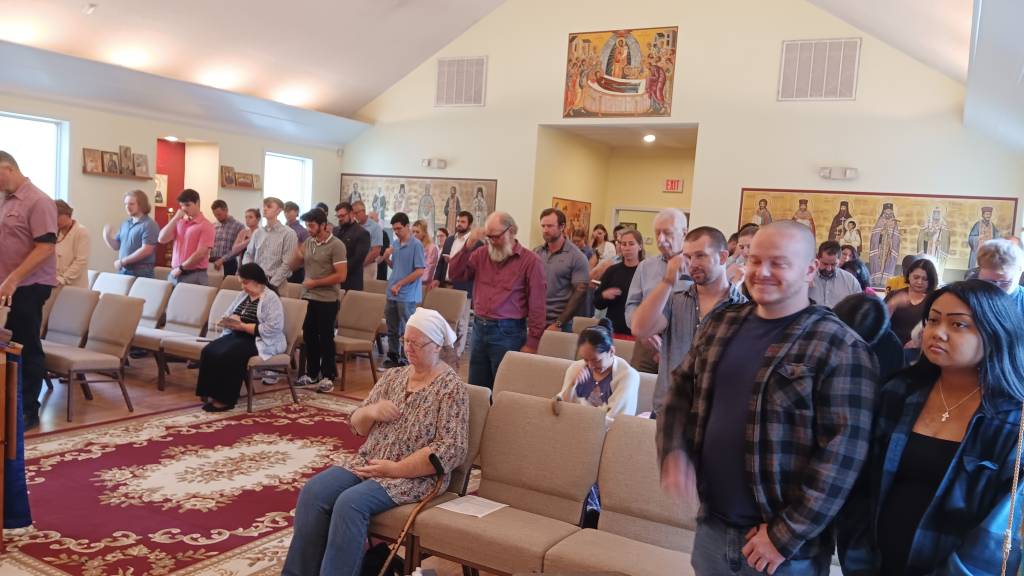
The title of the movie raises the most important question of all. What exactly is the Kingdom of Heaven? Is it Jerusalem? Is it a peaceful society? Is it a place where Muslims and Christians tolerate one another? Is it simply wherever good people choose mercy instead of violence?
The Christian answer goes much deeper. The Kingdom of God is not merely a political arrangement or an earthly territory. It is the reign of God breaking into creation, revealed in Jesus Christ and offered to humanity as a life of communion with Him. It is the Church.
This is why Christians can value Jerusalem without believing that possession of Jerusalem is salvation. The Holy City matters. The places where the events of salvation occurred matter. Christianity is incarnational, which means that physical places, bodies, bread, wine, water, oil, and the material world are not meaningless.
But possessing a holy place does not automatically make the person possessing it holy. A man can stand inside the Church of the Holy Sepulchre while his heart remains filled with hatred. He can defend sacred ground while neglecting the sacred image of God standing directly in front of him.
Nothing and Everything
This gives additional meaning to the famous exchange between Balian and Saladin near the end of the film. Balian asks, “What is Jerusalem worth?” Saladin answers, “Nothing,” walks away, then turns and adds, “Everything.” It is one of the movie’s most memorable moments because the contradiction feels strangely true.
Jerusalem is not God. Possessing Jerusalem cannot save us, and losing Jerusalem cannot separate a faithful Christian from God. In that sense, no city, kingdom, building, or piece of earth can possess ultimate value.
Yet Jerusalem is also a holy place marked by the history of salvation. Christians do not believe that matter is spiritually irrelevant. The Incarnation means that God entered human history and sanctified the material world, so the proper Christian response is neither idolatry of holy places nor indifference toward them.
The problem begins when possessing something holy becomes more important than becoming holy. That temptation did not disappear with the Crusades. We can defend Christian symbols, institutions, traditions, and identities while neglecting repentance, mercy, humility, and love.
Mercy Is Stronger Than Vengeance
Another deeply Christian echo within the film is its preference for mercy over vengeance. Much of the disaster in the story is driven by people who cannot restrain their pride, hatred, ambition, and desire for retaliation. Violence produces more violence until ordinary people suffer for the ambitions of powerful men.
Balian’s strongest moments come when he refuses that cycle. Protecting human life becomes more important than personal glory. The defense of Jerusalem is ultimately presented not as an attempt to gain honor through battle, but as an attempt to save the people trapped within the city.
Christian mercy does not mean pretending evil does not exist. It does not mean refusing to protect the innocent or treating justice as unimportant. Mercy means that hatred cannot become the master of our hearts, even when another person has genuinely wronged us.
This is another place where the movie becomes almost Christian. It recognizes the beauty of mercy but does not fully explain why mercy should triumph over vengeance. Christianity can answer that question because mercy is not merely a useful social principle. Christians show mercy because we ourselves live by the mercy of God.
The Soul Cannot Be Outsourced
We eventually return to Baldwin’s original warning because it is the thread running beneath all these themes. “Your soul is in your keeping alone.” No king can keep it for you. No government, priest, parent, political movement, employer, friend, or culture can answer before God in your place.
This should not produce fear so much as sobriety. The Orthodox Christian life requires us to stop blaming everyone else for the condition of our own hearts. Others may have wounded us, influenced us, taught us badly, or tempted us, but repentance begins when we finally become willing to say, “What must I do now?”
That is also why the Church gives us confession, fasting, prayer, worship, spiritual guidance, and the sacramental life. We are not expected to heal ourselves through sheer willpower. We take responsibility for our souls precisely by bringing our lives into communion with God and allowing Him to transform us.
The world constantly gives us reasons why virtue is inconvenient. Forgiveness is inconvenient. Chastity is inconvenient. Telling the truth is inconvenient. Repentance is inconvenient, generosity is inconvenient, humility is inconvenient, and loving an enemy may be among the most inconvenient things imaginable.
But inconvenience does not change truth. The martyrs understood this. The saints understood it. And surprisingly, in one of the strongest scenes of a movie that frequently misunderstands Christianity, King Baldwin understands it too.
Why Kingdom of Heaven Is Almost Christian
Kingdom of Heaven is not secretly an Orthodox Christian movie. Its treatment of Christianity is often incomplete, unfair, and shaped by modern assumptions about religion. Its picture of Christian history is narrow, and its solution to religious conflict often sounds more like modern secular humanism than historic Christianity.
Yet the movie cannot escape certain truths. Mercy is greater than vengeance. Sacrifice is greater than selfish ambition. Earthly power is temporary. Virtue remains virtue when it costs us something, and every human being must ultimately answer for the life he has lived.
That is what makes the film almost Christian. It catches glimpses of truths that Christianity has proclaimed for centuries while often separating those truths from the faith that gives them their fullest meaning. It wants the fruit of Christian morality while remaining suspicious of the tree from which much of that moral vision grows.
For Orthodox Christians, the answer is not merely to point out where the movie gets Christianity wrong. We should also allow its best question to be directed toward us. When virtue becomes inconvenient, what do we choose?
It is easy to admire Baldwin’s speech, or apparently turn him into an endless supply of internet memes. It is harder to remember his words when telling the truth might cost us something, when forgiveness feels impossible, when everyone around us approves of something sinful, or when faithfulness places us at odds with people whose approval we desire.
The Christian answer is not simply, “My soul belongs to me.” Ultimately, our lives belong to God. We have been given freedom, and that freedom carries responsibility, but the purpose of that freedom is communion with the One who created us.
So perhaps the great Almost Christian question raised by Kingdom of Heaven is this: How can a film that so often gets Christianity wrong still manage to say something deeply Christian about responsibility for our own souls? Perhaps because truth has a way of appearing even in places where its fullness is not yet understood.
Popular stories can give us glimpses of sacrifice, mercy, repentance, courage, and hope. But a glimpse is not the destination. The Orthodox Church invites us beyond admiring these virtues in stories and into a life where, by the grace of God, we actually learn to practice them.
That is the purpose of Almost Christian: not to baptize popular culture or pretend every good story is secretly Orthodox, but to recognize fragments of truth and follow them toward their source. If a movie can make us ask serious questions about judgment, virtue, mercy, and the condition of our souls, then we should not stop with the movie. We should bring those questions into prayer, repentance, worship, and the life of the Church.
If you have a film, book, song, television series, or other piece of media you would like to see covered in a future Almost Christian article, you can send your suggestion to me, Fr. Stephen, at frsteve@savannahorthodox.com.
Frequently Asked Questions
Is Kingdom of Heaven a Christian movie?
Kingdom of Heaven contains Christian themes, but it does not present a complete or consistently accurate picture of historic Christianity. Its strongest Christian echoes include personal responsibility before God, mercy, sacrifice, humility, and the danger of placing earthly power above the soul.
Is Kingdom of Heaven an Orthodox Christian movie?
No. Eastern Orthodox Christianity is largely absent from the film, even though the Holy Land had ancient Eastern Christian communities and a long Byzantine history. The Christianity shown in the movie is primarily connected with the Latin Crusader Kingdom of Jerusalem.
What does “your soul is in your keeping” mean in Kingdom of Heaven?
The statement means that other people may influence or command us, but we remain responsible for our moral choices. This closely resembles Romans 14:12, which teaches that each person will give an account of himself to God.
What does Christianity teach about the Kingdom of Heaven?
The Kingdom of Heaven is not simply an earthly nation, city, or political system. Orthodox Christianity understands the Kingdom as the reign and presence of God, into which humanity is called through communion with Him.
What can Orthodox Christians learn from Kingdom of Heaven?
The film offers a useful reminder that religious identity without repentance and virtue can become empty. Its challenge concerning personal responsibility is worth taking seriously: when we stand before God, we cannot simply blame kings, cultures, circumstances, or other people for the choices we willingly made.

