Almost Christian is a series examining the spiritual themes found in popular media through the lens of Orthodox Christianity, showing how these works can reflect fragments of truth while falling short of the fullness of the faith. The Prince of Egypt is a powerful example because it tells a biblical story with beauty, music, emotion, and moral weight. It is not a substitute for Scripture, the worship of the Church, or the living Tradition of Orthodox Christianity, but it gives us a meaningful place to begin a deeper conversation.
I first had the idea to revisit The Prince of Egypt after watching a video about the opening score of the film. The music alone carries a sense of awe, sorrow, fear, and hope. It draws the viewer into a world where suffering is real, but where God is not absent.
The story of Moses is not simply a tale about one man discovering his past. It is a story about God hearing His people, raising up a deliverer, and leading His people out of bondage. For Orthodox Christians, that makes the Exodus one of the great patterns of salvation in the whole Bible.
The Prince of Egypt and the Search for Freedom
The Prince of Egypt begins with slavery. The Hebrews are crushed under the power of Egypt, and their cries seem to rise into silence. The film captures something true about human suffering: people can be forgotten by rulers, ignored by the powerful, and treated as if they do not matter.
Yet the Bible tells us that God hears. In Exodus, the Lord says, “I have seen the affliction of my people who are in Egypt, and have heard their cry” (Exodus 3:7). The cries of the Hebrews are not wasted. Their pain is not invisible. Their suffering is not meaningless.
This is one of the reasons the story remains so powerful. The Orthodox Church teaches that God is not distant from His creation. He is holy, beyond all things, and yet He is near to the brokenhearted. He hears the prayers of the suffering, even when deliverance does not come as quickly as they desire.
The film also understands that freedom is not simple. Israel must be freed from Pharaoh, but Moses also must be freed from illusion. He has to learn who he really is, what Egypt really is, and what God is calling him to become.
Moses, Identity, and the Call of God
One of the strongest themes in The Prince of Egypt is identity. Moses grows up as a prince of Egypt. He has comfort, status, family, privilege, and power. Yet beneath all of this, there is a hidden truth about who he is and where he comes from.
When Moses learns that he is Hebrew, his world collapses. The life he thought was secure is shaken. The people he thought were only slaves are his people. The suffering he had been able to ignore becomes personal.
This is one of the ways the film becomes “almost Christian.” It sees that true identity is not found in power, wealth, reputation, or social position. A person can have all of these things and still not know who he is. Moses learns his true identity not from Egypt, but from God.
Orthodox Christians believe that our deepest identity is found in being created in the image and likeness of God. We are not merely our careers, our failures, our family history, our wounds, or our social role. We are made for communion with God. That is why every false identity eventually becomes too small for the human soul.
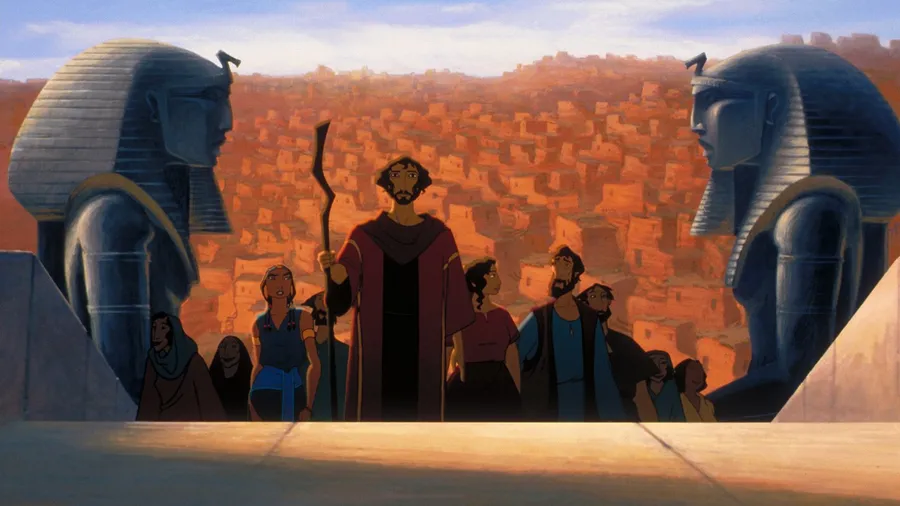
The film shows Moses wrestling with this truth in a dramatic way. He cannot remain only a prince once he knows the truth. He cannot unsee the suffering of his people. He cannot pretend that his comfortable life is innocent when it rests on the oppression of others.
This is where sacrifice enters the story. Moses gives up the life he knew. He loses status, security, and belonging. He enters exile, confusion, and weakness. Yet this loss becomes the very path through which God prepares him.
In the spiritual life, this is familiar. God often strips away our false confidence before He calls us into deeper obedience. We may think we are being ruined, when in truth we are being humbled. We may think we are being exiled, when in truth we are being prepared.
The Fathers of the Church often saw the life of Moses as a pattern of spiritual ascent. St. Gregory of Nyssa, in his Life of Moses, presents Moses as one who moves from visible things toward the mystery of God. Moses does not master God like a concept. He follows, obeys, and is drawn deeper.
That is an important Orthodox point. The spiritual life is not merely about gaining information. It is about purification, illumination, and union with God. Moses is not transformed because he solves a puzzle. He is transformed because he encounters the living God and obeys Him.
The burning bush is one of the most sacred moments in the story. The bush burns but is not consumed. God reveals Himself as holy, personal, living, and present. Moses must remove his sandals because he is standing on holy ground.
The film treats this scene with reverence, and that matters. God is not shown as an abstract force or vague spiritual energy. He speaks. He calls. He knows Moses by name. He sends Moses to His people.
The Orthodox Church teaches that God is not an idea we invent to comfort ourselves. He is the living God who reveals Himself. He is personal, holy, and merciful. He is not controlled by man, but He draws near in love.
Moses does not feel ready for this calling. In Scripture, he objects. He is afraid. He asks, “Who am I?” and later says that he is not eloquent. His weakness is not hidden from God, but neither does it cancel God’s call.
This is deeply pastoral. Many people assume they must feel strong before they obey God. They think they must have perfect confidence, perfect knowledge, or perfect courage. But Moses is called while afraid, uncertain, and deeply aware of his own limitations.
Orthodox Christians believe obedience is not the same thing as self-confidence. Obedience means trusting God more than we trust our fear. Moses does not become the deliverer because he is naturally impressive. He becomes God’s servant because he learns to follow the word of the Lord.
This is one place where The Prince of Egypt speaks with real moral seriousness. Moses is not chasing greatness. He does not seek a platform. He is not trying to become a hero. He is drawn into obedience by a calling he did not invent.
The contrast with Pharaoh is important. Pharaoh’s identity is built on control. He cannot repent because repentance would mean admitting that he is not god. His pride hardens him against mercy, truth, and even the suffering of his own people.
The Bible speaks of Pharaoh’s hardened heart, and the film captures the tragedy of that hardness. Pharaoh is not merely stubborn. He becomes spiritually blind. He sees signs and warnings, but he refuses to turn.
This makes Pharaoh a warning for every human soul. Repentance is not only for obviously wicked people. Repentance is the way the heart stays soft before God. When a person refuses correction again and again, the heart becomes harder, darker, and less able to receive mercy.
Orthodox Christianity speaks often about repentance because repentance is not humiliation for its own sake. It is healing. It is the return of the person to God. Pharaoh refuses that return, and his refusal brings judgment.
The plagues in the Exodus story reveal both judgment and mercy. They judge Egypt’s false gods, Pharaoh’s tyranny, and the cruelty built into the empire. But they also reveal God’s mercy toward His enslaved people. God is not indifferent to evil.
This is important because many people today want a God who is merciful but never judges. Yet mercy without judgment would leave the oppressed forever in bondage. If God never judges evil, then evil has the final word. The Exodus says that it does not.
At the same time, the story does not invite us to enjoy destruction. The judgment on Egypt is tragic because Pharaoh will not repent. His pride brings suffering not only on himself, but on his people. Sin is never private in the way we imagine.
The film handles the relationship between Moses and Ramses with emotion. It shows the pain of division between brothers. Moses does not hate Ramses. He grieves over him. This gives the story a human depth that helps us feel the cost of pride.
In this way, The Prince of Egypt reflects something true about sin. Sin does not merely break rules. It breaks communion. It divides brothers, wounds families, enslaves the weak, and turns the heart inward. Pharaoh’s refusal to humble himself becomes a disaster for everyone around him.
The deliverance of Israel is not only political freedom. It is a movement from slavery toward worship. In Exodus, Moses does not simply say, “Let my people go.” He says that they must go to serve and worship the Lord. Freedom is ordered toward God.
This is a point that modern people can easily miss. We often think freedom means doing whatever we want. But in the Orthodox Christian understanding, true freedom is not slavery to desire, ego, or passion. True freedom is the ability to love God and live according to the truth.
Israel’s bondage in Egypt points beyond itself. It points toward the deeper bondage of mankind to sin and death. The Exodus becomes a great biblical image of salvation because God leads His people out of slavery and toward life with Him.
This is where the story becomes Christological without ceasing to be the story of Moses. Moses points forward to Jesus Christ as the true Deliverer who leads His people from death to life. Moses brings Israel through water out of Egypt, and the Lord brings mankind through death into life.
The crossing of the Red Sea is one of the most important images in the whole story. The people stand trapped between Pharaoh’s army and the sea. They cannot save themselves. They must trust God and follow Moses into the impossible.
The Orthodox Church sees the crossing of the Red Sea as an image of baptism. St. Paul makes this connection when he says that the Israelites “were baptized into Moses in the cloud and in the sea” (1 Corinthians 10:2). The people pass through water, leaving slavery behind and entering a new life under God.
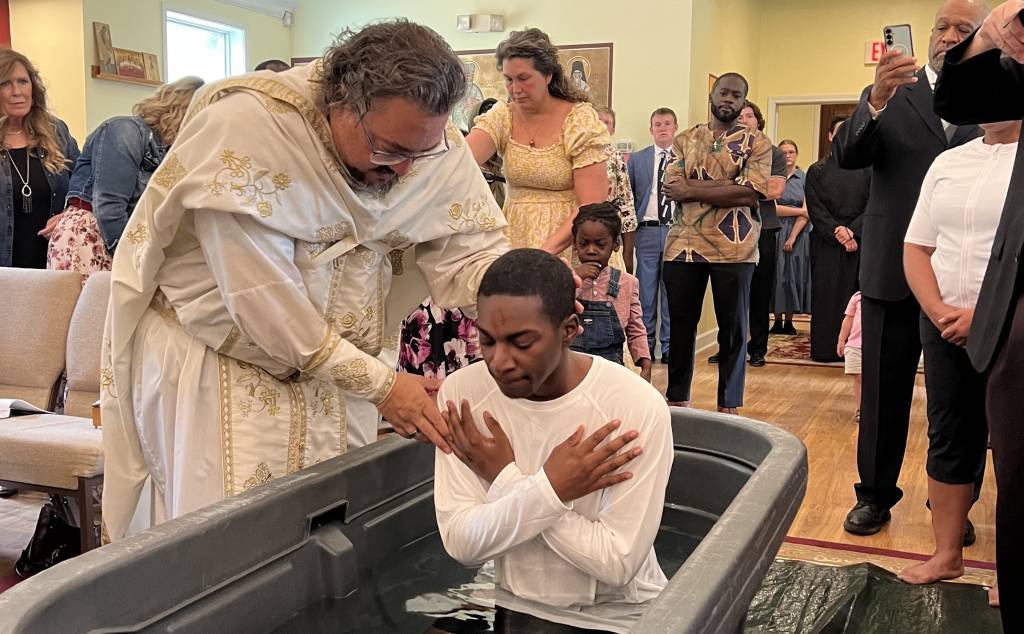
That does not mean the movie is secretly about Orthodox baptism. It means the biblical story it draws from is already filled with baptismal meaning. The film can help viewers feel the fear, wonder, and joy of that passage, even if it does not teach the fullness of the Church’s sacramental life.
In baptism, a person passes from the old life into the new. The water is not merely a symbol of personal improvement. It is participation in death and resurrection, a real entrance into the life of the Church. The Red Sea prepares us to understand that kind of passage.
The imagery is powerful because Israel does not become free by staying where they are. They must walk forward. Freedom requires faith. The old master is behind them, the waters are before them, and God calls them into a future they cannot control.
This is also how the Christian life often feels. We may want freedom from sin, but still fear the path of obedience. We may hate bondage, but still cling to what is familiar. The Exodus reminds us that deliverance involves trust, movement, and a willingness to leave Egypt behind.
The Fathers of the Church frequently read the Exodus spiritually. Egypt can represent the life of slavery to the passions. Pharaoh can represent the tyranny of sin. The Red Sea can represent baptism. The wilderness can represent the hard but necessary journey of purification.
This does not erase the historical meaning of the Exodus. Rather, it shows how deeply the story speaks. God truly delivered Israel, and that deliverance also reveals the pattern of how God saves. History and spiritual meaning belong together.
The Prince of Egypt captures the emotional power of deliverance, but it also stops short. Like any film, it cannot give us the sacramental life of the Church. It can move the heart, but it cannot baptize, confess, commune, or heal the soul through the mysteries.
That is why the series is called Almost Christian. A film may reflect truth, beauty, courage, sacrifice, repentance, and hope. It may awaken longing. It may even push someone to open Scripture. But it remains incomplete apart from the fullness of the Orthodox faith.
The story of Moses also shows the mystery of providence. Moses is saved as a child, raised in Pharaoh’s household, exiled into the wilderness, and called at the burning bush. At each stage, his life seems confusing. Yet God is guiding him, even through suffering.
Providence does not mean life feels easy or clear. Moses loses one home before he is sent back to another. He carries grief, guilt, fear, and uncertainty. Yet God works through all of it to prepare him for obedience.
This is one of the most comforting themes in the story. God does not waste the wilderness. He does not waste exile. He does not waste the years when Moses feels hidden and forgotten. The Lord is able to prepare a person in silence before sending him into service.
Orthodox Christians believe that God’s providence is not fate. We are not puppets. Human choices matter, sin matters, repentance matters, and obedience matters. Yet God is able to work through the tangled history of human life without being defeated by it.
Moses’ sacrifice is also central. He gives up comfort to serve God and His people. He cannot obey God and remain untouched by the suffering of Israel. Love requires him to act.
This is a hard lesson for modern people. We often want spirituality without sacrifice. We want identity without repentance, freedom without obedience, and mercy without change. Moses shows us that the call of God always asks for the whole person.
At the same time, Moses is not perfect. Scripture is honest about his weakness, fear, anger, and failures. That honesty matters because the saints are not imaginary heroes. They are real people transformed by God’s grace.
This is another Orthodox emphasis. Holiness is not pretending to be strong. Holiness is surrendering to God. Moses becomes great because he becomes a servant. His authority comes from obedience, not self-glorification.
The film’s music helps carry this theme. The songs are filled with longing, sorrow, wonder, and hope. They give emotional shape to the movement from bondage to freedom. The beauty of the film can open the heart to ask deeper questions.
Beauty matters in Orthodox Christianity. The Church does not treat beauty as decoration. Icons, chant, incense, vestments, and liturgy are not meant to entertain us. They are meant to direct the heart toward God.
Of course, a movie soundtrack is not liturgical worship. It does not replace the psalms, the hymns of the Church, or the Divine Liturgy. But beauty in culture can still awaken longing for the true beauty that comes from God.
The film also reminds us that the story of salvation is not abstract. It involves bodies, families, children, tears, fear, bread, blood, water, and death. The Bible is not a collection of vague spiritual ideas. It is the story of God acting in history.
This matters for inquirers into Eastern Orthodox Christianity. The Orthodox faith is not merely a set of opinions about God. It is the life of the Church, rooted in Scripture, worship, sacrament, prayer, repentance, and the communion of the saints.
When we watch a film like The Prince of Egypt, we can appreciate what it gets right without confusing it for the Church. We can say that it shows real echoes of biblical truth. We can also say that the fullness of that truth is found not on a screen, but in the worship and life of the people of God.
For parents, this film can also become a helpful conversation with children. It can lead to questions about Moses, Pharaoh, the burning bush, the Passover, and the Red Sea. Those conversations should lead us back to the actual text of Exodus and into the life of prayer.
For adults, the film can raise more personal questions. Where am I still living in Egypt? What false identity am I clinging to? What comfort keeps me from obedience? Where has my heart become hard?
Those are not movie questions anymore. They are spiritual questions. They bring us from cultural reflection to repentance. They ask whether we are willing to follow God out of bondage and into the unknown.
The story of Pharaoh should especially sober us. He sees suffering and refuses mercy. He hears warnings and refuses humility. He is given opportunity after opportunity, yet he will not bend.
Pride is dangerous because it feels like strength while it is destroying us. Pharaoh thinks repentance would make him weak, but his refusal to repent makes him a slave to himself. The same thing can happen in any human heart.
The story of Moses gives the opposite image. Moses begins afraid and unsure, but he becomes obedient. He is not saved by comfort, status, or self-expression. He is shaped by encounter, humility, and service.
That is why The Prince of Egypt remains such a meaningful film to revisit. It takes seriously the weight of slavery, the cost of freedom, the danger of pride, and the mystery of calling. It gives viewers a beautiful doorway into one of the great biblical stories.
Still, the doorway is not the destination. The film can stir the heart, but the Church gives us the path. In Scripture, worship, confession, baptism, the Eucharist, fasting, prayer, and the teaching of the Fathers, we do not merely admire deliverance from a distance. We enter the life of deliverance.
This is the invitation of Orthodox Christianity. Do not stop at being moved by sacred themes. Bring that longing into the Church. Come and see how the story of Exodus is fulfilled, prayed, sung, and lived in the life of the faithful.
If The Prince of Egypt awakens wonder in you, let that wonder become prayer. If it makes you think about bondage, ask where you need freedom. If it makes you think about Moses, ask what obedience God is asking of you today.
Cultural works can give us fragments of truth, and we should be grateful for those fragments. But fragments are meant to lead us toward fullness. The Prince of Egypt is almost Christian because it echoes the truth of deliverance, sacrifice, repentance, and hope. The fullness is found in the living faith of the Orthodox Church.
If you have a film, book, song, or other piece of media you would like considered for the Almost Christian series, you can send suggestions to Fr. Stephen at frsteve@savannahorthodox.com.
FAQ
Is The Prince of Egypt a Christian movie?
The Prince of Egypt is based on the biblical story of Moses and the Exodus, so it contains many themes that Christians recognize. It is not a complete presentation of the Orthodox faith, but it reflects important truths about God’s providence, deliverance, obedience, and freedom.
What does The Prince of Egypt teach about Moses?
The film shows Moses discovering his true identity and learning to obey God even when he feels unworthy. Orthodox Christians see Moses as a prophet and servant of God whose life points toward deeper spiritual realities.
What is the Orthodox meaning of the Red Sea crossing?
The Orthodox Church sees the crossing of the Red Sea as a foreshadowing of baptism. Israel passes through water from slavery into freedom, just as baptism brings a person from the old life into the life of the Church.
Why is Pharaoh’s hard heart important?
Pharaoh’s hard heart is a warning about pride and refusal to repent. His story shows that rejecting mercy again and again can darken the soul and bring judgment.
Can Orthodox Christians watch The Prince of Egypt?
Orthodox Christians can watch the film with discernment and gratitude for the biblical themes it reflects. It should lead us back to Scripture, prayer, and the worship of the Church rather than replace them.