Persevering in the faith means continuing with Christ when the Christian life feels joyful, and continuing with Christ when it feels difficult, dry, confusing, or heavy. The Orthodox Church does not teach that faithfulness is proved by never struggling. Faithfulness is proved by returning to Christ again and again, especially when we are tired, tempted, disappointed, or afraid.
The Christian life is a race, a battle, a healing, and a pilgrimage. There will be seasons of great joy and seasons when prayer feels weak. There will be moments of clarity and moments of doubt. There will be victories and falls. The important thing is not to confuse a hard season with the end of the journey. Christ calls us to keep going, to get back up, and to finish the race in the life of His Church.
Spiritual Highs, Lows, and the Steady Life of the Church
Many people begin the Orthodox life with excitement. The services are beautiful. The icons, incense, chanting, fasting seasons, prayers, and teachings feel deep and alive. For some, discovering Orthodoxy feels like coming home after years of searching. This joy is a gift from God, and it should be received with gratitude.
At the same time, spiritual excitement is not the same thing as spiritual maturity. A person can be moved by beauty, stirred by theology, and eager to learn, while still needing deep healing in the heart. The early joy is real, but it is not meant to carry the whole Christian life by itself. Feelings rise and fall. Christ remains.
This is why the Orthodox Church gives us a steady way of life. We do not build the Christian life on moods. We build it on worship, prayer, fasting, confession, the sacraments, repentance, Scripture, almsgiving, obedience, and love. These practices carry us when feelings are strong, and they also carry us when feelings are weak.
There will be spiritual lows. Prayer may feel dry. Church may feel harder to attend. The fast may feel frustrating. Confession may feel repetitive. Doubts may rise. Old sins may return. Other Christians may disappoint us. We may become bored, tired, angry, or ashamed. None of this means Orthodoxy is false or that God has abandoned us. It means we are human beings being healed.
Holy Scripture is honest about this. The Psalms are full of joy, praise, fear, grief, repentance, confusion, and hope. The Psalmist cries, “Why are you cast down, O my soul? And why are you disquieted within me? Hope in God” (Psalm 42:5). This is not fake cheerfulness. It is a soul learning to speak truth in the middle of struggle.
Spiritual lows often reveal what we were trusting. If we only pray when prayer feels good, we were partly trusting the feeling. If we only come to church when we are excited, we were partly trusting excitement. If we only repent when we feel strong, we were partly trusting ourselves. God allows dry seasons to teach us faithfulness that is deeper than emotion.
Saint John Chrysostom says, “The one who has fallen should not despair, and the one who stands should not be careless.” That is a good rule for the whole Christian life. When things are hard, do not despair. When things are going well, do not become proud or careless. In every season, stay close to Christ.
The Church’s rhythm is a mercy. Sundays come whether we feel ready or not. The feasts come. The fasts come. Confession remains. The prayers remain. The Gospel remains. The Eucharist remains. The life of the Church teaches us to keep walking even when our inner weather changes.
For catechumens, this is important from the beginning. Do not assume that the first excitement will always feel the same. It may deepen, but it will also be tested. That is normal. The goal is not to keep chasing the first feeling. The goal is to become faithful.
Doubt, Falls, and Getting Back Up
Doubt is not always the opposite of faith. Sometimes doubt is a temptation. Sometimes it comes from confusion, fear, pain, pride, bad teaching, sin, exhaustion, or spiritual attack. Sometimes it comes because we are asking real questions and trying to understand. The answer is not to panic. The answer is to bring doubt into the light and keep walking with the Church.
There is a difference between honest questions and corrosive doubt. Honest questions seek truth with humility. Corrosive doubt circles endlessly, refuses answers, feeds fear, and slowly pulls the person away from prayer, worship, confession, and obedience. If your questions lead you to seek Christ more deeply, ask them. If your doubts lead you into isolation, despair, and constant suspicion, bring them quickly to your priest or catechist.
The father in the Gospel cried out to Christ, “Lord, I believe; help my unbelief!” (Mark 9:24). This is one of the most honest prayers in Scripture. He did not pretend to have perfect faith. He brought his weak faith to Christ. That is what we should do. When faith feels weak, pray with the faith you have.
Doubt should not be fed by endless internet searching. Many people take a difficult question, type it into a search bar, and then spend hours absorbing fear, arguments, half-truths, anti-Christian claims, and confused opinions. This rarely brings peace. It usually increases noise. Bring serious questions to the Church. Read responsibly. Ask in the right setting. Do not let algorithms become your spiritual father.
Falling is also part of the struggle. A Christian should never make peace with sin, but he also should not be shocked when he falls. The passions are deep. Habits are strong. The demons are real. The world is loud. The flesh is weak. We need grace, repentance, and patience.
When you fall, get back up. Do not turn one sin into a week of despair. Do not say, “I failed, so there is no point.” That is pride disguised as sadness. Humility gets up. Humility says, “Lord, have mercy,” confesses, accepts correction, and keeps going.
The Proverbs say, “A righteous man may fall seven times and rise again” (Proverbs 24:16). The righteous man is not righteous because he never falls. He is righteous because he does not stay down. He rises again by repentance and the mercy of God.
Confession is essential here. Sin grows in secrecy. Shame wants you to hide. Pride wants you to explain. Despair wants you to quit. Confession breaks that cycle. You name the sin before Christ in the presence of the priest, receive counsel, hear the prayer of absolution, and return to the fight.
Do not confuse repentance with self-hatred. Repentance is not standing in front of God saying, “I am disgusting and hopeless.” Repentance is returning to the Physician and saying, “I am wounded, Lord. Heal me.” The Church is a hospital. The medicine may sting, but it is given for life.
When you fall, also look for patterns. Were you tired? Angry? Isolated? Hungry? Proud? Too much online? Avoiding prayer? Neglecting church? Keeping resentment? Patterns matter. Repentance is not only feeling sorry. It also means learning how the fall happened and taking sober steps to avoid the same path.
At the same time, do not overthink every fall until you are trapped in your own head. Say the truth, confess it, receive guidance, and keep moving. Salvation is a slow process. God is patient. The Church gives you a path. Walk it.
Finishing the Race
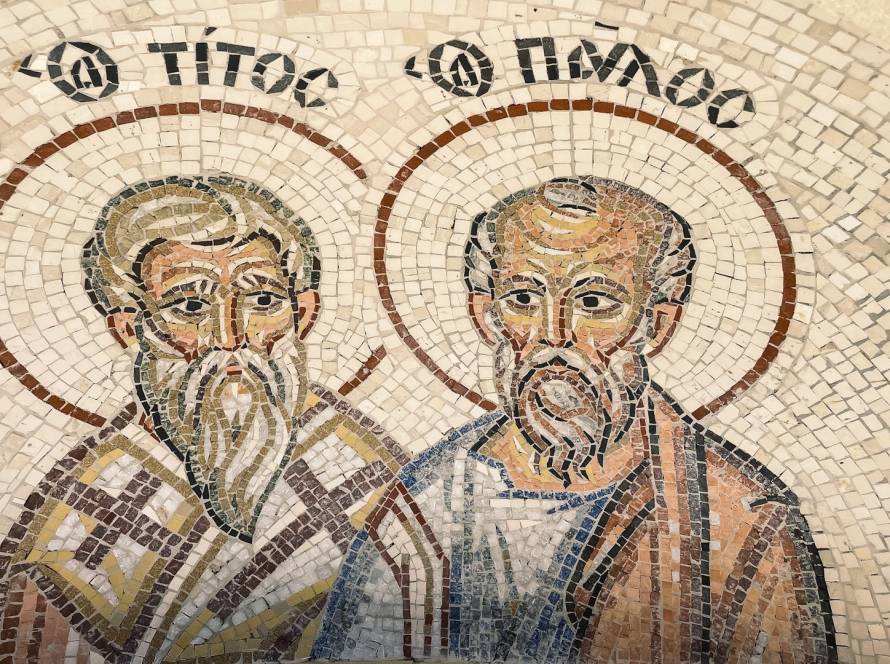
The Christian life is not a short emotional experience. It is a race that must be finished. Saint Paul says, “Let us run with endurance the race that is set before us, looking unto Jesus” (Hebrews 12:1-2). He also says near the end of his life, “I have fought the good fight, I have finished the race, I have kept the faith” (2 Timothy 4:7).
Finishing the race means remaining faithful to Christ until the end. It means not quitting because the path becomes hard. It means not abandoning the Church because of disappointment. It means not letting sin, doubt, pride, bitterness, comfort, politics, scandal, or distraction pull us away from the life of God.
This does not mean a Christian never limps. Many finish the race limping. Some finish with tears. Some finish after many falls. Some finish quietly, without anyone noticing. What matters is that they finish with Christ, in repentance, trusting His mercy.
The race is not finished by human strength alone. We endure by grace. Christ strengthens us through the sacraments, the prayers of the Church, the Scriptures, the saints, the fasts and feasts, confession, spiritual guidance, and the love of the parish. No one is meant to run alone.
The saints show us what perseverance looks like. The martyrs endured suffering without denying Christ. The confessors endured prison, exile, and pressure. The monastics endured years of prayer, fasting, and hidden struggle. Married saints endured family life, work, grief, and responsibility with faithfulness. Holiness is not one personality type. It is perseverance in Christ.
Finishing the race also requires patience with the ordinary. Many people want a dramatic spiritual life, but most growth happens through small acts of faithfulness. Come to church. Pray when tired. Fast when it is inconvenient. Ask forgiveness. Give alms. Refuse gossip. Confess the same sin again without despair. Love the difficult person in front of you. This is where endurance is built.
One danger is expecting the Christian life to always feel meaningful in the moment. Many faithful things feel small while we are doing them. A parent brings children to church while exhausted. A person says evening prayers with little focus. Someone goes to confession embarrassed by repeated sins. Someone forgives without receiving an apology. These things may not feel heroic, but they are part of finishing the race.
Another danger is becoming offended by the weakness of others in the Church. Priests, parishioners, catechists, and fellow Christians are sinners being healed. Some will disappoint you. You will disappoint others. Do not let someone else’s weakness become your excuse to leave Christ. The Church is holy because Christ is holy, not because every person in the parish has already become a saint.
Perseverance also means staying hopeful about your own salvation without becoming careless. Hope is not presumption. Presumption says, “It does not matter how I live.” Hope says, “Christ is merciful, so I will repent and keep going.” Fear of God and trust in God belong together.
The Christian life ends not in our achievement, but in Christ’s mercy. We struggle, but we are not saved by self-reliance. We repent, but God heals. We run, but grace carries us. We finish the race by clinging to Christ and refusing to let go.
For catechumens, the lesson is simple: begin with the basics and do not quit. Come to the services. Learn to pray. Keep your guidance. Ask questions. Avoid useless arguments. Confess honestly when you are received into the Church. Do not make Orthodoxy a temporary obsession. Let it become your life.
Most Commonly Asked Questions
Is it normal to have spiritual highs and lows?
Yes. Every Christian experiences seasons of joy and seasons of dryness, struggle, or weakness. Do not build your faith on feelings. Stay close to the Church, keep praying, and let the steady life of worship, confession, fasting, and repentance carry you.
What should I do when I have doubts?
Bring doubts into the light instead of hiding them or feeding them online. Ask your priest or catechist real questions in the right setting. Pray honestly, “Lord, I believe; help my unbelief,” and keep participating in the life of the Church while you work through them.
What if I keep falling into the same sin?
Do not despair, and do not make peace with the sin. Get back up, confess it, look for patterns, accept guidance, and keep struggling. Healing often takes time, especially when habits are deep.
How do I know if I am persevering?
You are persevering if you keep returning to Christ, especially after weakness, doubt, or failure. Perseverance does not mean you feel strong all the time. It means you keep praying, repenting, coming to church, receiving guidance, and refusing to quit.
What should I do next?
Stay faithful to the basics. Come to the services, keep a simple prayer rule, bring questions to the Church, confess your sins, forgive quickly, and get back up when you fall. Do not try to finish the race in one day. Walk the path in front of you today.
A Pastoral Closing
Persevering in the faith means continuing with Christ when it is beautiful and when it is hard. Do not be surprised by struggle, doubt, dryness, or falls. The saints were not people who never fought. They were people who kept turning back to Christ. Run the race with patience, stay in the Church, and keep your eyes on the Lord who has already conquered death.
If you’re working through this and need guidance, reach out to Fr. Stephen at frsteve@savannahorthodox.com AND Anthony at anthony@anthonyally.com. CC us both.