In recent years, space exploration has returned to the forefront of our attention, especially with missions like Artemis II and astronauts such as Victor Glover openly speaking about faith. This renewed interest in the heavens naturally leads many to reflect on humanity’s place in the universe. Films like Interstellar tap into that same longing, asking questions about survival, meaning, love, and what lies beyond what we can see.
Interstellar and the Longing for Salvation
Interstellar is not a Christian film in any formal sense, yet it is filled with imagery, themes, and symbols that feel deeply familiar to Christians. It wrestles with sacrifice, hope, and even something like resurrection. It reaches toward truths that the Orthodox Church has long proclaimed, though it does not fully arrive there.
This is what makes it such a powerful example for the “Almost Christian” series. It reflects fragments of truth, beauty, and longing, but it leaves the viewer with something incomplete. That tension can help us see more clearly what the fullness of the Orthodox faith offers.
Why does Interstellar resonate so deeply?
The film tells the story of a dying earth and humanity’s desperate attempt to survive. Cooper leaves his family to search for a new home among the stars, trusting in something greater than himself. Along the way, the story leans heavily on themes of love, sacrifice, and unseen guidance.
Orthodox Christians believe that human beings are created with a deep longing for eternity. As Ecclesiastes says, “God has put eternity into man’s mind” (Ecclesiastes 3:11). Interstellar taps into that longing by showing a world that cannot save itself and must look beyond its own limits.
The vast emptiness of space in the film reflects a kind of spiritual hunger. Humanity reaches outward because something within knows that this world, as it is, is not enough. This is very close to the Christian understanding of the human condition.
The Echoes of Christian Themes in Interstellar
The presence of the organ and the language of worship
One of the most striking features of the film is its soundtrack, which prominently uses a church organ. This is not accidental. The sound of the organ immediately brings to mind worship, reverence, and something sacred.
Even without explicit religious language, the film creates a sense that what is happening is not merely scientific but deeply meaningful. It places the story in a kind of liturgical atmosphere, where human actions are tied to something greater than themselves.
Prayer-like imagery and human dependence
Throughout the film, we see characters with eyes closed, hands clasped, or postures that resemble prayer. These moments are subtle but important. They show that when faced with the unknown, human beings instinctively reach beyond themselves.
The Orthodox Church teaches that prayer is the natural movement of the human heart toward God. Even in a film that does not explicitly name God, we see this instinct appear. It is a reminder that faith is not something imposed from the outside but something deeply rooted within us.
Family love as a reflection of something greater
The relationship between Cooper and his daughter Murph is at the heart of the story. Their love drives the entire narrative and becomes the key to humanity’s survival. The film even suggests that love transcends time and space.
This is one of the strongest “almost Christian” elements. Orthodox Christians believe that love is not just an emotion but a reflection of God Himself. As Scripture says, “God is love” (1 John 4:8). The film senses this truth but treats love almost as a force or principle rather than a Person.
The idea of unseen guidance
The wormhole, the tesseract, and the mysterious “they” who guide events all point to the idea that humanity is not alone. There is an unseen intelligence shaping the course of history and intervening at key moments.
This echoes the Christian belief in divine providence. The Orthodox Church teaches that God is actively present in the world, guiding, sustaining, and working for the salvation of mankind. However, the film leaves this presence vague and undefined, never fully revealing who or what is behind it.
Symbolic parallels that feel familiar
Many viewers have noticed parallels that resemble Christian themes. There are twelve astronauts sent out, which echoes the twelve apostles. Cooper undergoes a kind of death and rebirth through the black hole. He returns after a long absence, only to depart again.
There are also images that resemble Noah’s Ark in the space station preserving humanity, and even a kind of new Adam and Eve in the final plan to repopulate another world. These are not direct references, but they show how deeply Christian imagery has shaped our imagination.
The theme of sacrifice
At its core, Interstellar is about sacrifice. Cooper leaves everything behind for the sake of others. Characters risk and even give their lives so that humanity might live.
The Orthodox Church teaches that true love is always sacrificial. As the Lord Himself says, “Greater love has no man than this, that a man lay down his life for his friends” (John 15:13). The film captures this truth beautifully, even if it does not fully explain its source.
Resurrection-like imagery
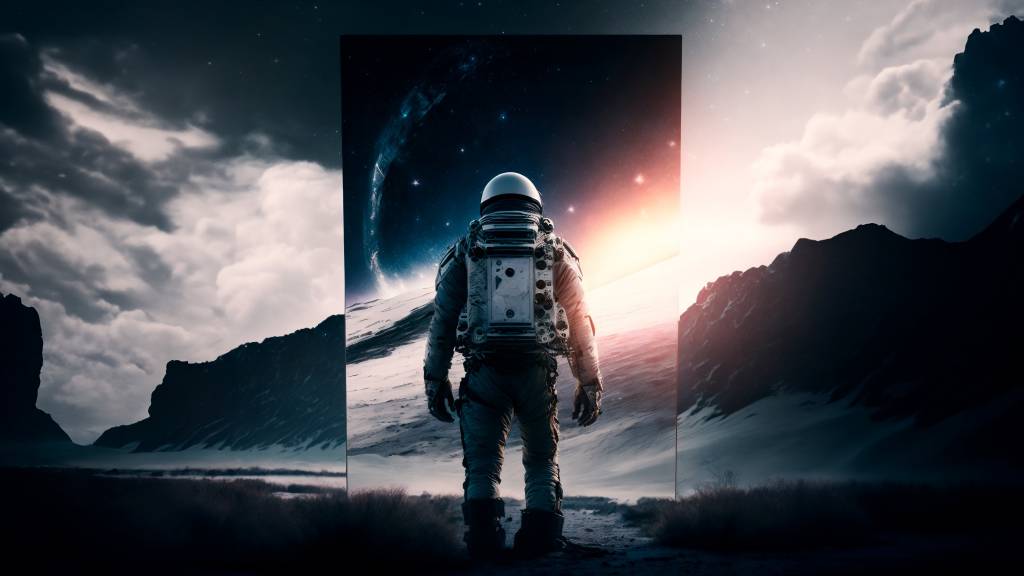
Cooper’s journey into the black hole and his unexpected return carries strong echoes of death and resurrection. He passes through what appears to be the end, only to emerge again in a new form of existence.
This resonates with the central Christian proclamation of resurrection. Orthodox Christians believe that death is not the end, but a passage transformed by Christ. The film gestures toward this reality but frames it in purely scientific and speculative terms.
Where Interstellar falls short
For all its beauty, the film ultimately places its hope in humanity itself. The mysterious beings who guide events are revealed to be future humans. Salvation comes from humanity reaching its full potential rather than from God.
This is where the film departs from the fullness of the Orthodox faith. The Orthodox Church teaches that humanity cannot save itself. Salvation is not the result of human progress or evolution, but the gift of God.
In Interstellar, love becomes the highest principle, but it is not grounded in a personal God. It becomes something abstract, almost like a force that binds the universe together. While this captures part of the truth, it lacks the fullness of revelation.
Why this matters for us today
Films like Interstellar are powerful because they reveal what people are already searching for. They show a hunger for meaning, for connection, and for something beyond death.
Orthodox Christians believe that these longings are not accidental. They are signs pointing us toward the truth. As St. Augustine once wrote, “Our hearts are restless until they rest in You.”
At the same time, we must be careful not to mistake these reflections for the reality itself. A shadow can point to the light, but it is not the light. Interstellar gives us glimpses of truth, but it cannot replace the life of the Church.
From reflection to reality
The Orthodox Church teaches that the answers to these questions are not found in theories or imagination, but in a living relationship with God. The mysteries of life, death, and eternity are not solved by human effort, but revealed through divine grace.
This is why the Church calls us not just to think about these things, but to enter into them. Through prayer, worship, and the sacraments, we encounter the reality that films like Interstellar can only hint at.
The longing for salvation, the power of love, and the hope of life beyond death are not just themes in a story. They are truths that are lived and experienced in the life of the Church.
A pastoral invitation
If Interstellar stirs something in you, that is not a coincidence. It is a reminder that you were made for more than this world can offer. The beauty and wonder you see in the film are echoes of a greater reality.
The Orthodox Church invites you to come and see that reality for yourself. Not as an idea, but as a life. Not as a distant hope, but as a present experience.
These stories can inspire us, but they are only the beginning. The fullness of truth is found in Christ and in His Church, where love is not just a concept, but a living and transforming reality.
If you have suggestions for other films, books, or music to be explored in this series, feel free to send them to Fr. Stephen at frsteve@savannahorthodox.com.
Frequently Asked Questions
Is Interstellar a Christian movie?
No, Interstellar is not a Christian film, but it contains themes that reflect Christian ideas like sacrifice, love, and hope. These elements can point toward deeper truths found in the faith.
What does Interstellar say about God?
The film suggests a higher power or guiding intelligence, but ultimately identifies it with future humans. This differs from the Orthodox Christian belief in a personal God who created and sustains all things.
Why does the movie focus so much on love?
Love is presented as the key force that transcends time and space. While this reflects a Christian truth, the film does not fully explain love as coming from God.
Are the religious symbols in Interstellar intentional?
Some may be intentional, while others reflect broader cultural influences. Christian imagery is deeply rooted in Western storytelling, so it often appears even in non-religious works.
What can Orthodox Christians take from Interstellar?
Orthodox Christians can appreciate the film’s themes of sacrifice, longing, and hope, while recognizing that it does not present the fullness of the faith. It can serve as a starting point for deeper reflection on truth.