Holy Week is the most sacred week of the year in the Orthodox Church. It is the week when Orthodox Christians walk with Christ through His final days before the Cross, His saving death, His burial, and His glorious Resurrection. Every service, every hymn, and every reading helps the faithful enter more deeply into the mystery of what the Lord has done for the life of the world.
Many people, especially visitors and inquirers, ask what happens each day of Orthodox Holy Week. That is a good question, because Holy Week can seem full, intense, and sometimes confusing if you are new to it. The Orthodox Church teaches that these services are not random or repetitive. They form one great journey, leading us from Palm Sunday to Pascha, from Christ’s entry into Jerusalem to His victory over death.
Orthodox Christians believe Holy Week is not just a time to remember past events as though we were looking at them from a distance. In the Church’s worship, we are drawn into them. We stand with the disciples, we hear the words of the Bridegroom, we keep watch at the Cross, we wait at the tomb, and at last we receive the light of the Resurrection.
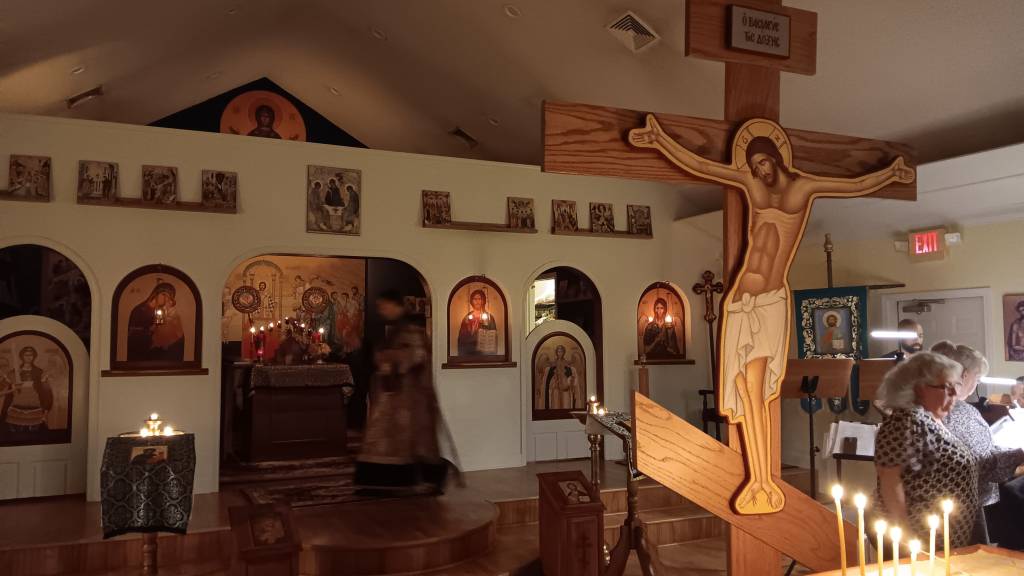
What Happens Each Day of Orthodox Holy Week?
Holy Week unfolds day by day with its own distinct emphasis, and each day opens another part of the mystery of Christ’s saving work. The Orthodox Church does not rush from Palm Sunday to Pascha as though only the ending matters. She leads the faithful step by step through the final days of the Lord’s earthly life, so that the Cross and Resurrection may be known not only in the mind but in the heart. This is why the services are full, layered, and deeply scriptural. Each day has its own spiritual tone, and together they form one sacred path.
What follows is a simple guide to the daily journey of Orthodox Holy Week. It is not meant to explain every hymn or every symbol, because Holy Week is too rich for that. It is meant to help readers see the shape of the week clearly and understand why each day matters. The Orthodox Church teaches that Holy Week is not religious theater, but the Church’s entrance into the saving acts of Christ. The more a person enters these days prayerfully, the more he begins to understand their beauty.
Holy Week also teaches something important about the Christian life itself. There is joy, then watchfulness, then betrayal, then sorrow, then waiting, and finally Resurrection. That pattern is not accidental. Orthodox Christians believe the life of every believer is shaped by the same movement from repentance and endurance into the joy of new life in Christ.
For that reason, Holy Week should not be approached as a busy schedule to survive. It should be approached as a gift. The services slow us down, deepen our attention, and place us inside the Gospel in a way that ordinary days often do not. They teach us to watch, to grieve, to hope, and then to rejoice.
The Daily Journey from Palm Sunday to Pascha
Palm Sunday
Palm Sunday stands at the doorway of Holy Week and remembers Christ’s triumphal entry into Jerusalem. The crowds greeted Him with branches and cries of praise, yet the Church already knows that this royal entry leads toward the Cross. Orthodox Christians believe this day reveals Christ as the true King, but a King who reigns in humility rather than worldly power. He comes riding on a donkey, not in earthly splendor, and goes willingly toward His saving Passion. So Palm Sunday is joyful, but it is a serious joy that prepares the faithful to follow the Lord into the solemn days ahead.
Holy Monday
Holy Monday begins the Bridegroom services and sets before the Church the call to spiritual watchfulness. The hymn “Behold, the Bridegroom comes at midnight” reminds the faithful that Christ comes suddenly and that His servants must be ready. On this day the Church remembers the barren fig tree as a warning against fruitless religion that has leaves but no living faith. Holy Monday also remembers righteous Joseph, who was rejected by his brothers and became a type of Christ in his innocence and suffering. The day calls Orthodox Christians to repentance, vigilance, and the bearing of real spiritual fruit.
Holy Tuesday
Holy Tuesday continues the theme of watchfulness and places special emphasis on readiness for the coming of Christ. The Church remembers the parable of the Ten Virgins, teaching that the Christian life requires oil in the lamp, which is to say faith, repentance, and steady devotion. It also remembers the parable of the talents, showing that God’s gifts must not be buried in fear or neglect. Orthodox Christians believe this day awakens the soul from laziness and spiritual sleep. Holy Tuesday teaches that a life of discipleship must be attentive, fruitful, and prepared to meet the Lord.
Holy Wednesday
Holy Wednesday turns the Church’s attention to the sinful woman who anointed Christ and to Judas who betrayed Him. These two figures are set side by side to show the difference between repentance and hardness of heart. The woman gives what is precious in sorrow and love, while Judas gives Christ away for silver and darkness. Orthodox Christians believe this day teaches that no one is shut out from mercy if he turns to the Lord with humility. Holy Wednesday calls the faithful to choose love over betrayal, repentance over pride, and devotion over coldness of heart.
Holy Thursday
Holy Thursday remembers the Mystical Supper, when Christ gave His Body and Blood to His disciples and established the Eucharist. The Church also remembers the washing of the disciples’ feet, showing that the Lord of glory reigns through humility and service. As the day continues, the mind of the Church turns to Gethsemane, the betrayal by Judas, the arrest of Christ, and the beginning of His Passion. In many parishes, Thursday night brings the service of the Twelve Passion Gospels, where the faithful hear the long Gospel readings of Christ’s suffering. Holy Thursday teaches Orthodox Christians that the Eucharist, humility, sacrifice, and love all stand together at the heart of the Gospel.
Holy Friday
Holy Friday is the day of the Crucifixion and the most solemn day of the year in Orthodox life. The Church remembers that Christ was mocked, beaten, nailed to the Cross, and died in the flesh for the salvation of the world. Orthodox Christians believe the Cross is not a tragic accident, but the willing self-offering of the Son of God, who lays down His life for His friends and for the life of all. Later in the day the Church remembers His burial, and the faithful stand before the tomb in mourning, reverence, and love. Holy Friday is full of sorrow, yet even here the Church begins to sing with hope, because death will not hold the Lord forever.
Holy Saturday
Holy Saturday is a day of profound stillness, because Christ rests in the tomb in the flesh after His saving death on the Cross. Yet the Orthodox Church also proclaims that while His body lies in the tomb, He descends into Hades and begins the overthrow of death from within. The Vesperal Liturgy of Holy Saturday is filled with Old Testament readings that show how all salvation history points toward Christ and His victory. During this service, the darkness of Holy Friday begins to open into the first brightness of Pascha, and the whole Church senses that the Resurrection is near. Holy Saturday teaches that God is at work even in silence, and that what looks like defeat is already becoming victory.
Pascha
Pascha is the radiant feast of Christ’s Resurrection and the goal toward which all of Holy Week has been moving. Late in the night the faithful gather in darkness, receive the light, and hear the joyful proclamation that Christ is risen from the dead. Orthodox Christians believe this is not merely the memory of a past miracle, but the victory of Christ over death, Hades, and the power of sin for the life of the world. This is why Pascha is called the Feast of Feasts and why Saint John Chrysostom’s Paschal homily calls all people to rejoice. The Resurrection reveals the meaning of every sorrow that came before it, for Christ has trampled down death by death and given life to those in the tombs.
The order of Holy Week matters because each day reveals something unique about the Lord’s saving work. Palm Sunday reveals the King who comes in humility, Holy Monday through Holy Wednesday call us to watchfulness and repentance, Holy Thursday reveals the Mystical Supper and the beginning of the Passion, Holy Friday reveals the Cross and burial, Holy Saturday reveals the harrowing of Hades, and Pascha reveals the Resurrection. The Orthodox Church teaches that these are not isolated moments but one saving mystery unfolding before the faithful. Together they proclaim the whole Gospel. Together they teach the heart how to follow Christ.
This is why the Orthodox Church fills the week with so many services. It is not because the Church likes complexity for its own sake. It is because the faithful must be formed by the saving events of Christ, not merely informed about them. Holy Week trains the soul through prayer, Scripture, hymnody, and silence. It teaches us how to stand before the Cross and how to rejoice at the empty tomb.
The Church Fathers speak with great love about these days because they saw in them the very center of the Christian faith. Saint John Chrysostom’s Paschal homily is perhaps the most famous example, but the whole tradition of the Church bears witness to the same truth. The Fathers knew that Christians come to know Christ more deeply by walking with Him through His Passion, burial, and Resurrection. Holy Week is therefore not an extra devotion added onto Orthodoxy. It is one of the clearest revelations of what Orthodox Christianity is.
Many people are surprised by how much Scripture fills these services. Holy Week is soaked in the Psalms, the Gospels, the prophets, and the whole story of salvation. Orthodox Christians believe the Church is letting the Bible speak in its fullness as the saving acts of Christ unfold. This is one reason Holy Week feels so rich and serious. The Word of God is everywhere in it.
For those who are new to the Orthodox Church, Holy Week can feel overwhelming at first. That is normal, and no one should feel pressured to understand every detail immediately. The best thing is to come, stand prayerfully, listen carefully, and let the Church teach you through her worship. Holy Week is not understood only with the mind. It is learned in the heart through prayerful participation.
In the end, Holy Week shows the pattern of the Christian life itself. There is joy, watchfulness, betrayal, sorrow, burial, waiting, and then Resurrection. The Orthodox Church teaches that Christians are called to follow Christ through all of this, trusting that the Cross always leads toward life. Holy Week is not only about what happened to the Lord. It also reveals what it means for us to belong to Him.
If you want to understand the Orthodox Church more deeply, come during Holy Week and let the services speak for themselves. Come to the Bridegroom services, come to the Passion Gospels, come to the tomb on Holy Friday, come to the solemn beauty of Holy Saturday, and above all come to Pascha. Then you will not only know what happens each day of Orthodox Holy Week. You will begin to know why it matters.
FAQ
What happens on each day of Orthodox Holy Week?
Palm Sunday remembers Christ’s entry into Jerusalem. Holy Monday through Holy Wednesday focus on watchfulness and repentance, Holy Thursday on the Mystical Supper and betrayal, Holy Friday on the Crucifixion and burial, Holy Saturday on Christ in the tomb and His victory over Hades, and Pascha on the Resurrection.
Why don’t we serve Holy Unction during Holy Week?
In our parish, Holy Unction is served before Holy Week because Holy Week already has its own full liturgical character centered on the Bridegroom, the Mystical Supper, the Cross, the tomb, and the Resurrection. Holy Unction is a sacrament of healing for soul and body, not something appointed specifically for Holy Week itself, and it should never be treated as a substitute for confession. In some places it became common to attach it to Holy Week, but that is a later custom rather than something essential to the services of the week.
Is Christ crucified on Thursday or Friday in Orthodox Holy Week?
The Orthodox Church commemorates the Crucifixion on Holy Friday. Holy Thursday includes the Mystical Supper, Christ’s arrest, and the beginning of His Passion, especially as remembered in the Thursday night service of the Passion Gospels.
What is Holy Saturday in the Orthodox Church?
Holy Saturday is the day Christ rests in the tomb in the flesh while also descending into Hades to overthrow death. It is one of the most profound days of the church year, full of stillness, hope, and hidden victory.
Why are there so many Orthodox Holy Week services?
The services lead the faithful step by step through the saving events of Christ’s Passion, death, burial, and Resurrection. The Orthodox Church uses these services to help Christians enter the mystery deeply rather than only think about it from a distance.
What is the most important service of Holy Week?
All of Holy Week matters, because each service reveals part of the saving work of Christ. But Pascha is the summit, because it proclaims the Resurrection and the defeat of death.